
Last updated: October 2026
Where to eat in Lisbon depends on what you want: seafood beer halls, custard tart bakeries, old-school tascas or modern Portuguese kitchens, and the city does all of them well. Lisbon is one of Europe’s best cities for eating well without spending a fortune. Its food is built on the sea and on simple, generous cooking: grilled sardines, garlicky clams, salt cod in endless variations, slow-cooked pork and, of course, the custard tart that has become a national symbol. Alongside the old family-run tascas, a new generation of chefs is reinventing Portuguese food with seasonal ingredients and creative small plates.
This guide covers 10 of the best places to eat in Lisbon, from market halls and bakeries to seafood beer halls and modern restaurants. Each comes with a practical box: how to get there, how long to allow, the best time to go and one tip. Further down you’ll find the dishes to order, suggested food routes, where to stay, getting around and budget guidance.
Opening days and booking policies change, so check each venue’s website or social media before you go. For wider trip planning, the national tourism board has a handy Lisbon overview on Visit Portugal. If you’re still deciding what else to fit around your meals, our guide to the best things to do in Lisbon covers the sights between each stop.
Quick answer: Where are the best places to eat in Lisbon? For a first visit, start with Time Out Market for variety, Cervejaria Ramiro for seafood and Pastéis de Belém or Manteigaria for custard tarts. For a more local meal, try Zé dos Cornos or O Velho Eurico, and book Prado (or queue early at Taberna da Rua das Flores) for modern Portuguese cooking. A Cevicheria and Sol e Pesca round out the list with ceviche and tinned fish.
Quick list: where to eat in Lisbon
| Place | Area | Best for | Price tier |
|---|---|---|---|
| Time Out Market | Cais do Sodré | Sampling many chefs in one place | Mid-range |
| Cervejaria Ramiro | Intendente | Seafood feast | Mid-range |
| Pastéis de Belém | Belém | The original custard tart | Cheap |
| Manteigaria | Chiado and other branches | Custard tarts in the centre | Cheap |
| Taberna da Rua das Flores | Chiado | Creative Portuguese small plates | Mid-range |
| Zé dos Cornos | Mouraria | Grilled ribs and traditional plates | Cheap to mid-range |
| O Velho Eurico | Mouraria, below the castle | Modern tasca cooking | Mid-range |
| A Cevicheria | Príncipe Real | Peruvian-Portuguese ceviche | Mid-range |
| Prado | Near the cathedral | Seasonal, farm-to-table cooking | Special occasion |
| Sol e Pesca | Cais do Sodré | Tinned fish and wine | Cheap to mid-range |
1. Time Out Market (Mercado da Ribeira)
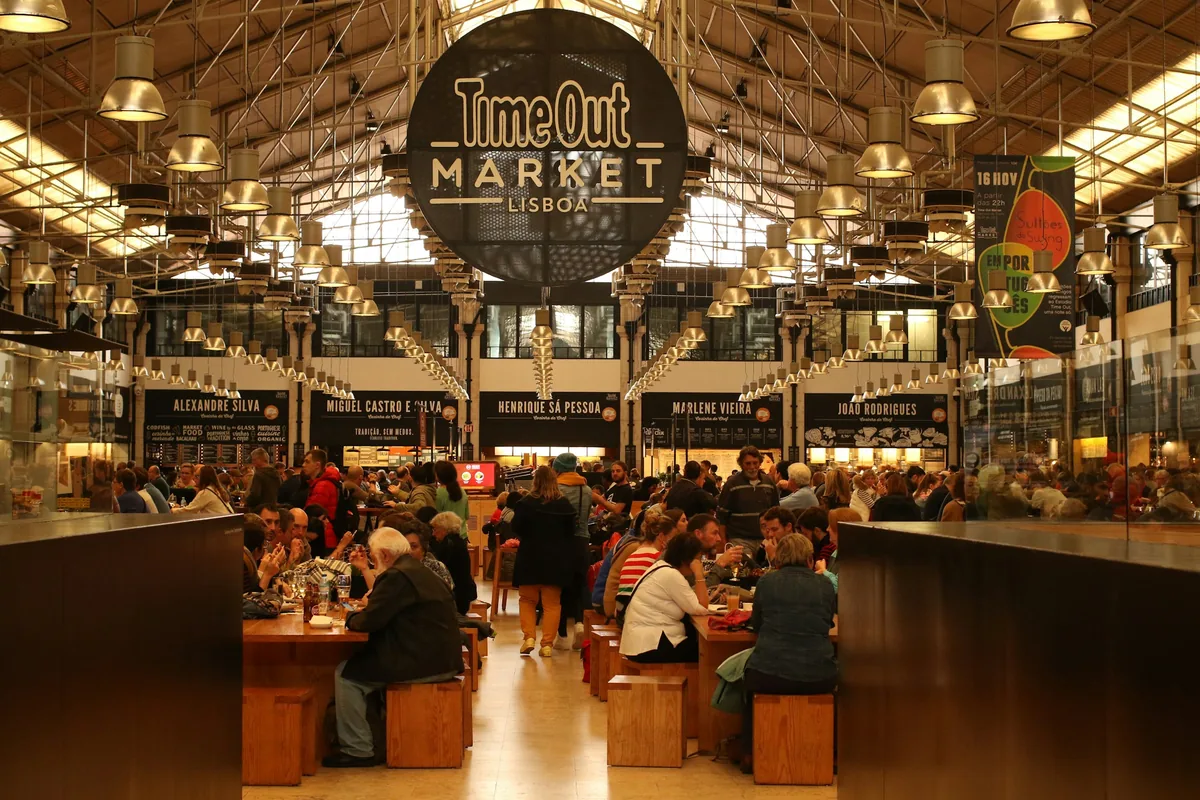
Time Out Market is inside the Mercado da Ribeira, Lisbon’s historic market hall by Cais do Sodré. Half the building is a traditional fresh food market; the other half is a huge food hall with stalls run by some of the city’s best-known chefs and restaurants, all around long communal tables.
It’s a great first stop for getting a feel for Lisbon’s food. You can try seafood, steak sandwiches, custard tarts, croquettes, petiscos (Portuguese small plates) and modern dishes without committing to a single restaurant. It’s also handy for groups, since everyone can choose their own food. Check the official Time Out Market Lisboa website for current stalls and opening times.
The downside is the crowds. At peak times finding a seat can be a challenge, and some locals see it as touristy. Treat it as an introduction rather than the only place you eat.
- How to get there: Opposite Cais do Sodré station (metro, train and ferry).
- How long to spend: An hour.
- Best time to go: Late morning or mid-afternoon, avoiding lunch and dinner peaks.
- Tip: Walk through the traditional market side first in the morning, when the fish and produce stalls are busiest.
2. Cervejaria Ramiro
Cervejaria Ramiro is Lisbon’s most famous seafood beer hall. It has been serving shellfish for decades in a bright, noisy dining room, and it’s the place to order a seafood feast: garlic prawns, clams in garlic and coriander (amêijoas à Bulhão Pato), crab, percebes (goose barnacles) and tiger prawns, all priced by weight.
The tradition is to finish with a prego, a steak sandwich in a soft roll, as “dessert”. Wash it all down with cold beer.
Ramiro is popular with locals and visitors, and queues are common. Seafood is sold by weight, so keep an eye on what you’re ordering if you’re watching your budget.
- How to get there: In Intendente, near the Intendente metro station.
- How long to spend: An hour and a half, plus any queue.
- Best time to go: Early lunch or late afternoon, outside the main rush.
- Tip: Order a few dishes to start and add more as you go; it’s easy to over-order.
3. Pastéis de Belém

Pastéis de Belém has been baking custard tarts since 1837, using a recipe said to come from the monks of the nearby Jerónimos Monastery. Here they’re called pastéis de Belém rather than pastéis de nata, and the recipe is famously kept secret.
The tarts come out warm, with crisp, flaky pastry and a rich custard filling, and you add cinnamon and icing sugar yourself from shakers on the table. Inside, a series of blue-tiled rooms stretches back further than you’d expect, so even when there’s a queue for takeaway, there’s often space to sit down.
Belém is also home to the Jerónimos Monastery, Belém Tower and the Monument to the Discoveries, so combine your visit with sightseeing, and see the official Pastéis de Belém website for details. Our Lisbon sightseeing guide explains how to fit the Belém monuments into a day.
- How to get there: Tram 15 or train from Cais do Sodré to Belém.
- How long to spend: 30 minutes.
- Best time to go: Morning, before the monastery queues build.
- Tip: Skip the takeaway queue and head inside; table service often moves faster.
4. Manteigaria
If you can’t get to Belém, or want a second opinion, Manteigaria is widely considered one of the best places for pastéis de nata in central Lisbon. The shop makes only custard tarts, and you can watch them being made through the glass. The pastry is especially crisp and the custard has a slightly caramelised top.
There are several branches, including one in Chiado and one inside Time Out Market, so it’s easy to fit in. The tarts are best eaten standing at the counter with a bica, a short Portuguese espresso, just as the locals do.
Settling the Belém versus Manteigaria debate is a popular Lisbon pastime, so try both and decide for yourself.
- How to get there: The Chiado branch is near Baixa-Chiado metro.
- How long to spend: 10 to 15 minutes.
- Best time to go: Any time; tarts come out of the oven throughout the day.
- Tip: Listen for the bell. It’s rung when a fresh batch comes out of the oven.
5. Taberna da Rua das Flores
Taberna da Rua das Flores is a small, atmospheric restaurant in Chiado that serves creative Portuguese petiscos based on traditional recipes and seasonal produce. The menu changes regularly and is often written on a chalkboard, with dishes such as fish tartare, braised pork, seasonal vegetables and unusual takes on salt cod.
The space is tiny and full of character, and the staff are happy to explain the dishes. It’s a good place to try something more inventive than standard tourist menus while still feeling rooted in Lisbon’s food traditions.
- How to get there: On Rua das Flores in Chiado, near Baixa-Chiado metro.
- How long to spend: About an hour and a half.
- Best time to go: Lunch, or arrive early for dinner.
- Tip: It has generally not taken reservations, so arrive early and expect a queue; check the current policy and whether card payments are accepted.
6. Zé dos Cornos
Zé dos Cornos is a classic Lisbon tasca: a small, no-frills restaurant serving generous plates of traditional food at long communal tables. It’s tucked down Beco dos Surradores, on the edge of Mouraria near Praça da Figueira, one of the oldest and most multicultural parts of the city, and it’s popular with locals and visitors who don’t mind waiting for a seat.
The house speciality is ribs (entrecosto) cooked on the grill and served with simple sides, and the menu also features dishes such as bacalhau à Brás and pork. Portions are often described as generous, so it’s worth asking whether a dish is big enough to share. The atmosphere is busy, friendly and rustic, and it’s a good way to experience everyday Lisbon food.
Mouraria is often described as a birthplace of fado, and it’s worth wandering its lanes after lunch.
- How to get there: In Mouraria, a short walk from Martim Moniz metro and Praça da Figueira.
- How long to spend: About an hour, plus any wait.
- Best time to go: Lunch. Arrive early, as there is usually a queue.
- Tip: It has generally not taken reservations and has been cash only, so bring cash and check the current policy before you go.
7. O Velho Eurico
O Velho Eurico is a neighbourhood tasca that has been given new life by a young team who kept its traditional character while refreshing the cooking. It’s in Mouraria, just below the castle and close to Alfama, and its tiled walls and simple tables feel like old Lisbon.
The menu focuses on Portuguese comfort food done very well, from petiscos to slow-cooked dishes and seasonal specials. It’s lively, popular with locals and a good choice for an evening meal after exploring Alfama and the castle.
- How to get there: On the slopes below São Jorge Castle, walkable from Baixa or Martim Moniz.
- How long to spend: About an hour and a half.
- Best time to go: Dinner; book ahead where possible.
- Tip: Ask the staff for the dishes of the day, which are often the highlights.
8. A Cevicheria
A Cevicheria, in the elegant Príncipe Real neighbourhood, combines Peruvian ceviche with Portuguese fish and seafood. It’s easy to spot thanks to the giant octopus sculpture hanging from the ceiling.
The menu focuses on fresh, zingy raw fish dishes, tiraditos and other Peruvian-inspired plates, and pisco sours from the bar. It’s a lively, casual place that makes a refreshing change from heavier Portuguese food, especially on a hot day.
Príncipe Real itself is one of Lisbon’s most attractive areas, with a garden square, concept stores and nearby viewpoints such as the Miradouro de São Pedro de Alcântara.
- How to get there: In Príncipe Real, uphill from Bairro Alto. The historic Glória funicular is out of service, so expect a walk uphill.
- How long to spend: An hour.
- Best time to go: Lunch or early evening.
- Tip: There’s usually a queue, so add your name to the list and explore the neighbourhood while you wait.
9. Prado
Prado is a bright, plant-filled restaurant near Lisbon’s cathedral that focuses on seasonal, local ingredients from small Portuguese producers. The menu changes often and is designed for sharing, with an emphasis on vegetables, fish and natural wine.
It’s a good choice for a special meal that feels relaxed rather than formal. The cooking is precise and creative, but it still reflects Portuguese ingredients and flavours.
- How to get there: Just below the cathedral, between Baixa and Alfama; allow a short walk from the nearest metro.
- How long to spend: Two hours.
- Best time to go: Dinner, booked in advance.
- Tip: Let the staff guide you on natural wines; the list focuses on small Portuguese producers.
10. Sol e Pesca
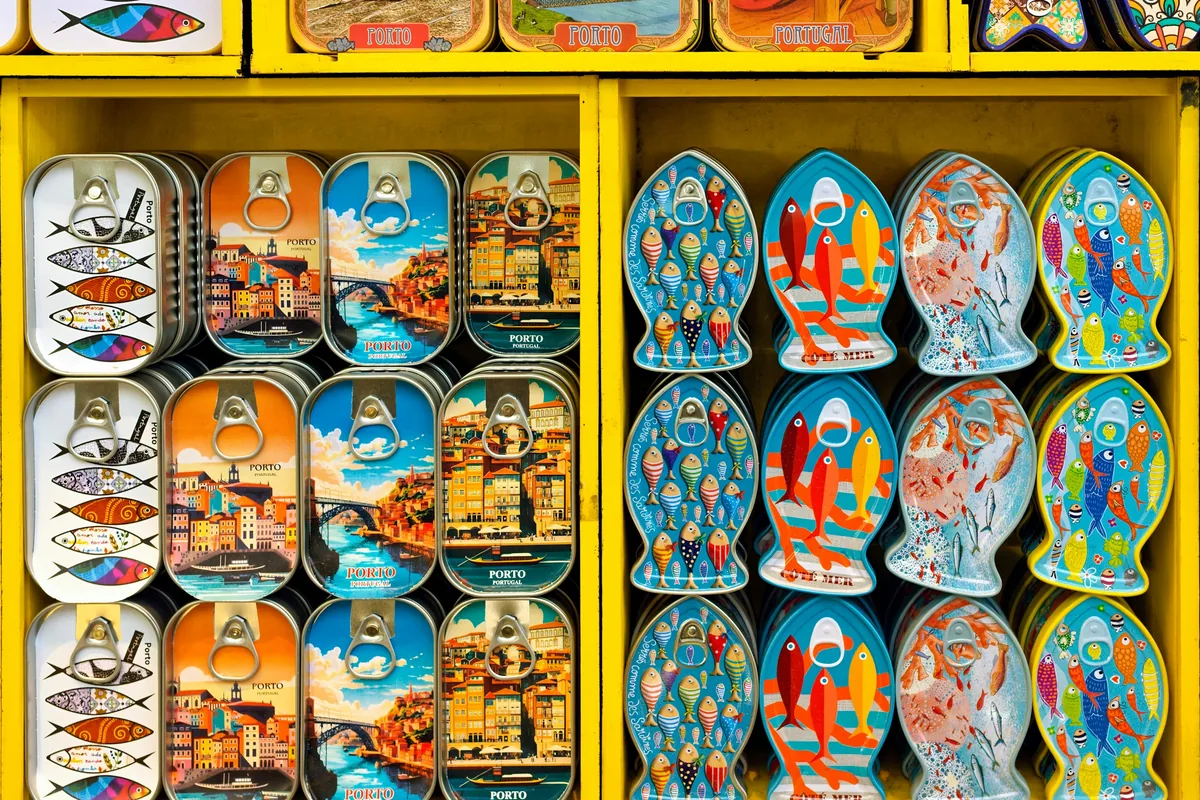
Portugal takes tinned fish seriously, and Sol e Pesca is one of the best places to try it. This small bar in a former fishing tackle shop on Rua Nova do Carvalho (the “Pink Street” in Cais do Sodré) serves tins of sardines, mackerel, octopus and more, with bread, olives and a glass of wine.
It’s casual, cheap and full of character, with fishing rods and nets still on display. It’s a good spot for a light meal or a snack before a night out in Cais do Sodré, one of the city’s liveliest nightlife areas.
- How to get there: On Rua Nova do Carvalho, a short walk from Cais do Sodré station.
- How long to spend: 45 minutes to an hour.
- Best time to go: Early evening.
- Tip: Ask for a recommendation; the staff can suggest tins that suit your taste.
Portuguese dishes to look out for
- Pastel de nata: the custard tart, best eaten warm with cinnamon.
- Bacalhau: salt cod, said to have 365 recipes, one for each day of the year. Try bacalhau à Brás, shredded with egg and potato.
- Sardinhas assadas: grilled sardines, especially popular in June during the Santo António festivities.
- Amêijoas à Bulhão Pato: clams with garlic, olive oil, coriander and lemon.
- Bifana: a pork sandwich in a soft roll, often eaten standing at a counter.
- Prego: a steak sandwich.
- Polvo à lagareiro: roast octopus with potatoes and olive oil.
- Ginjinha: a sour cherry liqueur served in small shots at stands around Rossio.
- Vinho verde: a light, young wine from northern Portugal.
Suggested food routes for 1, 2 or 3 days
One day: Start with a pastel de nata at Manteigaria, then explore Time Out Market for lunch. In the evening, have tinned fish at Sol e Pesca followed by a seafood dinner at Cervejaria Ramiro.
Two days: Spend a morning in Belém for pastéis de Belém, then lunch in Mouraria at Zé dos Cornos. Have dinner at O Velho Eurico after watching sunset from a viewpoint near the castle.
Three days: Add Príncipe Real for ceviche at A Cevicheria and a special dinner at Prado, or an early queue at Taberna da Rua das Flores.
Where to stay for food lovers
- Chiado and Baixa: central, with easy access to most of the places in this guide.
- Cais do Sodré: close to Time Out Market and the nightlife on Pink Street.
- Príncipe Real: stylish and quieter, with great restaurants and bars.
- Alfama and Mouraria: traditional and atmospheric, with tascas and fado houses, though hilly.
Getting around
Lisbon is hilly, so wear comfortable shoes. The metro is efficient for longer distances, and historic trams, especially tram 28, are fun though often crowded. Trams and trains to Belém leave from the Cais do Sodré area. Several of the historic funiculars and the Santa Justa Lift have been closed since the 2025 Glória accident, so check Carris before relying on them for the steepest climbs. Ride-hailing apps are widely used.
For up-to-date timetables and visitor information, check the official sources: Visit Lisboa and Carris (trams and buses).
Booking, tipping and eating habits
- Booking: Book ahead for popular modern restaurants and weekend dinners, though a few favourites such as Taberna da Rua das Flores work on a walk-in basis. Many tascas don’t take bookings, so arrive early.
- Couvert: Bread, olives and other starters placed on the table are usually charged if you eat them. You can send them back if you don’t want them.
- Tipping: Tipping is appreciated but not obligatory. Rounding up or leaving a little extra for good service is common.
- Meal times: Lunch starts later than in the UK and dinner later still, with many locals eating well into the evening.
Budget guidance
- Cheap eats: custard tarts, bifanas, tinned fish, market food and lunchtime pratos do dia (dish of the day) at tascas.
- Mid-range: seafood beer halls, modern petiscos and sit-down neighbourhood restaurants.
- Special occasion: seasonal tasting menus and Michelin-starred restaurants.
Lunch menus are often the best value, and many local restaurants offer a set menu with a main course, drink and coffee at lunchtime.
Beyond the Table: Explore More of Lisbon
Once you’ve eaten your way around the city, work off the custard tarts with a trip out of town. Our guide to the best day trips from Lisbon covers Sintra, Cascais and other easy excursions, and our Lisbon sightseeing guide fills in the rest of your itinerary. Heading further north next? Read our guide to the best things to do in Porto for another great food city, or head south with our pick of the best Algarve beaches for seafood by the sea.
Frequently Asked Questions
What food is Lisbon famous for?
Lisbon is famous for pastéis de nata (custard tarts), bacalhau (salt cod), grilled sardines, seafood such as clams and prawns, and pork sandwiches called bifanas.
Where can you get the best pastel de nata in Lisbon?
The two most famous places are Pastéis de Belém, which has been baking them since 1837, and Manteigaria, which has several branches in central Lisbon. Try both and decide for yourself.
Is Time Out Market worth it?
Yes, as an introduction to Lisbon’s food. It’s convenient and has stalls from well-known chefs, but it gets very busy, so go outside peak times and eat at local restaurants too.
Do you need to book restaurants in Lisbon?
For popular modern restaurants and weekend dinners, yes. Traditional tascas often don’t take bookings, so arrive early, especially at lunchtime.
Is eating out in Lisbon cheap?
Lisbon is good value compared with many Western European capitals, especially at lunch. Prices have risen in recent years, but tascas, bakeries and markets remain affordable.
What is a tasca?
A tasca is a small, traditional Portuguese restaurant, usually family-run, serving simple home-style food at reasonable prices. They’re often busiest at lunchtime.