Last updated: October 2026
Granada is one of the best bases in southern Spain for day trips, because the mountains, the Mediterranean coast and several of Andalucia’s great historic cities are all within a couple of hours. This guide to the best day trips from Granada picks ten that work without a long overnight plan, from the Mezquita in Córdoba to cave houses in Guadix and white villages in the Alpujarras.
If you only have time for one or two day trips from Granada, make them Córdoba for its Mezquita and either Guadix or the Alpujarras for a very different, rural side of Andalucia. Most of the trips below can be done by public transport, and a few are far easier with a car. Bus and train times change by season, so check the operators, Alsa for coaches and Renfe for trains, before you book. Anything this guide could not confirm is marked “check before you go”.
Quick answer: What are the best day trips from Granada? The best day trips from Granada are Córdoba for the Mezquita, Málaga for a city and sea mix, the Alpujarras for white mountain villages, Guadix for its cave quarter and Nerja for the coast and its caves. Úbeda and Baeza, Salobreña, Sierra Nevada, Antequera and Ronda complete the list.
Quick comparison: best day trips from Granada
| Day trip | Best for | Getting there | Time each way |
|---|---|---|---|
| Córdoba | The Mezquita and old Jewish quarter | Train or bus | Under 3 hours |
| Málaga | City sights and the sea | Bus | Around 1.5 hours |
| Las Alpujarras | White mountain villages | Bus or car | Around 2 hours or more |
| Guadix | Cave houses | Train, bus or car | Under 1.5 hours |
| Nerja | Beaches and the Cueva de Nerja | Bus or car | Around 1.5 to 2 hours |
| Salobreña | A whitewashed hill town and castle | Bus | Around 1 hour |
| Úbeda and Baeza | Renaissance architecture | Bus | Around 2 hours |
| Ronda | A dramatic gorge and old bridge | Car, or bus with a change | Over 2 hours |
| Sierra Nevada | Mountain air and walking | Bus or car | Under 1 hour |
| Antequera | Ancient dolmens and a rail hub | Train, bus or car | Under 2 hours |
1. Córdoba
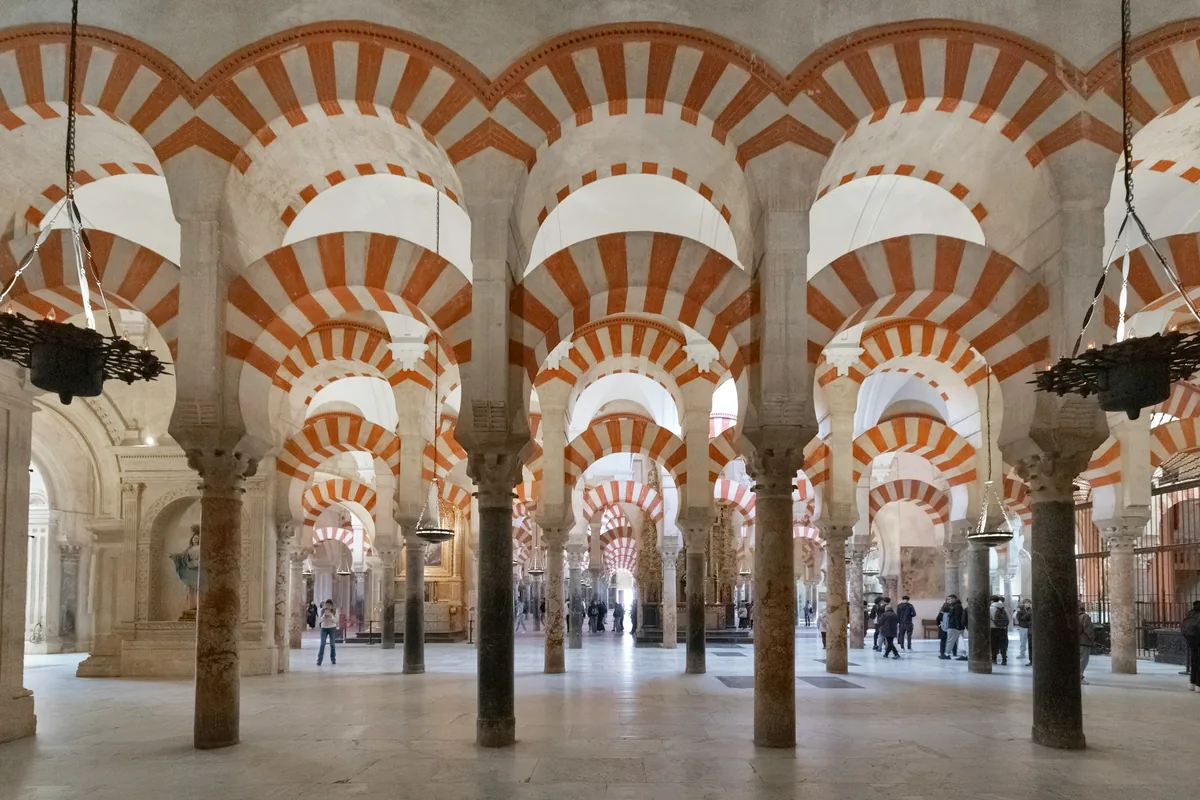
Córdoba is the most rewarding big day trip from Granada, and the reason is the Mezquita-Catedral, a vast mosque with a cathedral built inside it. The forest of red-and-white arches is one of the best-known interiors in Spain, and the surrounding old town is a UNESCO World Heritage Site, listed as the Historic Centre of Córdoba.
After the Mezquita, walk through the Jewish quarter, where whitewashed lanes open onto small squares and flower-filled patios. The Roman Bridge and the Calahorra tower give you the classic view back over the river, and the Alcázar de los Reyes Cristianos has gardens that are pleasant on a warm afternoon. Córdoba is also a good place for a long lunch, with local dishes such as salmorejo, a thick cold tomato soup, and flamenquín, a rolled pork and ham dish that is fried until crisp.
Trains and buses both run between the cities, and sources give journey times from roughly one and a half hours to under three hours depending on the service. The train is usually quicker, but fewer services run, so look at the timetable before you commit to a return. The sights are compact and easy to cover on foot, which makes this one of the easiest day trips to pace.
Book the Mezquita through its official site at mezquita-catedraldecordoba.es, because entry rules, visiting slots and ticket types change, and resellers often charge more.
- How to get there: Renfe train or Alsa bus from Granada, with the train usually faster.
- How long to spend: A full day, with at least two hours at the Mezquita and old town.
- Best time to go: Spring and autumn. Summers here are very hot.
- Tip: Check the official site for current visiting arrangements before you go, and book ahead in busy seasons.
2. Málaga
Málaga makes an easy city-and-sea day trip from Granada, with a Moorish fortress, Picasso’s birthplace and a working harbour all within walking distance of each other. Direct buses are frequent and take roughly an hour and a half, so you can leave after breakfast and still have a full day.
Start at the Alcazaba, an 11th century palace-fortress that climbs the hill above the old town. A path leads on to the Gibralfaro castle for wide views over the port, although the walk is steep. Back in the centre, the cathedral and the narrow streets around Calle Larios are good for wandering, and the Museo Picasso Málaga shows work by the city’s most famous son. The Roman theatre sits at the foot of the Alcazaba and is easy to see on the way in.
Málaga is also a good lunch stop. Seafood grilled over open fires is a local speciality, and the espeto de sardinas, sardines grilled on a skewer, is the classic beach order. If you want sea air, the promenade at the port and the city beaches are a short walk or bus ride from the centre.
Allow time to walk from the bus or train station to the old town, and look at where your coach arrives before you book. If you plan to climb to Gibralfaro, go earlier in the day while it is cooler. If the coast tempts you to stay longer, our guide to the best things to do in Marbella covers the Costa del Sol resort just west of Málaga.
- How to get there: Alsa coach from Granada bus station, roughly 1.5 hours each way.
- How long to spend: A full day, or half a day if you are mainly here for the Alcazaba and old town.
- Best time to go: Spring and autumn for walking, or summer if you plan to swim.
- Tip: Check museum and monument opening days before you go, as some close on Mondays.
3. Las Alpujarras
The Alpujarras are a string of whitewashed villages on the southern slopes of the Sierra Nevada, and they are the best day trip from Granada if you want mountains and quiet streets rather than monuments. The three best-known villages in the Poqueira gorge, Pampaneira, Bubión and Capileira, sit close together and are easy to link on foot.
Pampaneira is the gentlest introduction, with flat-roofed houses, local weaving and cured ham shops along its main street. Bubión is smaller and quieter, and Capileira, the highest of the three, has the best views and is a starting point for walks into the Poqueira valley. The architecture here, stacked white houses with flat stone roofs and tall chimneys, is unusual in Spain and echoes the area’s Berber-influenced past.
Public transport is the main challenge. Only two or three Alsa buses a day usually run from Granada to the Poqueira villages, with a journey of roughly two to two and a half hours, and schedules change often. Lanjarón and Órgiva, on the same road, are served more often. Because return buses can be early, a day trip by bus needs careful planning, and many visitors prefer to drive or join a small-group tour.
If you drive, take it slowly: the mountain roads are narrow and winding. Bring layers, because it is cooler at altitude than in Granada, and comfortable shoes for the steep lanes.
- How to get there: Alsa coach to the villages, or drive via Lanjarón and Órgiva.
- How long to spend: A full day, with time to stroll all three villages and have lunch.
- Best time to go: Spring and autumn. Winter can bring snow at the top of the valley.
- Tip: Check the return bus time on Alsa’s website before you set out, as services are limited and the last bus back can be early.
4. Guadix

Guadix is the best day trip from Granada for something you will not see in most of Europe: a neighbourhood of people living in houses dug into the hillside. The Barrio de las Cuevas is a cave district just south of the centre, and thousands of dwellings are carved into the soft clay, with white chimneys poking out of the slopes.
You can visit a cave house museum to see how families lived, with cool rooms, thick walls and furnished interiors. The Centro de Interpretación Cuevas de Guadix is one of the places that explains how the caves work, and walking up to a viewpoint above the quarter gives the best sense of its scale. Check the opening days of any cave museum before you go, as hours change by season.
Guadix also has a handsome old town, a cathedral with a mix of Gothic, Renaissance and Baroque styles, and a medieval Alcazaba fortress. It is a smaller, calmer place than Córdoba or Málaga, so it works well if you want a slower day.
Both trains and buses connect Granada and Guadix, with journey times reported as under an hour and a half. A car is helpful for reaching the viewpoints, but you should not drive into the cave district itself, as the lanes are narrow and hard to turn around in.
- How to get there: Renfe train or Alsa bus from Granada, or under an hour by car.
- How long to spend: Half a day to a full day.
- Best time to go: Spring and autumn. The caves stay cool in summer.
- Tip: Leave the car outside the cave district and walk in.
5. Nerja
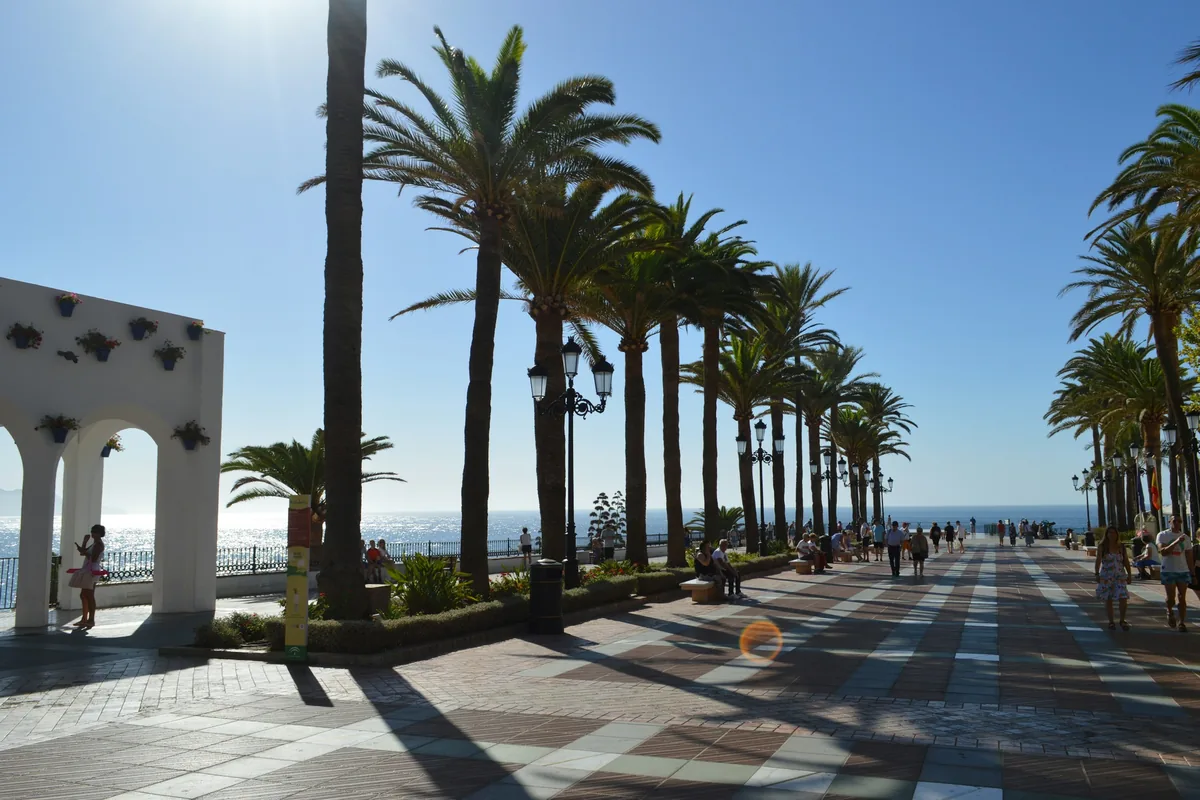
Nerja is the most popular coastal escape from Granada, with a pretty clifftop promenade, small beaches and one of Spain’s best-known show caves nearby. The Balcón de Europa, a palm-lined viewpoint over the sea, is the town’s centrepiece and a natural place to start.
The Cueva de Nerja, a short drive from town, is a huge cave system with large chambers and dramatic rock formations. Check its official website for current opening times and ticket options before you plan your day, as these change. Nerja’s old streets, small shops and tapas bars sit behind the promenade, and several small coves reached by steps below the viewpoint are good for a swim.
If you have a car, you can pair Nerja with Frigiliana, a hillside village a short drive inland that is often named among Spain’s prettiest white towns. Its tangle of steep lanes, tiled plaques and flower pots rewards a slow walk, but the climb is real, so wear sturdy shoes.
By public transport, Alsa runs direct buses from Granada that usually take around two hours, but there are only a handful a day, so check the timetable and the last return before you go. Frigiliana and the cave are easier with a car. By car it is roughly an hour and a half.
- How to get there: Direct Alsa coach, around two hours, or drive, roughly 1.5 hours.
- How long to spend: A full day, timed around the bus if you are not driving.
- Best time to go: Late spring and early autumn for warm water and fewer crowds.
- Tip: Check the Cueva de Nerja website for current opening arrangements before you go.
6. Salobreña
Salobreña is a whitewashed hill town crowned by a Moorish castle, and it is the quickest way from Granada to the Mediterranean. Frequent direct buses make the trip in roughly an hour, so you can be on the coast before mid-morning.
The old town climbs a rocky outcrop above the sugar cane fields and sea, with narrow lanes, small squares and steps that lead up to the castle. The views from the castle walls take in the coastline and the Sierra Nevada behind, and it is one of the best viewpoints on this stretch of coast. The climb is steep, so go earlier in the day and carry water.
Below the town, a pebbly beach with a promenade and seafood restaurants gives you somewhere to cool off after sightseeing. Playa de la Guardia is quieter than the town beach if you prefer more space. The wider Costa Tropical, as this part of the coast is known, has a mild climate and grows subtropical fruit such as custard apples and avocados.
If you have extra time, you can add Almuñécar, a slightly larger resort town along the coast with a castle, a Roman aqueduct and a long seafront. It is a little farther by bus, so it suits a full day better than a short visit.
- How to get there: Alsa coach from Granada bus station, roughly an hour each way.
- How long to spend: Half a day to a full day.
- Best time to go: Spring through autumn. Summer weekends are busy.
- Tip: Climb to the castle early, then have lunch by the beach.
7. Úbeda and Baeza
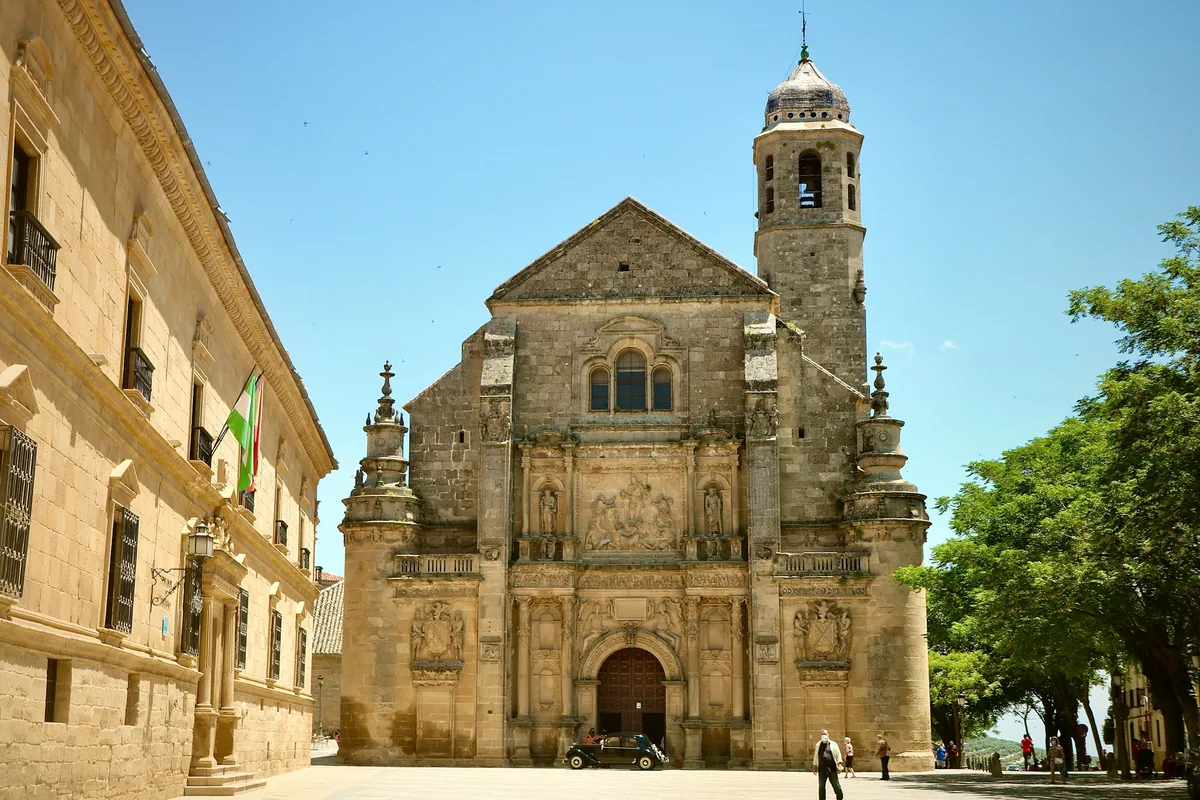
Úbeda and Baeza are two small Renaissance towns in Jaén province, and together they are the best day trip from Granada for architecture lovers. Both were inscribed on the UNESCO World Heritage List in 2003 as the Renaissance Monumental Ensembles of Úbeda and Baeza, and their golden stone palaces and churches feel a world away from the Moorish streets of Granada.
In Úbeda, head for Plaza Vázquez de Molina, where the Sacra Capilla del Salvador, the town hall and a grand palace form one of the finest Renaissance squares in Spain. Baeza, a short ride away, is smaller and quieter, with a cathedral, a lovely main square and the Palacio de Jabalquinto, known for its ornate facade. Both towns are surrounded by olive groves, and olive oil is an important local product, so look out for tastings and shops.
Public buses link Granada with Úbeda, and sources give a journey of roughly two hours. Regional buses connect Úbeda and Baeza, but the timings are not frequent enough to guarantee a relaxed schedule, so check before you go. Many visitors book a guided day tour that covers both towns, and it is a sensible option if you want to see both in one day.
This is a quieter, less touristy trip than Córdoba or Málaga, so it suits travellers who prefer low-key sightseeing. The towns are compact, and comfortable shoes are enough.
- How to get there: Alsa coach from Granada, then a local bus between the two towns, or a guided tour.
- How long to spend: A full day to see both towns without rushing.
- Best time to go: Spring and autumn. Summer is very hot inland.
- Tip: Check return times before you leave Granada, and plan lunch in Úbeda.
8. Ronda
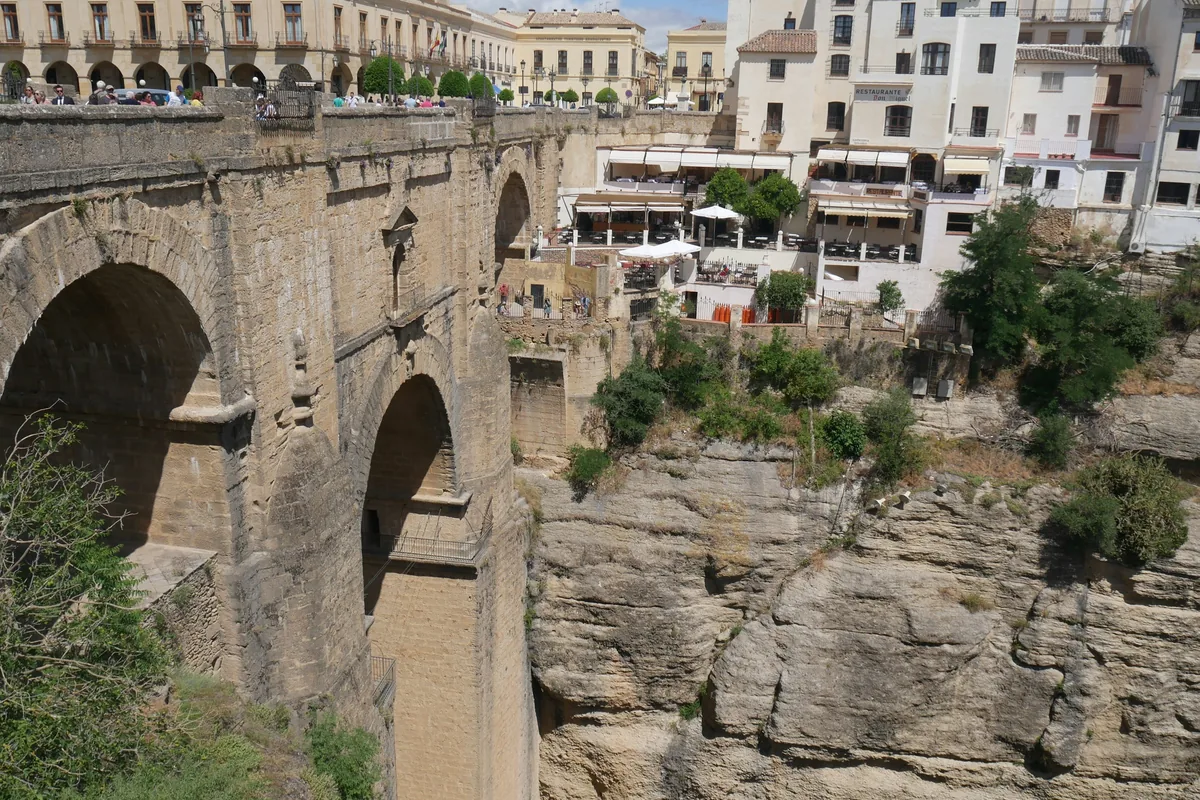
Ronda is one of the most dramatic towns in Andalucia, built on either side of a deep gorge and joined by the Puente Nuevo, a tall stone bridge. It is a stunning place but also the longest and least convenient day trip on this list from Granada.
The bridge and the views down the El Tajo gorge are the main sights, and you can see them from several viewpoints and gardens in the old town. The Plaza de Toros, one of Spain’s oldest bullrings, is also a draw for its architecture and museum, whatever your view on bullfighting. Wander the old Moorish quarter, the Arab Baths and the lanes around the Plaza Duquesa de Parcent to get a feel for the old town.
Transport is the problem. There is no straightforward direct coach: bus journeys from Granada usually need at least one change and take far longer than driving. There is no direct train either, and rail journeys involve a change, so check Renfe for the current connection. For that reason, many visitors prefer to drive, which takes roughly two and a half hours each way, or to stay overnight in Ronda instead of making it a day trip.
If you do go for the day without a car, start early, check the full journey and the last return on Alsa’s and Renfe’s websites, and consider a guided tour instead.
- How to get there: Drive, or bus or train with at least one change.
- How long to spend: A long full day, or better, an overnight stay.
- Best time to go: Spring and autumn.
- Tip: Confirm the return time before you leave, since missing the last service can strand you.
9. Sierra Nevada
Sierra Nevada is the closest escape from Granada, with high mountain scenery less than an hour from the city. In winter it is Spain’s southernmost ski area, and in the warmer months it is a base for walking, with trails among the highest peaks on the Spanish mainland.
The ski station at Pradollano is reached by road from Granada, and the official Sierra Nevada resort website (sierranevada.es) has a “how to get there” page for bus and car. The bus, run by Autocares Tocina from Granada bus station, is more frequent in the ski season. Outside it, there is usually a single daily round trip, morning up and late afternoon back, so plan your return carefully and check the current timetable before you go.
In winter, skiing and snowboarding are the draw, and the resort has equipment hire for beginners. In summer, higher routes lead to peaks such as Veleta and Mulhacén, but these are serious mountain walks that need good preparation, the right clothes and a check on conditions. Do not attempt the high peaks on a casual day out if you are not an experienced walker.
For an easier day, the lower slopes around the resort and nearby valleys offer gentler walks. The mountains can be much colder and windier than Granada, so bring layers and sun protection even in summer.
- How to get there: Bus to Pradollano, or drive, roughly 45 minutes to an hour.
- How long to spend: A full day for skiing or a good walk.
- Best time to go: Winter for snow, late spring to early autumn for walking.
- Tip: Check the weather and bus times before you set out, as conditions change quickly.
10. Antequera
Antequera is a small town at the crossroads of Andalucia, known for its prehistoric dolmens and a hilltop Moorish fortress. The Antequera Dolmens Site is a UNESCO World Heritage Site inscribed in 2016, and the main monuments are the Menga and Viera dolmens and the Tholos of El Romeral, with El Torcal and La Peña de los Enamorados as natural landmarks. See the UNESCO listing for details.
Menga is the star: a huge megalithic burial chamber, thousands of years old, built from enormous stones. It is a surprising place to find in the middle of Andalucia, and visits are best planned using the official site arrangements, so check before you go. In town, the Alcazaba, the churches and the old quarter are worth a wander, and the local bread and pastries are popular.
El Torcal, a limestone landscape of strange rock towers, is nearby, but it is harder to reach without a car. If you have a vehicle, it makes a good half-day add-on, with marked walking routes.
Antequera is a rail junction, so trains and buses reach it from several directions. Check Renfe or Alsa for the best Granada service, as times vary. It is a good choice for a lower-key day, and because it is only a short hop from Málaga by train, you can also combine the two on a longer trip.
- How to get there: Renfe train or Alsa bus, or about an hour by car.
- How long to spend: Half a day, or a full day with El Torcal.
- Best time to go: Spring and autumn.
- Tip: Check the dolmens’ visiting arrangements on the official site, and bring a layer for El Torcal.
How to pick the right day trip from Granada
Choose by interest first. For history, pick Córdoba, Úbeda and Baeza or Antequera. For the coast, pick Salobreña or Málaga, with Nerja if you have a car. For landscapes and quiet villages, pick the Alpujarras, Guadix or Sierra Nevada.
Then think about transport. Salobreña, Málaga, Córdoba and Guadix are the easiest by public transport. The Alpujarras, Nerja, Ronda and El Torcal are far easier by car. If you do not drive, consider a small-group tour for those places, which handles the logistics. Be honest about time: a day trip with five hours of travel leaves little time on the ground.
If your trip also takes in central or eastern Spain, the same approach works for our day trips from Madrid to Toledo, Segovia and Salamanca and our easy escapes from Valencia, from the Albufera lagoon to Cuenca.
Suggested plans for 1, 2 or 3 days
One day: Take the bus to Córdoba and spend the day at the Mezquita and old town, or head to Málaga for a mix of sights and sea.
Two days: Add a coastal day to Salobreña and a rural day to Guadix. Both are short rides and leave you energy for Granada in the evening.
Three days: Mix a historic day in Córdoba or Úbeda and Baeza, a mountain day in the Alpujarras or Sierra Nevada, and a coast day in Nerja or Salobreña. Rest on a Granada day in between, as the Alhambra and the old town deserve their own time.
Getting around
Granada’s bus station is outside the centre, so allow extra time to reach it by city bus or taxi. Alsa runs most long-distance coaches, and Renfe runs the trains, which are useful for Córdoba, Guadix and Antequera. Buy tickets online when you can and check the return time before you set out.
A rental car makes the Alpujarras, Nerja, Frigiliana and El Torcal much easier, but parking in old towns is difficult. Roads in the mountains are narrow, so drive carefully. Small-group tours are a good option for places with limited public transport.
Where to stay in Granada for day trips
The area around the bus station and the Camino de Ronda is practical for early departures. The city centre, near Gran Vía and the cathedral, puts you close to restaurants and the old town. The Albaicín, the old Moorish quarter, is beautiful but hilly and awkward with luggage. If you want to be near trains, look for places close to the railway station in the Ronda area.
Budget guidance
Shoestring: Use public buses, pack a picnic, and choose trips with free sights such as walking in Salobreña or the Alpujarras.
Mid-range: Combine bus travel with a paid sight such as the Mezquita or the Cueva de Nerja, and have a sit-down lunch.
Comfortable: Join a small-group tour or hire a car for the Alpujarras, Nerja and Ronda, and book a guided visit in Córdoba.
Frequently Asked Questions
What is the best day trip from Granada?
Córdoba is the best all-round day trip from Granada, thanks to the Mezquita and its historic old town. For something more rural, try Guadix or the Alpujarras.
Can you do day trips from Granada without a car?
Yes. Córdoba, Málaga, Salobreña, Guadix and Antequera are all reachable by bus or train. The Alpujarras, Nerja and Ronda are more difficult without a car, so consider a tour.
What is the closest day trip to Granada?
Sierra Nevada is the closest, with the ski resort of Pradollano less than an hour away. Guadix and Salobreña are also within roughly an hour or so.
Can you visit the coast from Granada in a day?
Yes. Salobreña is roughly an hour by direct bus, and Almuñécar is a little farther. Málaga and Nerja also work as day trips, though buses to Nerja are less frequent.
Is Córdoba worth visiting as a day trip from Granada?
Yes, as long as you start early. The Mezquita and the old town can be covered in a day, though a longer stay lets you enjoy it at a slower pace.
How many days do you need around Granada?
Three to five days gives you time for the Alhambra and old town plus two or three day trips. Add more if you want to explore the Alpujarras or the coast.
Discover More of Spain
Spain rewards travellers who build a trip around its food as well as its sights. Take a look at the best places to eat in Seville for more of Andalucia, or head north to the best pintxos in San Sebastian.