Last updated: November 2026
The best hidden gems in Paris are not secrets so much as places most visitors walk straight past on the way to the Eiffel Tower and the Louvre: a glass-roofed arcade, a Roman arena in the Latin Quarter, small museums in old mansions and a railway viaduct turned into a garden walk. Several cost nothing to enter, and almost all of them are calm even in summer.
For a first look, start with Galerie Vivienne and the covered passages, then add the Arènes de Lutèce and the Musée de la Vie Romantique. This guide covers ten places, how to reach each one by metro, how long to allow and what to pair them with nearby. It also includes a free printable 3-day itinerary that groups the places by area, so each day needs only short walks and a metro ride or two.
For general planning, the Paris tourist office lists current openings and events. Hours, closing days and ticket rules change, and small museums often close on Mondays, so check before you go. Anything this guide could not confirm is marked “check before you go”. If you are also thinking about leaving the city, see our guide to the best day trips from Paris.
Quick answer: What are the best hidden gems in Paris? Galerie Vivienne is the prettiest of the covered passages, the Arènes de Lutèce is the most surprising piece of Roman Paris and the Musée de la Vie Romantique is the most charming small museum. For a long, green walk away from the crowds, take the Coulée verte René-Dumont from Bastille eastwards.
Free printable itinerary
Planning a trip? Download our 3-Day Paris Hidden Gems Itinerary as a PDF: the day-by-day plan plus all 10 places with directions and map links. Print it or keep it on your phone.
Quick list: best hidden gems in Paris
| Gem | Area | Best for | Cost |
|---|---|---|---|
| Galerie Vivienne and the covered passages | 2nd and 9th | A rainy-day wander | Free |
| Musée de la Vie Romantique | 9th | A small museum with a garden | Free permanent collection |
| Coulée verte René-Dumont | 12th | A raised garden walk | Free |
| Arènes de Lutèce | 5th | Roman history in a quiet corner | Free |
| Musée de la Chasse et de la Nature | Marais | A curiosity cabinet in two mansions | Ticketed |
| Butte-aux-Cailles | 13th | A village feel and street art | Free |
| Grande Mosquée de Paris | 5th | Gardens, architecture and mint tea | Small fee |
| Musée Cognacq-Jay | Marais | 18th-century art in a mansion | Free permanent collection |
| Jardin des Serres d’Auteuil | 16th | Greenhouses and a botanical garden | Free |
| Musée Zadkine | 6th | Sculpture in a hidden garden | Free permanent collection |
1. Galerie Vivienne and the Covered Passages
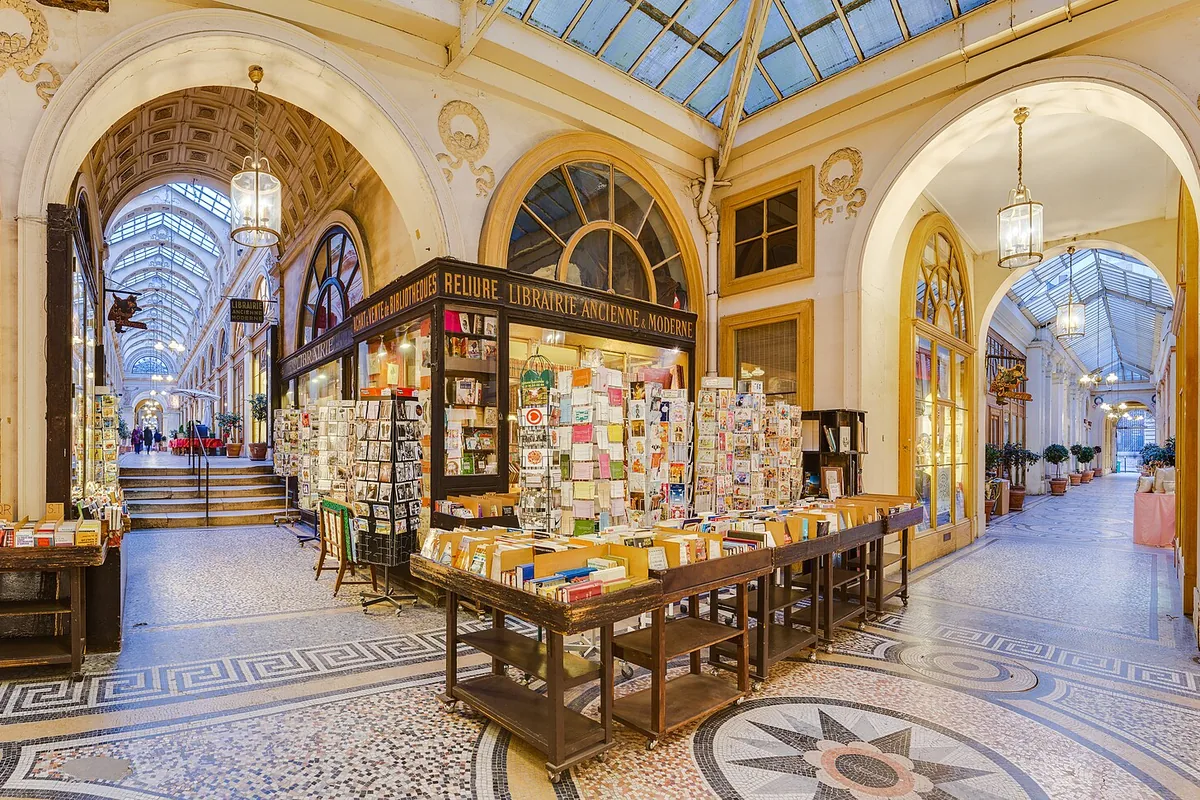
Galerie Vivienne is the most elegant of the covered passages that run like secret shortcuts between the streets of the 2nd and 9th arrondissements. Its mosaic floor and glass roof date from the early 19th century, and it is usually described as the chicest of the arcades, with a bookshop, tea room and small boutiques under the skylights. The entrances are on rue Vivienne and rue des Petits-Champs, close to the Palais-Royal.
The passages were the shopping centres of their day, built so that people could browse out of the rain and the mud of the streets. About a ten-minute walk away, across Boulevard Montmartre, are two more that make an easy trail. Passage des Panoramas is one of the oldest of the arcades, dating from around 1800, and was among the first public places in Paris lit by gas, while Passage Jouffroy is known for its metal and glass structure and for toy and collectable shops.
The mood changes between them. Galerie Vivienne is calm and polished, Panoramas has a busy mix of small restaurants and old stamp and postcard dealers, and Jouffroy sits somewhere in between. Walking all three takes under an hour at a leisurely pace, longer if you stop for coffee or browse.
Because the passages are public thoroughfares, there is nothing to book and no ticket to buy. Opening hours differ by passage and some close in the evening, so check before you go. The city’s own guide to the galleries and covered passages of Paris is a good starting point.
- How to get there: Metro to Bourse for Galerie Vivienne, or Grands Boulevards for Panoramas and Jouffroy.
- How long to spend: One to two hours for all three passages.
- Best time to go: A weekday morning or a wet afternoon, when the arcades are quiet.
- Tip: Start at Galerie Vivienne and walk north, finishing at Passage Jouffroy.
2. Musée de la Vie Romantique
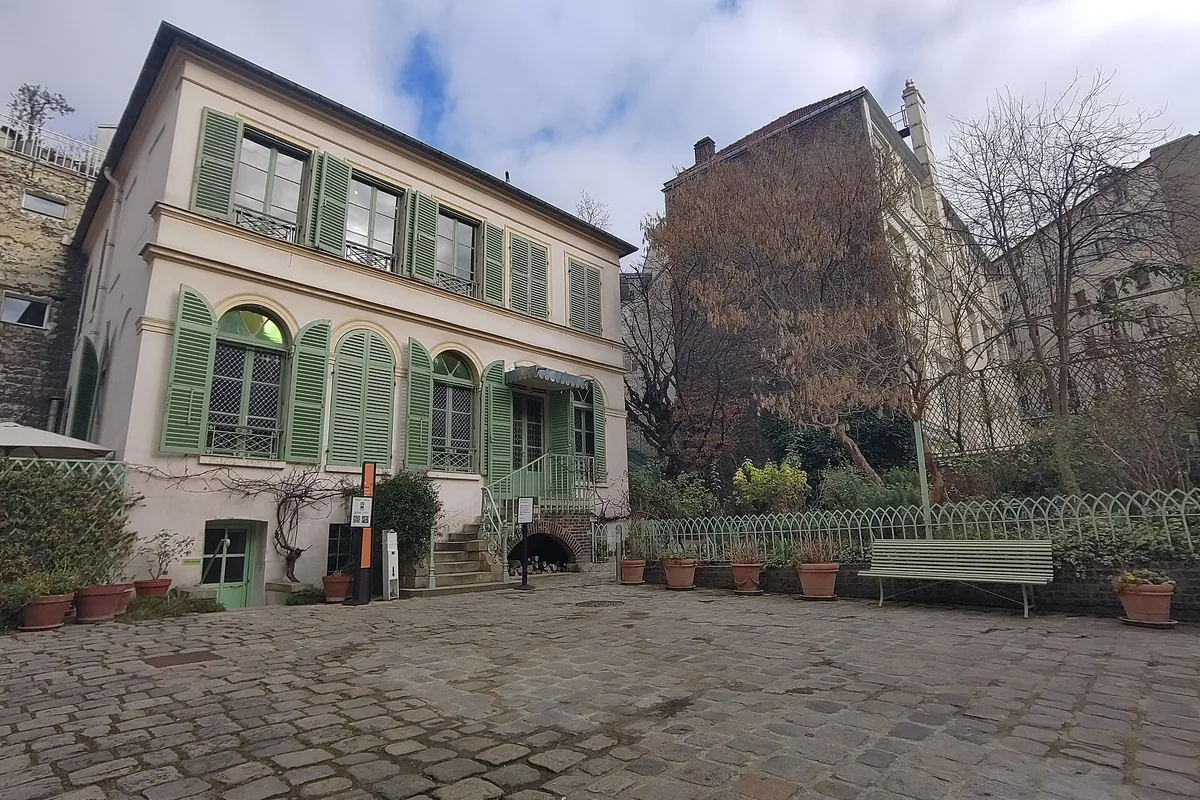
The Musée de la Vie Romantique is a small, calm museum in a Montmartre-side townhouse where the permanent collection is free. It sits in the 9th arrondissement in a house and garden linked to the painter Ary Scheffer, whose circle once included writers and musicians of the Romantic era, among them George Sand. The collection focuses on that period, with paintings, portraits, furniture and personal objects.
The museum reopened in February 2026 after a long renovation, and its garden and tea room are a big part of the appeal. The tea room is run by Rose Bakery and is popular in good weather, which makes it one of the nicest places in this part of Paris for a pause. The garden itself is a pleasure in spring and summer.
The permanent collection is free, while temporary exhibitions are ticketed. That makes it an ideal short visit: an hour for the rooms, then tea in the garden. It is also close to the cafes and independent shops of the area south of Pigalle, which makes it easy to combine with a stroll.
The City of Paris page for the museum is the best place to check current hours, which differ for the museum and the tea room. The City of Paris lists the museum as open Tuesday to Sunday and closed on Mondays, and visits may need a timed slot booked online, so check before you go. The page gives no separate hours for the tea room.
- How to get there: Metro to Blanche or Pigalle, then a short walk.
- How long to spend: One hour for the museum, plus time for tea.
- Best time to go: A weekday, or any day the weather suits the garden.
- Tip: Plan the visit around the tea room, and check its hours separately from the museum.
3. Coulée verte René-Dumont
The Coulée verte René-Dumont is a raised garden walk built on an old railway viaduct, and it is the best way to see the 12th arrondissement on foot. Formerly known as the Promenade Plantée, it runs from near Bastille eastwards towards the Bois de Vincennes, around 4.5 km in all, with planted beds, trellises and benches on top of the old line and views into courtyards and streets as you go.
Underneath the first section is the Viaduc des Arts, a row of arches that now houses craft workshops and design studios. The walk passes through the Jardin de Reuilly, where you can step down into a lawned park, and continues over streets and through cuttings. It is the Paris cousin of New York’s High Line, and it is older, quieter and much less crowded.
Most visitors walk only the first part, from Bastille to Jardin de Reuilly, which takes under an hour with stops. The metro station Daumesnil sits near the middle if you want to join or leave halfway, and Gare de Lyon is a short walk from the route. There is no entry cost.
A caution on access: the walk is reached by stairs in several places, and there are lifts at a few points, but the City of Paris page lists some of them as out of service at times, so step-free access is limited. The walk also has seasonal opening hours and closes in the evening. Check the City of Paris page on the Coulée verte for current lift status and hours before you go.
- How to get there: Metro to Bastille for the start, or Daumesnil for the middle.
- How long to spend: One to two hours for the first half, more for the whole route.
- Best time to go: A dry morning or late afternoon, when the light is soft and the path is quiet.
- Tip: Walk west to east so you finish in the quieter, greener section.
4. Arènes de Lutèce
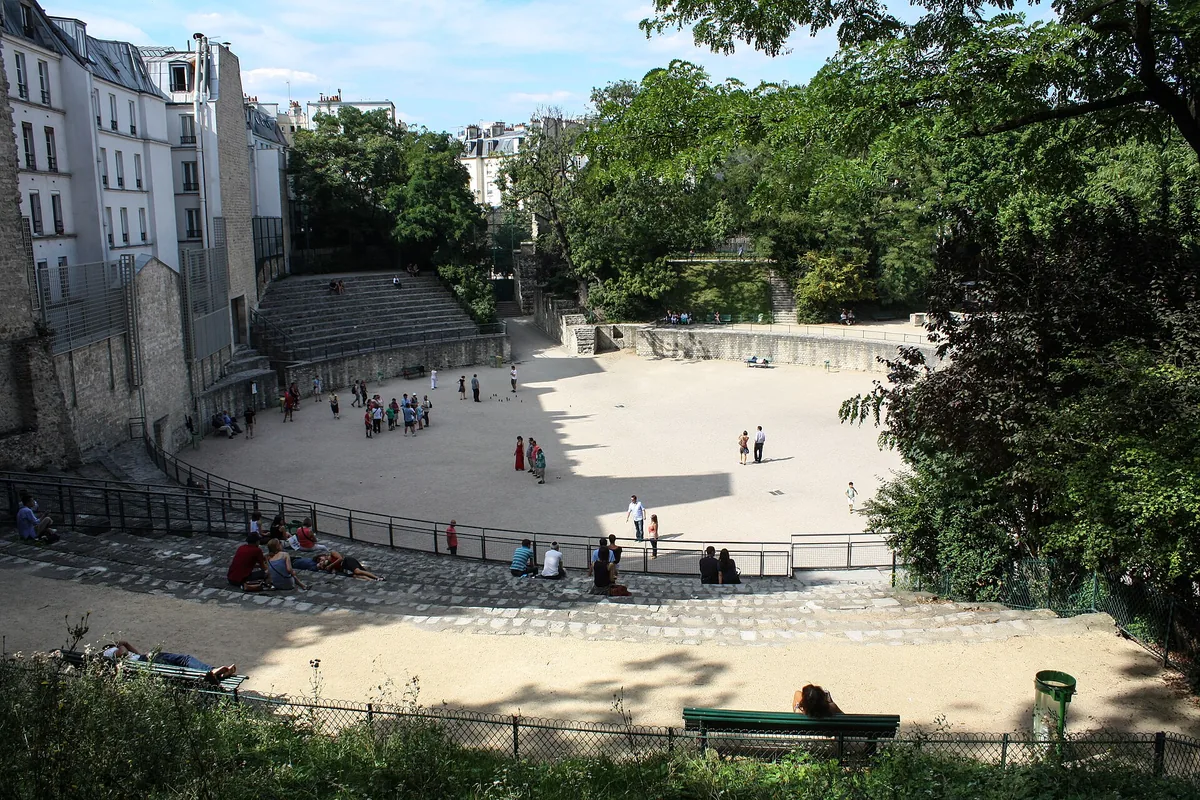
The Arènes de Lutèce is one of only two visible remains of Roman Paris, alongside the Cluny baths, and almost nobody includes it on a first trip. It is a Gallo-Roman amphitheatre in the 5th arrondissement, once able to seat around 15,000 spectators for shows and gladiator contests, and it is tucked behind ordinary apartment buildings between rue Monge and the Jardin des Plantes.
Today it works as a neighbourhood park. Locals play football and boules in the arena, children run on the terraces and people read on the stone tiers, which gives the place a lived-in feel that more famous monuments lack. The stone steps are rough and uneven, so wear sensible shoes.
Entry is free and there is nothing to book. There are several ways in, including from rue Monge and through the Square Capitan on rue des Arènes, so follow the signs once you reach the area. Opening hours change with the season, and the City of Paris lists later closing in summer than in winter, so check before you go.
The arena is a good first stop for a day in the Latin Quarter. From here the Jardin des Plantes, the Grande Mosquée de Paris and the Musée de Cluny, with its Roman baths, are all within walking distance, which makes it easy to build a themed route about ancient and medieval Paris. The Paris tourist office page has current details.
- How to get there: Metro to Cardinal Lemoine, Jussieu or Cuvier – Jardin des Plantes, then a short walk.
- How long to spend: Half an hour to an hour.
- Best time to go: A mild morning, before the benches fill up.
- Tip: Sit near the top of the tiers for the best view of the arena and the stage.
5. Musée de la Chasse et de la Nature
The Musée de la Chasse et de la Nature is one of the most unusual museums in Paris, and it is far more about art and animals than about hunting. It occupies two historic mansions on rue des Archives in the Marais: the Hôtel de Guénégaud, one of the finest 17th-century private houses in the city, and the 18th-century Hôtel de Mongelas. The rooms are furnished like a collector’s home, with antique weapons sitting beside paintings, tapestries and contemporary works.
The museum explores the relationship between people and animals through art, history and science. Reviewers often describe it as a cabinet of curiosities, with stuffed animals, trophies, old paintings and modern installations set out in unexpected ways. It also stages temporary exhibitions that bring in contemporary artists, so what you see can change from visit to visit.
It is a private museum and is ticketed, unlike some of the free places in this guide. It is usually open Tuesday to Sunday and closed on Mondays and public holidays, but check the official site before you go. The Paris tourist office page gives the address and an overview.
The museum is a good choice if you want something distinctive for a rainy afternoon, and it is easy to combine with the Marais. The Musée Cognacq-Jay, also in this guide, is a short walk away, so the two make a neat pair.
- How to get there: Metro to Rambuteau or Arts et Métiers, then a short walk.
- How long to spend: One to two hours.
- Best time to go: A weekday afternoon, when the rooms are quiet.
- Tip: Look at the ceilings and fireplaces as well as the displays, since the mansions are part of the show.
6. Butte-aux-Cailles
The Butte-aux-Cailles is a small hilltop neighbourhood in the 13th arrondissement that still feels like a village. Cobbled lanes, low houses with gardens and neighbourhood bars give it a very different mood from the grand boulevards, and it is often nicknamed a mini Montmartre without the crowds.
Street art is a big part of the appeal. The 13th arrondissement has a long tradition of murals, and the Butte-aux-Cailles has many on its walls, from animals to large pieces by local artists. Walking tours exist, but you can also simply wander with a map and see what turns up around each corner. Much of the information online comes from companies selling tours, so treat claims about specific artworks with caution and enjoy the walk for its own sake.
The area is at its best in the evening, when the bars and small restaurants on the main streets fill with locals. It is relaxed rather than polished, and prices tend to be lower than in the central tourist districts. Daytime is quieter, and good for photographs of the cobbles and murals.
The Paris tourist office page on the Butte-aux-Cailles gives an overview of the area. Because there is no single ticketed sight, plan the visit as a walk of an hour or two, with a drink or a meal as the main stop.
- How to get there: Metro to Place d’Italie or Corvisart, then walk uphill.
- How long to spend: Two hours, or an evening if you eat there.
- Best time to go: Late afternoon into the evening.
- Tip: Follow the side streets rather than the main road to find the murals and the quietest lanes.
7. Grande Mosquée de Paris
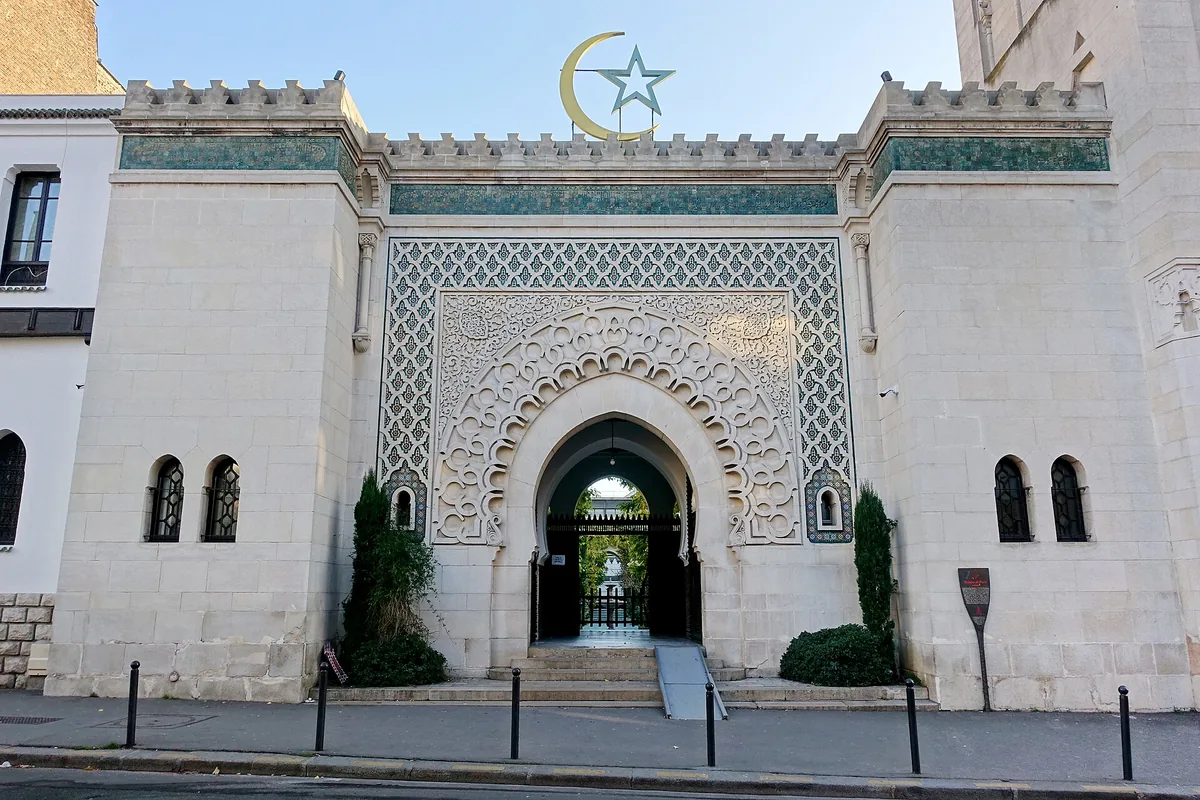
The Grande Mosquée de Paris is one of the calmest and most photogenic places in the Latin Quarter, and many visitors do not realise they can go in. It sits in the 5th arrondissement near the Jardin des Plantes and is known for its Moorish-style courtyards, tilework, fountains and Andalusian garden. The setting feels closer to Marrakech than central Paris.
Visitors can usually walk through the gardens and courtyards, and guided visits are usually offered on the other days. A small entry fee, a few euros, usually applies to the visit, and it is closed to visitors on Fridays, so check before you go. The mosque is a working place of worship, so dress modestly, keep your voice low and expect parts of it to be closed at prayer times and on some Muslim holidays.
The tea room is the highlight for many people. It serves Moroccan mint tea and pastries in a shaded setting, and it is an easy place to rest after a morning in the Latin Quarter. There is also a restaurant and a hammam with separate women’s and men’s days, which are separate from the visitor route and have their own opening times and fees.
Plan about an hour for the gardens, longer with tea. The official Paris Region page on the mosque gardens gives an overview, and the mosque’s own website should be your source for hours and fees.
- How to get there: Metro to Place Monge or Censier-Daubenton, then a short walk.
- How long to spend: One to two hours, including tea.
- Best time to go: A weekday morning, when the courtyards are quiet.
- Tip: Check the visiting rules and prayer-time closures before you set out, and dress modestly.
8. Musée Cognacq-Jay
The Musée Cognacq-Jay is a tiny Marais museum of 18th-century art where the permanent collection is free. It is housed in the Hôtel de Donon, a Marais mansion at 8 rue Elzévir, and shows the collection of Ernest Cognacq, the founder of the Samaritaine department store, and his wife Marie-Louise Jaÿ. The rooms recreate the feel of a refined 18th-century home, with paintings, furniture, porcelain and decorative objects.
What makes it a hidden gem is the scale. It is intimate rather than overwhelming, so you can see everything in an hour, and the carved panelling and room settings are as interesting as the paintings. It suits anyone who likes the idea of a museum visit but finds the large national museums tiring.
It is open Tuesday to Sunday and closed on Mondays and some public holidays. The permanent collection is free, while temporary exhibitions are ticketed. The city’s page does not give step-free access details, so contact the museum first if this matters. See the City of Paris page for current details.
It sits in the middle of the Marais, so it pairs well with the Musée de la Chasse et de la Nature, the Place des Vosges and the cafes and shops of the area. A short museum visit followed by lunch in the neighbourhood makes an easy half day.
- How to get there: Metro to Saint-Paul or Chemin Vert, then a short walk.
- How long to spend: About one hour.
- Best time to go: A weekday morning or early afternoon.
- Tip: Pair it with the Musée de la Chasse et de la Nature for a two-museum Marais morning.
9. Jardin des Serres d’Auteuil
The Jardin des Serres d’Auteuil is a free botanical garden with historic glasshouses on the western edge of Paris, and it is one of the most peaceful places in the city. It sits at the Porte d’Auteuil, beside the Bois de Boulogne, in the 16th arrondissement. The greenhouses were designed and built in the late 1890s by the architect Jean-Camille Formigé and are listed as a historic monument.
The garden is built around several glasshouses holding tropical and subtropical plants grouped by region, with collections that include plants from South-East Asia, Australia, South America and Africa. The tall palm house and the rooms of orchids and exotic foliage make it a welcome place to warm up in winter. Outside there are lawns, ponds and shaded paths for a slow stroll.
Entry is free, and the garden is open all year. Hours change with the season and the glasshouses close a little earlier than the garden, so check the City of Paris page before you go. Two entrances close during the Roland-Garros tournament, though the others stay open.
The garden is away from the main sightseeing areas, so it works best as a half-day trip combined with the Bois de Boulogne or the nearby Roland-Garros stadium area. It is a good option for a wet day, when the heated greenhouses are much more welcoming than an open park.
- How to get there: Metro to Porte d’Auteuil (line 10), then a short walk.
- How long to spend: One to two hours.
- Best time to go: A cold or rainy day, or a quiet weekday morning.
- Tip: Bring a light layer, since the tropical houses are warm and humid.
10. Musée Zadkine
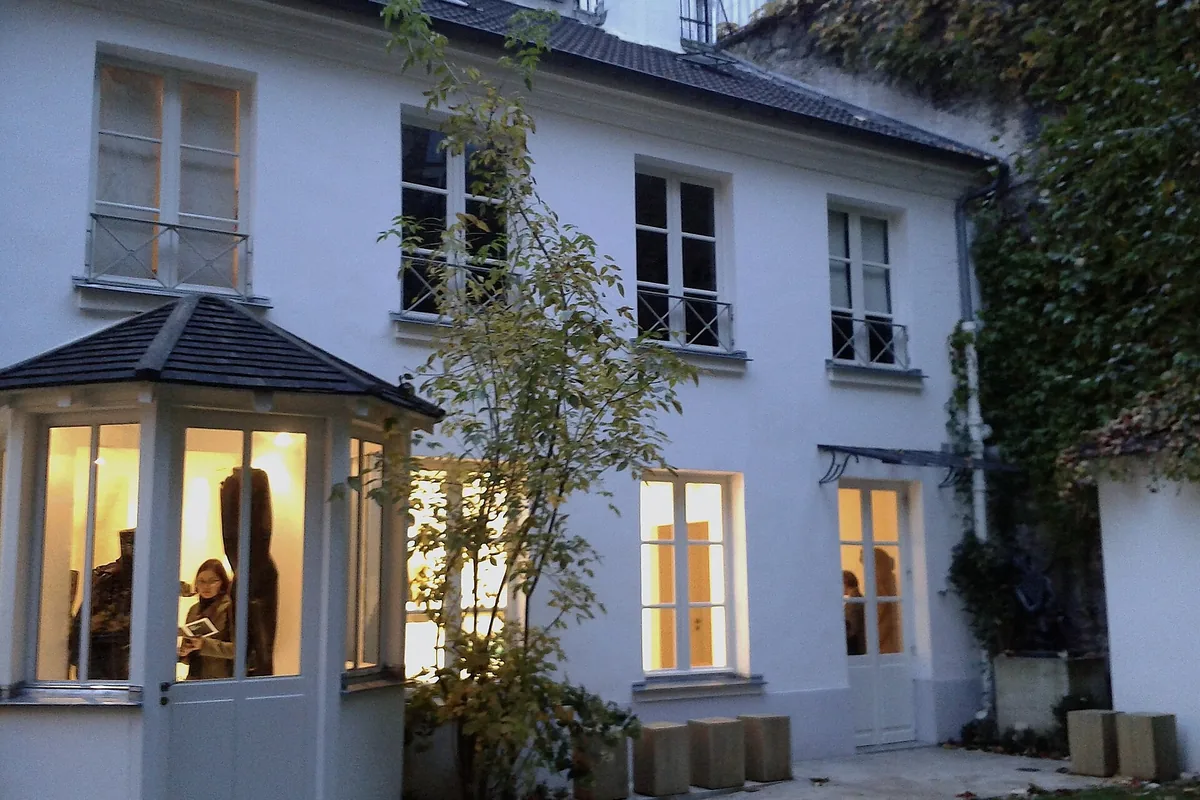
The Musée Zadkine is a studio museum and sculpture garden near the Jardin du Luxembourg, and it is free to see the permanent collection. It stands at 100 bis rue d’Assas in the 6th arrondissement and was the home and workshop of the sculptor Ossip Zadkine. The house and garden are quiet and informal, a world away from the crowds of nearby Saint-Germain.
Inside, the rooms show his sculptures, drawings and personal pieces, while the leafy garden holds larger works among the trees. It is the garden that most visitors remember, since it feels like a private courtyard hidden in the middle of the city. Guides often recommend it for photographs, and it is a good place to sit on a warm day.
The museum is open Tuesday to Sunday during the day and closed on Mondays and some public holidays, according to the City of Paris. Temporary exhibitions can carry a ticket, so check the official Paris Musées site before you go. The Paris tourist office page gives an overview.
The Zadkine museum is a few minutes from the Luxembourg Gardens, which makes it an easy pairing. See the sculpture and garden first, then continue to the park for a longer walk, or head towards Montparnasse. It is an excellent choice if you want art without queues.
- How to get there: Metro to Vavin or Notre-Dame-des-Champs, then a short walk, or RER B to Port-Royal.
- How long to spend: One hour.
- Best time to go: A sunny weekday, when the garden is at its best.
- Tip: Combine it with a walk through the Luxembourg Gardens.
How to pick the right hidden gems for your trip
Match the gem to the weather and the energy you have. On a rainy day, the covered passages, the Musée Cognacq-Jay and the greenhouses at Auteuil are the best choices. On a bright day, the Coulée verte, the Arènes de Lutèce and the Butte-aux-Cailles reward time outdoors.
If you have limited time, choose one cluster rather than crossing the city. The Marais pair of Cognacq-Jay and the Musée de la Chasse et de la Nature share a street area. The Latin Quarter offers the Arènes de Lutèce and the Grande Mosquée within a short walk. The 9th arrondissement combines the Musée de la Vie Romantique with the covered passages.
Several places on this list are small or privately run, so always check opening days. Monday closures are common in Paris museums, and a few places also close on public holidays. Anything you cannot verify online is worth a quick phone call or a look at the official site.
How Many Days Do You Need? A 3-Day Paris Hidden Gems Itinerary
Three days is enough to see all ten gems without rushing. The plan below groups them by area, so each day involves one or two short metro rides and plenty of walking.
Day 1: Passages, Romantic Paris and the Marais
Start in the morning at Galerie Vivienne, then walk on to Passage des Panoramas and Passage Jouffroy. Take the metro north to the Musée de la Vie Romantique for the museum and tea in its garden. In the late afternoon, head to the Marais for the Musée Cognacq-Jay if it is still open, and finish with dinner in the neighbourhood.
Day 2: Latin Quarter and the Left Bank
Begin at the Arènes de Lutèce, then walk to the Grande Mosquée de Paris for the gardens and mint tea. After lunch, cross to the 6th arrondissement for the Musée Zadkine and its garden, and continue into the Luxembourg Gardens for the evening. This day is mostly on foot, with one short metro ride if you want it.
Day 3: Green Paris and the Hilltop Village
Spend the morning on the Coulée verte René-Dumont, starting at Bastille and walking as far as the Jardin de Reuilly. In the afternoon, take the metro to the Butte-aux-Cailles for its lanes and street art, and stay for dinner. If you have time on another day, the Musée de la Chasse et de la Nature fits the Marais on Day 1, and the Jardin des Serres d’Auteuil suits a wet day.
Getting around Paris
The metro is the quickest way to reach almost everything in this guide, and walking fills the gaps. Most of the places here are within a short walk of a station, so a contactless ticket or a multi-day pass covers the trips. Check the RATP website for current fares and passes, and note that the metro can be crowded at rush hour.
Walking is the best way to link neighbouring gems, such as Cognacq-Jay and the Musée de la Chasse et de la Nature, or the Arènes de Lutèce and the Grande Mosquée. The Coulée verte is a walk in itself. For longer cross-city hops, a bus gives you a view of the streets, though it is slower than the metro.
Where to stay in Paris for hidden gems
The Marais is the most convenient base for this list, with museums, restaurants and good metro links close by. The Latin Quarter is a good alternative if you want the Arènes de Lutèce and the Grande Mosquée on your doorstep. The 9th arrondissement around Saint-Georges and Pigalle is a lively choice for the Musée de la Vie Romantique and the covered passages.
If you prefer a quieter base, the 12th arrondissement near Bastille puts you at the start of the Coulée verte, while the 13th arrondissement near the Butte-aux-Cailles is often better value. Check the location of your hotel against a metro map, since a few minutes from a station matters more than the district name.
Budget guidance
Hidden gems are among the cheapest ways to enjoy Paris. On a shoestring, you can fill days with the passages, the Coulée verte, the Arènes de Lutèce, the Butte-aux-Cailles, the Jardin des Serres d’Auteuil and the free permanent collections at the Musée de la Vie Romantique, Musée Cognacq-Jay and Musée Zadkine (temporary exhibitions are ticketed). A mid-range budget adds the ticketed Musée de la Chasse et de la Nature, a guided visit at the Grande Mosquée and tea or a meal at each stop. A comfortable budget can add a long lunch or dinner in the Marais or on the Butte-aux-Cailles each day.
Frequently Asked Questions
What are the best hidden gems in Paris?
Galerie Vivienne, the Arènes de Lutèce, the Musée de la Vie Romantique and the Coulée verte René-Dumont are among the best. They are all easy to reach by metro, and most can be seen in an hour or two.
Are there free hidden gems in Paris?
Yes. The covered passages, the Coulée verte, the Arènes de Lutèce, the Butte-aux-Cailles and the Jardin des Serres d’Auteuil are free. The permanent collections of the Musée de la Vie Romantique, Musée Cognacq-Jay and Musée Zadkine are free too, although temporary exhibitions are ticketed.
Which hidden gems in Paris are good in the rain?
The covered passages, the Musée Cognacq-Jay, the Musée de la Chasse et de la Nature and the greenhouses at Auteuil all work well in wet weather. The Musée de la Vie Romantique also has an indoor tea room.
Can visitors go inside the Grande Mosquée de Paris?
Yes, visitors can usually enter the gardens and courtyards and take a guided visit, and the tea room is open to the public. It is a working mosque, so dress modestly and check for closures on prayer times and Muslim holidays.
What is the best area of Paris for hidden gems?
The Marais and the Latin Quarter have the most within walking distance. The Marais has Cognacq-Jay and the Musée de la Chasse et de la Nature, and the Latin Quarter has the Arènes de Lutèce and the Grande Mosquée.
How many days do you need to see Paris hidden gems?
Three days is enough for all ten without rushing, and two days covers the best of them if you skip the Auteuil greenhouses and the Butte-aux-Cailles. Our free printable itinerary groups them by area.
Discover More of Paris
Once you have seen the hidden gems, turn to the food and drink side of the city. Our guides to the best wine bars in Paris, the best cocktail bars in Paris and the best foods to try in Paris pick up where this list leaves off.
Featured image: Photo by Chabe01, CC BY-SA 4.0, cropped, via Wikimedia Commons