Last updated: November 2026
Lisbon eats well without trying to impress. The city is built on custard tarts, salt cod cooked a dozen ways, pork sandwiches eaten standing at a counter and seafood served by the kilo. If you are wondering what to eat in Lisbon, start with a pastel de nata, order bacalhau à Brás in a proper tasca, eat a bifana at the counter and finish with a shot of ginjinha. Add grilled sardines in summer and a plate of clams in garlic, and you have covered the dishes locals actually eat.
This guide covers ten foods to try in Lisbon, with a named place or neighbourhood for most of them and a practical box for each. Further down you will find a short glossary, tips on ordering and booking, a free printable 3-day Lisbon food itinerary, where to stay, getting around and budget guidance. For general planning, the official Visit Lisboa website is a good starting point. If you want a restaurant list rather than a dish list, our guide to the best places to eat in Lisbon is the companion to this one.
Food scenes change quickly. Menus, opening days and booking rules move from year to year, so this guide avoids exact times and prices. Where sources disagreed or we could not confirm something, it says so. Check before you go.
Quick answer: What are the best foods to try in Lisbon? The ten essentials are pastel de nata, bacalhau à Brás, bifana, grilled sardines, caldo verde, pastéis de bacalhau, clams in garlic and coriander, seafood rice, ginjinha and pica-pau. If you only have one day, eat a pastel de nata in Belém, a bifana at lunch, bacalhau à Brás for dinner and a ginjinha on the way home.
Free printable itinerary
Planning a trip? Download our 3-Day Lisbon Food Itinerary as a PDF: the day-by-day plan plus all 10 places with directions and map links. Print it or keep it on your phone.
Quick comparison: best foods to try in Lisbon
| Food | Where to try it | Best for | Price tier |
|---|---|---|---|
| Pastel de nata | Belém | The famous custard tart | Cheap |
| Bacalhau à Brás | Chiado and tascas | Classic salt cod comfort food | Mid-range |
| Bifana | Chiado and Baixa | A quick, cheap lunch | Cheap |
| Sardinhas assadas | Alfama, in season | Grilled sardines on bread | Cheap to mid-range |
| Caldo verde | Mouraria and tascas | A warming starter | Cheap |
| Pastéis de bacalhau | Tascas and petiscos bars | Salt cod fritters | Cheap |
| Amêijoas à Bulhão Pato | Seafood cervejarias | Clams in garlic and coriander | Mid-range to splurge |
| Arroz de marisco | Seafood restaurants | A big wet seafood rice | Mid-range to splurge |
| Ginjinha | Largo de São Domingos | Sour cherry liqueur | Cheap |
| Pica-pau | Tascas and beer halls | Garlicky beef bites | Cheap to mid-range |
1. Pastel de Nata

The pastel de nata is Lisbon’s signature food: a small custard tart with a blistered top and a flaky, buttery shell, best eaten warm with a dusting of cinnamon. It is also the easiest thing on this list to try, because almost every bakery in the city sells one.
The original home of the tart is Pastéis de Belém in Belém, which has been making them since 1837 according to its own history and most guides. Its recipe is said to trace back to the monks of the nearby Jerónimos Monastery, and the queue outside is part of the experience. A short walk away, Manteigaria also has a shop on Rua de Belém, with fresh batches coming out through the day and windows where you can watch them being made. Reviewers disagree about which tart is better, and the honest answer is to try both.
Order it the local way: with a bica, the short Lisbon espresso, and a shake of cinnamon or icing sugar from the table. Eat it within minutes of leaving the oven, because the pastry loses its crunch fast. If you want the full tour of the city’s best bakeries, from Belém to Chiado, our guide to the best pastel de nata in Lisbon ranks the options and explains how to tell a good one from a tourist-trap tart.
One practical point: opening hours for the bakeries differ between sources and between seasons, so check the official Pastéis de Belém website before you plan a visit around a particular time.
- How to get there: Tram 15E or a train from Cais do Sodré to Belém, then a short walk to Rua de Belém.
- How long to spend: About 30 minutes for the tart, longer if you add the monastery or the riverside.
- Best time to go: Early morning or mid-afternoon, to avoid the longest queues.
- Tip: Eat the tart warm and check current opening times on the official site first.
2. Bacalhau à Brás
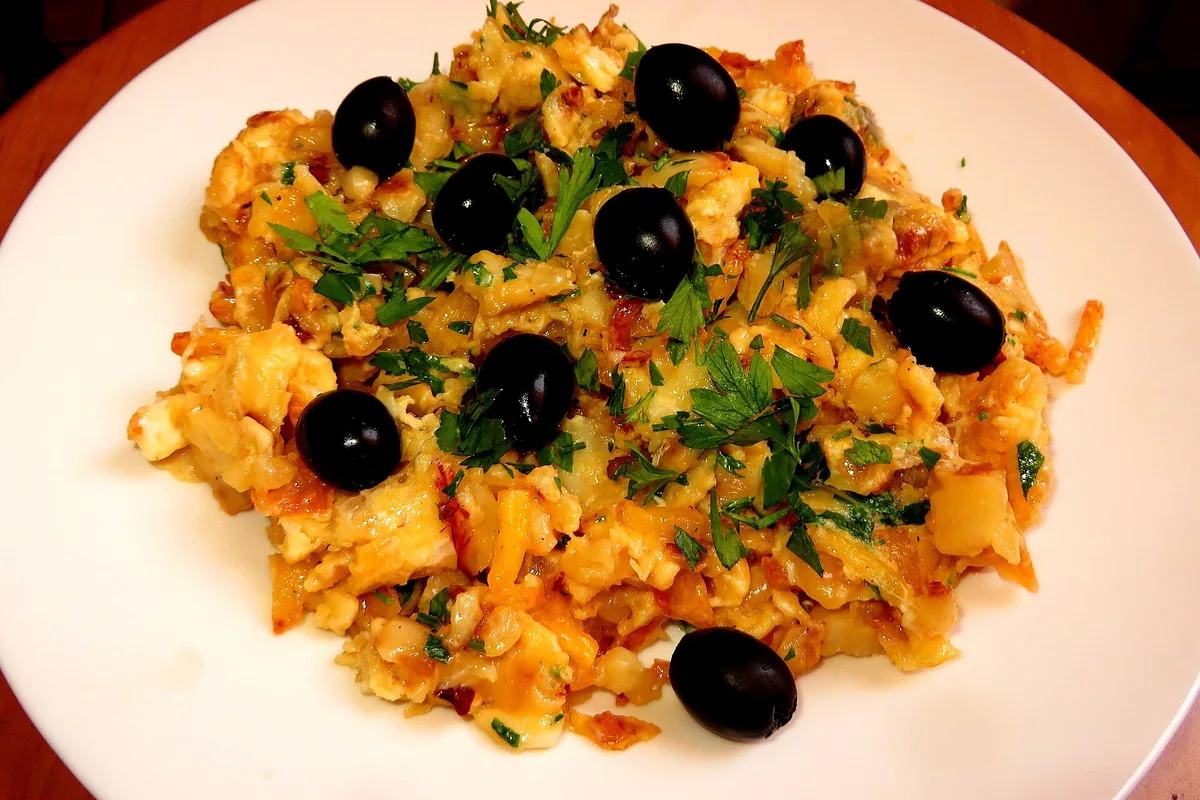
Bacalhau à Brás is shredded salt cod scrambled with thin fried potato straws, onion and eggs, finished with black olives and parsley. It is the dish most visitors are told to try when they ask about Portuguese cooking, and it is a gentle introduction to bacalhau, the dried salt cod that Portugal is said to cook in hundreds of ways.
The dish sounds heavy but is soft, savoury and slightly creamy. The cod is soaked for a day or more to remove the salt, then flaked and tossed through the eggs just before they set. Done well, the eggs stay glossy rather than dry. You will find it on tasca menus all over the city, often as a daily dish at lunchtime.
For a first plate, A Taberna da Rua das Flores in Chiado, at Rua das Flores 103, is a tiny place that guides regularly recommend for traditional dishes and petiscos. Most guides say it does not take bookings and is cash only, though one local report says it has accepted reservations since 2020, so check before you go and bring cash. For a whole menu of salt cod, A Casa do Bacalhau in Beato, east of the centre, lists bacalhau à Brás among its many cod dishes.
Salt cod dishes are served warm, but the plate does not need to be piping hot to taste right. Pair it with a glass of Vinho Verde, the light, slightly sparkling white wine from northern Portugal, or with a simple house white.
- How to get there: Metro to Baixa-Chiado, then a short walk down Rua das Flores.
- How long to spend: About an hour for a relaxed lunch or early dinner.
- Best time to go: Weekday lunch, when tascas serve their dishes of the day.
- Tip: Arrive when doors open, because small tascas fill quickly and may not take bookings.
3. Bifana
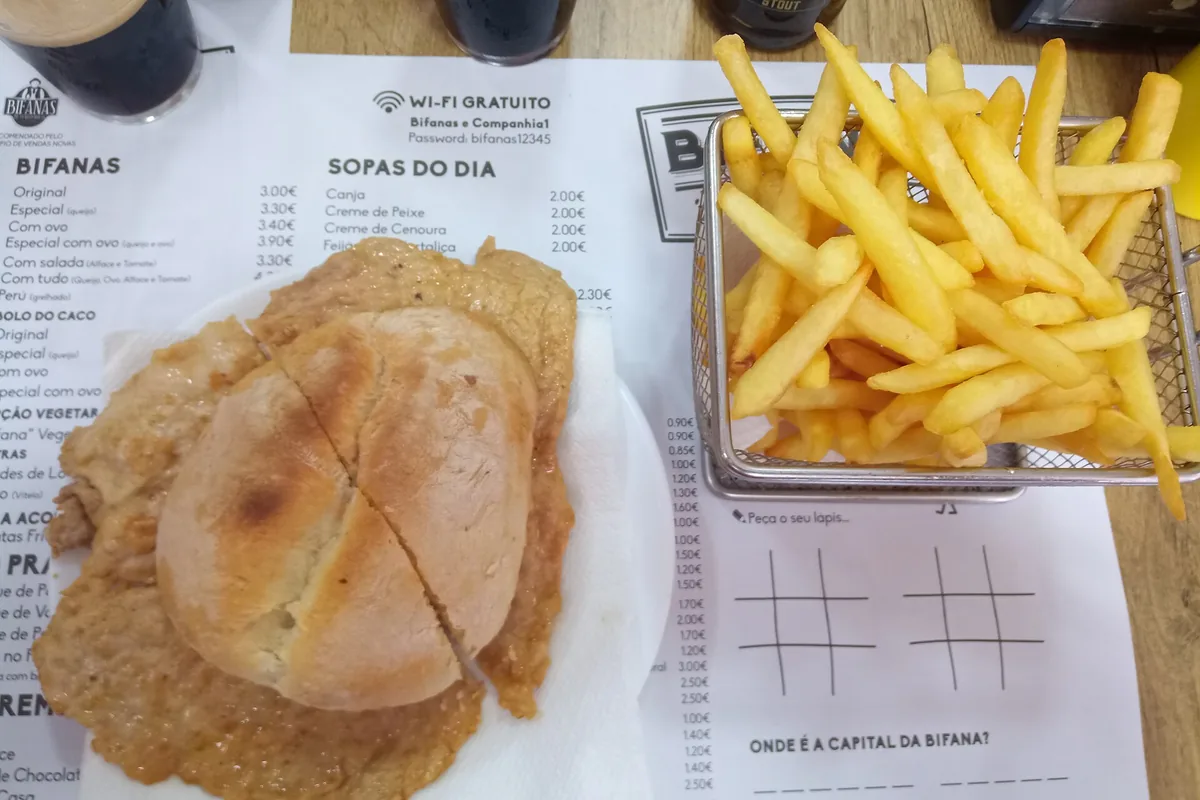
A bifana is a thin slice of pork, simmered in garlic, white wine and spices, served in a crusty roll and eaten at a counter. It is Lisbon’s answer to the fast-food sandwich, and it is cheap, fast and surprisingly satisfying.
The meat is marinated, then cooked in its own juices so the sauce soaks into the bread. Locals add mustard, a spicy piri-piri sauce or both, and drink a small beer or a soft drink alongside. Some places serve it with a slice of cheese or a fried egg. Eating it standing at the bar is part of the point.
O Trevo, at Praça Luís de Camões 48 on the edge of Chiado, is the best-known bifana stop. Food writers have long recommended it, and the counter is a convenient place to eat between sightseeing stops. Listings show it closed on Sundays, so plan another day. As Bifanas do Afonso, at Rua da Madalena 146 in Baixa, is the other name that comes up most often in guides, with a stand-up counter and a spicier style that locals seem to queue for.
If you want to compare, order one in each place. The difference is in the sauce: some are garlicky and loose, others sweeter and more concentrated. The bread matters too, and it should be fresh and crisp outside, soft inside.
Do not confuse a bifana with a prego, which is a thin steak sandwich. Both are Portuguese counter classics, and the prego is worth trying if you are still hungry.
- How to get there: Metro to Baixa-Chiado for both, then a short walk up to Praça Luís de Camões for O Trevo or across Baixa to Rua da Madalena.
- How long to spend: Under half an hour, because it is a quick stop.
- Best time to go: Lunchtime on a weekday, when the counters are busiest and the pork freshest.
- Tip: Ask for mustard on the side if you are unsure, as some counters add it automatically.
4. Sardinhas Assadas (Grilled Sardines)
Grilled sardines are the taste of a Lisbon summer: whole fish, grilled over charcoal and served on a slice of bread that soaks up the juices. They are tied to the Santo António festivities in June, when smoke from street grills fills the narrow lanes of Alfama and Mouraria.
The main festival night is the night of 12 to 13 June, and the celebrations run through the month. During this time, locals set up grills in the street, and restaurants put sardines on every menu. The fish are traditionally eaten with roasted red peppers, boiled potatoes and a green salad, and you eat them with your fingers, lifting the flesh off the bone. The best time for fresh sardines is generally from about May to October, when the fish are plump.
Outside the festival, you can still find sardines at tascas and restaurants through the warm months. In Alfama, Páteo 13 on Calçadinha de Santo Estêvão is a charcoal grill with a large terrace that guides regularly recommend for sardines; go early or be prepared to wait, and note that some listings describe it as mainly a summer place. Farol de Santa Luzia, by the Santa Luzia viewpoint, is a traditional seafood restaurant also named in sardine guides, though we could not confirm its current menu. Tinned sardines are also a Portuguese tradition, and fancy conserva shops sell beautifully packaged ones to take home.
Remember that the festival is very busy, and Alfama gets crowded on the main night. If you want a calmer taste of the tradition, visit on an ordinary summer evening instead, or look for sardines on the menu in a neighbourhood restaurant. In winter, sardines are less common and less good, so do not be surprised if a menu skips them.
- How to get there: Tram 12E or a short walk uphill from Baixa to Alfama.
- How long to spend: About an hour for a relaxed dinner.
- Best time to go: June for the festival, or any summer evening from May to October.
- Tip: Eat the fish with your hands, and use the bread to soak up the oil.
5. Caldo Verde
Caldo verde is a simple green soup of potato, finely shredded kale, garlic and olive oil, often finished with a slice of chouriço. It is one of Portugal’s national dishes, and a bowl is a good way to start a cold evening in Lisbon.
The soup is blended smooth, then the cabbage (couve galega) is sliced into hair-thin ribbons and added at the end so it stays bright green. A drizzle of olive oil goes on top. It is traditionally served at festivals and late-night gatherings, and in the Santo António celebrations you will see it in stalls.
Mouraria is the neighbourhood most often named for authentic tascas. Food guides recommend looking for the traditional, no-frills style: a small room with locals, a chalkboard menu and a grill outside. Caldo verde is not on every menu every day, so ask when you arrive. Soup is often a winter dish, and some kitchens drop it in summer.
Eat it with bread and a glass of red wine. Many Portuguese families make the soup at home, so the version you find in a tasca will often be better than one in a tourist restaurant. If you see it listed as “sopa do dia” (soup of the day), that is usually a safe bet.
If you want to eat it somewhere with more of an occasion, a few traditional restaurants in Alfama offer fado evenings with food. These are more expensive, so book ahead and check what the evening includes.
- How to get there: Metro to Martim Moniz, then walk uphill into Mouraria.
- How long to spend: About 45 minutes as a starter before a main course.
- Best time to go: Cooler months, when the soup is most likely to be on the menu.
- Tip: Ask whether the chouriço is included, because some tascas serve it on the side.
6. Pastéis de Bacalhau
Pastéis de bacalhau are golden, egg-shaped fritters made from salt cod, mashed potato, parsley and onion, deep-fried until crisp outside and soft within. They are a standard petisco, the Portuguese word for a small plate, and they appear at parties, in snack bars and at the start of a tasca meal.
The cod is mixed with potato so the cake holds together, and the shape is made with two spoons. A good one is not greasy, and the inside is moist and well seasoned. They are eaten warm or at room temperature, and they are the perfect companion to a cold beer or a glass of white wine. Some places serve them with a small salad or with rice.
You can find them in most tascas and petiscos bars across the city. A Taberna da Rua das Flores, mentioned above, is described by guides as a good starting point for petiscos, with a menu built around small plates at dinner. We could not confirm that it serves pastéis de bacalhau on any given day, so ask about the menu on arrival.
If you want to test your skills, many cooking classes in Lisbon teach how to make these, and the recipe is not difficult. Otherwise, grab a few from a bakery or a snack bar and eat them as a quick street snack.
In the north of Portugal the same fritters are usually called bolinhos de bacalhau, so you may see either name on a menu. If you order a mixed plate of petiscos, a pastel de bacalhau is almost always part of it.
- How to get there: Metro to Baixa-Chiado or Martim Moniz, depending on the tasca.
- How long to spend: About 30 minutes as part of a longer petiscos meal.
- Best time to go: Early evening, when petiscos bars start serving.
- Tip: Order two or three small plates at a time rather than a big main course.
7. Amêijoas à Bulhão Pato
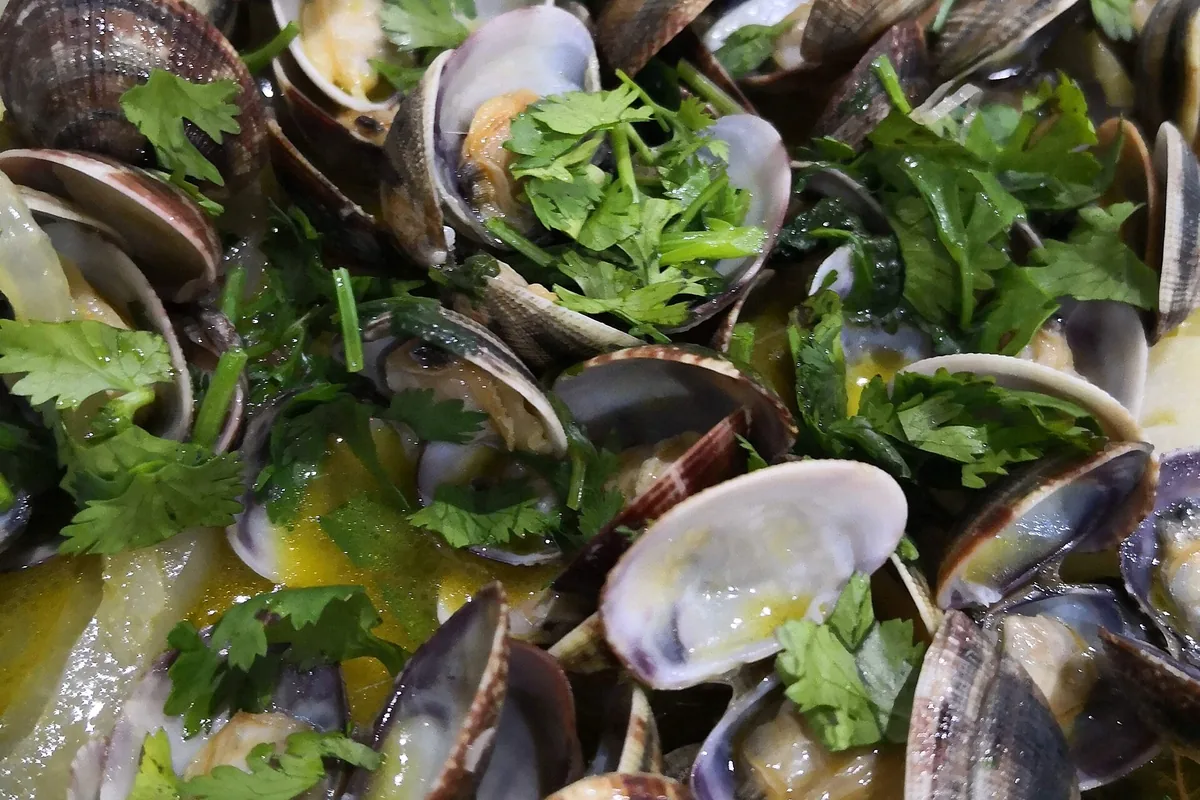
Amêijoas à Bulhão Pato is a plate of clams steamed open in olive oil, garlic, coriander and lemon, served with bread for mopping up the juices. It is named after a nineteenth-century Portuguese poet and food lover, and it is one of the simplest and best seafood dishes in Lisbon.
The clams are cooked briefly so they stay tender, and the sauce is bright with fresh coriander. It is served as a starter or a sharing plate, and it is traditionally eaten with a cold beer. The dish is not usually expensive, but prices rise when the clams are premium, so check the menu.
Cervejaria Ramiro, at Avenida Almirante Reis 1H, is one of the best-known seafood cervejarias in Lisbon, and guides regularly name its prawns, crab, lobster and clams. Amêijoas à Bulhão Pato is on its own menu, and so is a prego, the steak sandwich that many guides suggest ordering to finish. Its official site lists it as open Tuesday to Sunday, so it is closed on Mondays. It now takes online reservations, which need a card and a deposit, but queues still form at busy times, so book ahead or arrive early.
Seafood in Portugal is sold by weight, so ask the price before you order anything expensive, such as lobster or large prawns. The waiter will weigh the seafood in front of you. If you want to keep costs down, order clams and a plate of prawns to share, rather than a full shellfish platter.
Most seafood cervejarias add a couvert of bread, butter and other starters. These are charged only if you eat them, so send them back if you do not want them.
- How to get there: Metro to Intendente or Arroios, then a short walk along Avenida Almirante Reis.
- How long to spend: About 90 minutes for a relaxed seafood meal.
- Best time to go: Early lunch or early dinner, before the queue forms.
- Tip: Check the price per weight before ordering shellfish by the kilo.
8. Arroz de Marisco
Arroz de marisco is a Portuguese seafood rice, wetter and soupier than paella, cooked in a rich tomato and shellfish broth with prawns, clams, crab or other shellfish. It is served in a deep pot in the middle of the table and is meant to be shared.
The rice is cooked until it is loose, almost like a stew, and finished with fresh coriander. The best versions taste deeply of the sea, and the shells add flavour to the broth. In Lisbon it is served in seafood restaurants, in cervejarias and in many traditional restaurants near the river.
We could not confirm a single venue where the dish is reliably excellent, so the safest approach is to follow the local advice: choose a seafood restaurant that is busy at lunchtime, and ask what is best that day. Cervejarias and marisqueiras (seafood restaurants) often serve it for two people minimum. If you are travelling alone, ask for a half portion.
Eat it with a spoon rather than a fork, because the broth is the best part.
This is not a cheap dish, since the seafood is the main cost, and prices vary by the type and amount of shellfish. For a lower-cost alternative, ask for arroz de tamboril (monkfish rice), arroz de polvo (octopus rice) or a plain fish stew. They are often cheaper and just as satisfying.
If you are planning a day outside the city, many of the coastal towns on our list of the best day trips from Lisbon serve seafood rice with sea views.
- How to get there: Depends on the restaurant, but most seafood places are reachable by Metro or a short taxi.
- How long to spend: About 90 minutes for a shared pot of rice and a drink.
- Best time to go: Lunch, especially at weekends when the pot is a family tradition.
- Tip: Order for at least two people, and ask whether the rice includes lobster or only prawns and clams.
9. Ginjinha
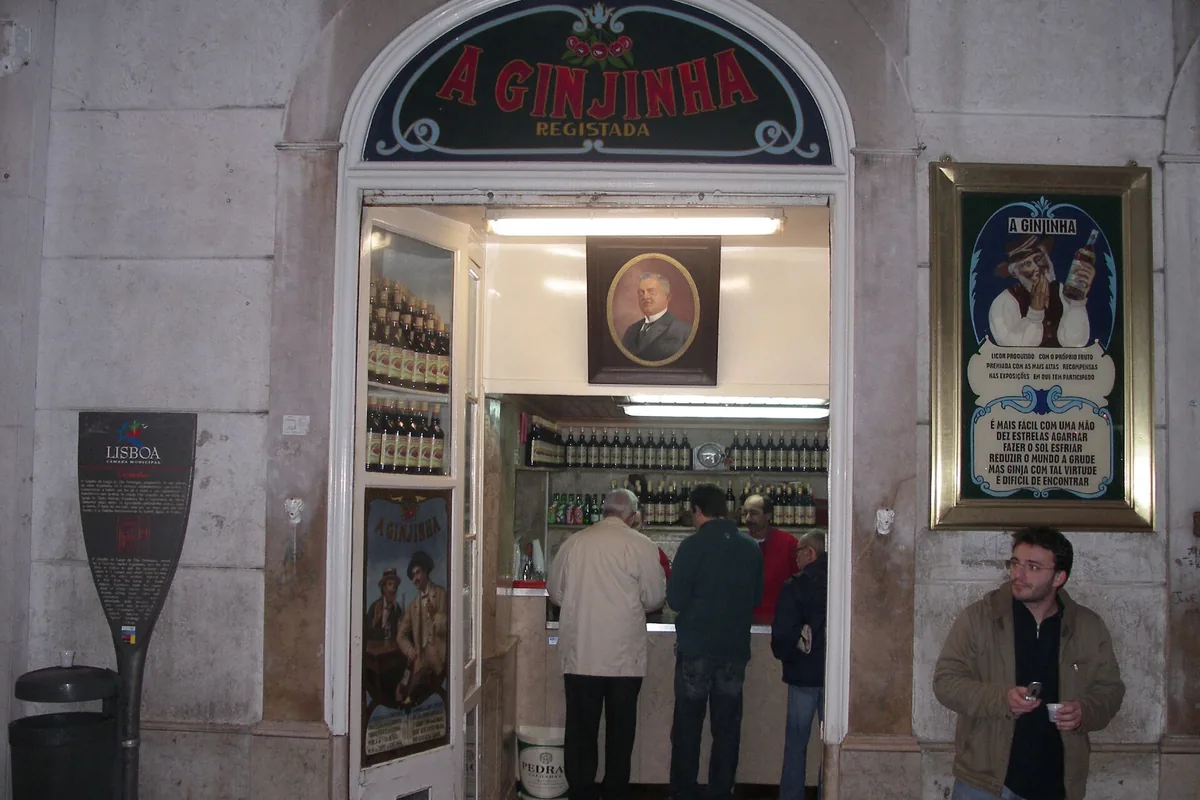
Ginjinha is a sweet-sour liqueur made from sour cherries (ginja), served in a tiny glass, often with a cherry at the bottom. It is the drink to try with a dessert or a walk, and a shot at the original bar on Largo de São Domingos is one of the quickest ways to feel part of Lisbon.
A Ginjinha, at Largo de São Domingos 8, near Rossio, is the best-known place to drink it. The bar is a small standing room with a counter, and the Espinheira family has been associated with it for generations. Lisbon’s official Lojas com História (Shops with History) programme lists the bar and dates it to 1840, when a Galician named Francisco Espinheira opened it, and that listing is a good place to read the history. Several other ginjinha bars nearby brand themselves with similar names, so check the address if you want the original.
To order, ask for “ginjinha com elas” if you want it with the cherries, or “sem elas” without. Drink it quickly, in one or two sips, standing at the door like the locals. It is strong, with a sweet cherry flavour, and it is not meant to be sipped for long.
Consider ginjinha an aperitif or a digestif. It pairs well with a pastel de nata, and with the end of a long dinner. For more ideas on where to drink in the evening, see our guide to the best bars in Lisbon.
- How to get there: Metro to Rossio, then a short walk to Largo de São Domingos.
- How long to spend: About 10 minutes.
- Best time to go: Late afternoon or evening, when the square is lively.
- Tip: Ask for “com elas” if you want the cherry, and drink it standing at the counter.
10. Pica-Pau
Pica-pau is a classic tasca snack of small pieces of beef (or sometimes pork) cooked in a garlicky sauce and served with pickled vegetables. The name means woodpecker, because you pick at the pieces with a toothpick or a fork.
The meat is cut in strips or cubes and cooked with garlic, mustard, wine and sometimes a splash of beer. It comes with pickled gherkins or onions, whose sharpness balances the rich sauce. It is a petisco, not a main course, and is usually shared at the table with bread and a drink. In Lisbon it is a typical order at a traditional beer hall or tasca.
We could not confirm a specific restaurant with a standout version, so the best approach is to look for it on the menu at a tasca or a cervejaria. Mouraria and Alfama have many traditional rooms, and food guides suggest looking for small places with a chalkboard menu and locals at the tables. A Taberna da Rua das Flores, described earlier, is built around small plates at dinner, so ask whether pica-pau is on that day.
The sauce changes between kitchens. Some are mustardy, others heavy on garlic, and some use a bit of tomato. Always mop up the sauce with bread, because that is the best part.
Pica-pau goes well with a cold beer, a glass of red wine or a Vinho Verde. If you like the dish, you might also enjoy other Portuguese bar snacks such as chouriço assado (flamed sausage), cheese with honey, or fried peppers. Many of them are listed on the same menu.
- How to get there: Metro to Martim Moniz or Baixa-Chiado, then a short walk into Mouraria or Alfama.
- How long to spend: About 45 minutes as part of a petiscos meal.
- Best time to go: Early evening, when tascas start filling up.
- Tip: Share it with friends and order bread to soak up the sauce.
A short glossary of Lisbon food
- Bica: The short, strong espresso served in Lisbon.
- Couvert: The bread, butter, olives and cheese brought to the table. You are charged only for what you eat.
- Petisco: A small plate, similar to tapas, shared at the table.
- Tasca: A small, traditional, often family-run eatery with a short menu.
- Cervejaria: A beer hall that usually serves seafood and grilled dishes.
- Prato do dia: The dish of the day, usually the best value at lunch.
- Vinho Verde: A light, young Portuguese white wine, slightly sparkling.
How to pick what to eat in Lisbon
If you are short on time, choose by mood. For a quick bite, go for a bifana or a pastel de nata. For a proper sit-down meal, order bacalhau à Brás or a shared pot of arroz de marisco. For drinks and snacks, choose ginjinha and pica-pau.
Travellers on a budget should lean on lunch. Many tascas serve a prato do dia, and it is the best value in the city. If you want seafood, share a few plates rather than ordering a platter. Vegetarians will find the choice narrower in traditional places, so look for vegetable soups, cheese and egg dishes, or ask the waiter what can be made without meat or fish. Many newer restaurants in Lisbon offer vegetarian options.
Booking, tipping and eating hours in Lisbon
Lisbon eats later than the UK. Lunch is usually from early afternoon and dinner from the evening onward, with some tascas closing between services. Many small places close on Sundays or Mondays, so check before you go.
Popular restaurants and cervejarias often fill up quickly, and some do not take bookings at all. Arrive early or be prepared to wait. For anywhere that does take bookings, make one in advance for weekends and for the evening of the main June festival.
Tipping is modest in Portugal. Rounding up the bill or leaving a small amount for good service is normal, and service is not usually added to the bill. Remember that the couvert is charged only if you eat it, and ask for the bill (a conta, por favor) when you are ready.
Suggested food plans for 1, 2 or 3 days
Day 1: Belém, the centre and a classic dinner
Start the morning in Belém with a pastel de nata at Pastéis de Belém, and compare it with one from Manteigaria if you have the energy. Take a tram or a train back towards the centre. For lunch, eat a bifana at O Trevo near Chiado or at As Bifanas do Afonso in Baixa. In the afternoon, walk to Largo de São Domingos for a shot of ginjinha. For dinner, head to a tasca in Chiado for bacalhau à Brás.
Day 2: Mouraria and Alfama
Spend the day among the older neighbourhoods. Start with a coffee and a pastel de bacalhau at a local bakery or tasca. Walk up through Mouraria and look for a lunch of caldo verde and a dish of the day. In the afternoon, wander through Alfama. For dinner, in the warmer months, look for grilled sardines in a small Alfama restaurant. In winter, choose a tasca for pica-pau and petiscos instead.
Day 3: Seafood and a long lunch
Dedicate the day to seafood. Go to a cervejaria such as Ramiro for clams and prawns, and finish with a prego from the same menu. Book ahead or arrive early to avoid the wait, and remember it is closed on Mondays. After lunch, walk along Avenida Almirante Reis or take a short taxi to the river for a slow afternoon. End with a final pastel de nata or a small ginjinha before heading home.
Our free printable 3-day Lisbon food itinerary puts these plans in a one-page format you can take with you.
Where to stay for Lisbon food
- Baixa and Chiado: The best base for first-timers, with the metro, trams and many restaurants within walking distance.
- Alfama and Mouraria: Atmospheric and full of traditional tascas, but steep and hilly.
- Cais do Sodré and Santos: Good for bars, markets and riverside food, with easy access to Belém by train.
- Príncipe Real and Bairro Alto: Stylish, with many restaurants and bars, and a good choice if you plan to eat out in the evening.
Getting around Lisbon
The centre is compact but hilly. The metro covers most of the places in this guide, and you can check lines and stations on the Metro de Lisboa website. Trams and buses are run by Carris, and Tram 15E and the local trains from Cais do Sodré go to Belém. Wear comfortable shoes, because the old neighbourhoods have steep cobbled streets. Taxis and ride-hailing apps are useful for late evenings and for getting up the hills.
Budget guidance
Lisbon is one of the more affordable capitals in Western Europe for food. Counter snacks such as a bifana, a pastel de nata or a ginjinha are at the cheap end. A tasca lunch with the dish of the day is the best value for a sit-down meal. Seafood by weight is the main place where costs rise, so ask the price before you order. Drinks and the couvert can add up, so decline the starters you do not want. Prices change, so use these as tiers rather than fixed figures.
Frequently Asked Questions
What is the most famous food in Lisbon?
The pastel de nata is the most famous, followed by bacalhau (salt cod) in its many forms. Grilled sardines and the bifana sandwich are also strongly linked to the city.
What is a typical Lisbon meal?
A typical meal might start with bread, olives and a soup such as caldo verde, followed by grilled fish or a salt cod dish, and finish with a custard tart and a coffee. Lunch is often the main meal, with a dish of the day.
Is Lisbon food expensive?
Lisbon is generally good value, especially at lunch. Snacks and tasca meals are cheap, while seafood by weight is the main place where bills grow. Check prices before ordering shellfish.
What should vegetarians eat in Lisbon?
Traditional cooking leans on meat and fish, but vegetable soups, cheese, egg dishes and pastries are widely available. Newer cafes and restaurants often have vegetarian and vegan menus, so ask or check the menu before you sit down.
When is the best time to eat sardines in Lisbon?
Fresh sardines are best from about May to October, and the Santo António festivities in June are the peak. Outside the season they are less common, so check the menu.
Do I need to book restaurants in Lisbon?
For popular seafood restaurants and on weekends, booking is wise where possible. Some small tascas and cervejarias do not take bookings, so arrive early. Check each restaurant before you go.
Discover more of Lisbon
Food is only one part of the city. Plan the sightseeing between meals with our guide to the best things to do in Lisbon, then sit down with coffee in one of the best cafes in Lisbon. When the day is done, watch the sunset with a drink at one of the best rooftop bars in Lisbon.
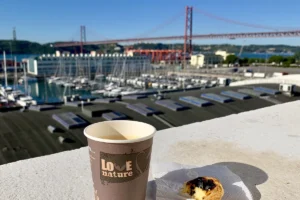
Featured image: Photo by Yusuke Kawasaki from Tokyo, Japan, CC BY 2.0, cropped, via Wikimedia Commons