Last updated: November 2026
Lisbon runs on custard tarts, and the best pastel de nata is a warm, blistered-top tart with a crisp, flaky shell and a creamy, lightly set filling. If you want the best pastel de nata in Lisbon, start with the original Pastéis de Belém, then compare it with Manteigaria, Pastelaria Aloma and Pastelaria Santo António. Between them they cover the famous, the fashionable and the neighbourhood favourites, and you can taste all four in a couple of days.
This guide covers ten places to eat pastel de nata, each with a practical box. Further down you will find how to eat one properly, how to pick between them, a free printable 3-day Lisbon pastry itinerary, where to stay, getting around and budget guidance. For general planning, the official Visit Lisboa website is a good starting point. If you want savoury food too, our guide to the best places to eat in Lisbon covers seafood, tascas and more, and our first-timer’s guide to the best things to do in Lisbon helps you fit the pastry stops around the main sights.
Pastelarias change faster than monuments. Hours, queues and even branches move from year to year, so this guide avoids exact times and prices. Where something could not be confirmed, it says so, so check before you go.
Quick answer: Where can you find the best pastel de nata in Lisbon? For the original, go to Pastéis de Belém in Belém. For the best-known modern shop, try Manteigaria in Chiado, and for a neighbourhood bakery that has won Lisbon’s best pastel de nata contest several times, visit Pastelaria Aloma in Campo de Ourique. Pastelaria Santo António in Alfama, Confeitaria Nacional in Baixa and Fábrica da Nata near Restauradores are all strong alternatives.
Free printable itinerary
Planning a trip? Download our 3-Day Lisbon Pastry Itinerary as a PDF: the day-by-day plan plus all 10 places with directions and map links. Print it or keep it on your phone.
Quick comparison: best pastel de nata in Lisbon
| Place | Area | Best for | Price tier |
|---|---|---|---|
| Pastéis de Belém | Belém | The original recipe | Cheap |
| Manteigaria | Chiado and other branches | Fresh batches from an open kitchen | Cheap |
| Pastelaria Aloma | Campo de Ourique | A contest-winning neighbourhood bakery | Cheap |
| Confeitaria Nacional | Baixa | A historic family pastelaria | Cheap to mid-range |
| Fábrica da Nata | Restauradores and Rua Augusta | A central, tiled tart shop | Cheap |
| Pastelaria Versailles | Avenida da República | A grand old tearoom | Cheap to mid-range |
| Pastelaria Santo António | Alfama | A tart before the castle climb | Cheap |
| Pastelaria Suíça | Rossio | A historic name on the main square | Cheap to mid-range |
| Pastelaria Mexicana | Near Praça de Londres | A tiled neighbourhood favourite | Cheap |
| Time Out Academy workshop | Time Out Market | Learning to make your own | Mid-range |
1. Pastéis de Belém
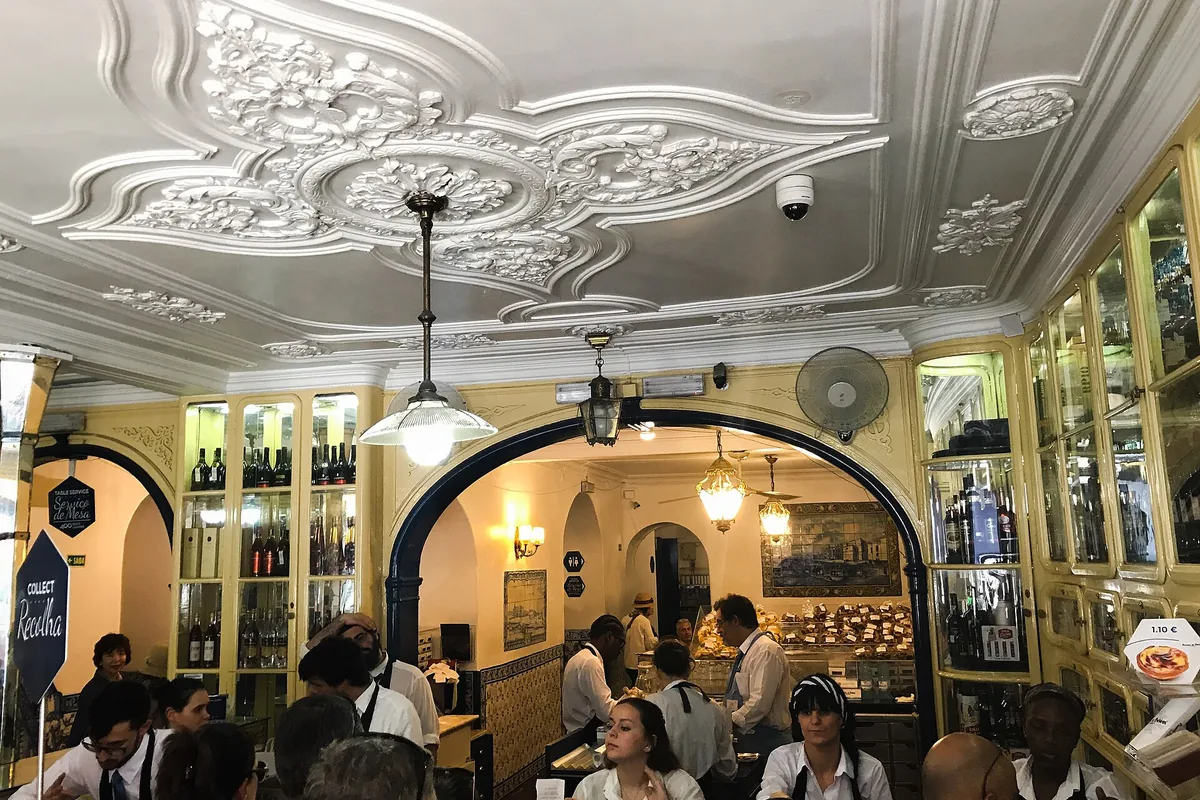
Pastéis de Belém is the original, and it is the one place where you can taste the recipe that gave the Lisbon custard tart its fame. The bakery says it began making its tarts in 1837, in buildings attached to a sugar refinery next to the Jerónimos Monastery, using a recipe passed on from the monastery. The recipe is still a closely guarded secret.
The tarts here are officially called pastéis de Belém, not pastéis de nata, and the bakery protects the name. The shell is thin and very crisp, and the custard is creamy with a dark, slightly burnt top. You sprinkle cinnamon and icing sugar on top at the table, and many people eat two with a small coffee.
The shop is large, with many rooms and tiled walls, and there is usually a queue for takeaway at the front. Seating is a better choice than the takeaway line on busy days. Check the official Pastéis de Belém website for the history and current details.
Belém is also home to the monastery, the tower and several museums, so the bakery is easy to combine with a half day of sightseeing. Go early or late in the day to avoid the longest queues.
- How to get there: Tram 15E or a train from Cais do Sodré to Belém, then a short walk.
- How long to spend: Thirty minutes to an hour, plus queue time.
- Best time to go: A weekday morning or late afternoon, outside the lunchtime peak.
- Tip: Ask for a table inside rather than joining the takeaway queue.
2. Manteigaria
Manteigaria is the best-known modern shop for pastel de nata, and it bakes in small batches you can watch through the glass. Its flagship sits on Rua do Loreto in Chiado, and the business has grown to several branches in Lisbon, including one in Time Out Market and another in Príncipe Real.
The format is simple. There is a counter, a bakery visible behind it, and very little else on the menu. The tart is made in batches, so it often arrives warm, with a shell that crackles and a custard with a lightly caramelised top. A coffee from the counter is the usual pairing, and many people stand at the counter rather than sit.
Reports differ on exactly how many Lisbon branches there are, because shops open and close, so use the official site or a map to find the nearest one. The flagship in Chiado is the best choice if you want the full experience, with the bakers working in front of you.
Manteigaria is also one of the best places to compare styles. Try one here after you have tasted the original in Belém, and see which shell and custard you prefer. It is a good example of how a modern shop can sit alongside the old pastelarias.
- How to get there: Walk from Baixa-Chiado Metro to Rua do Loreto, or take a tram to Chiado.
- How long to spend: Fifteen to thirty minutes.
- Best time to go: Mid-morning or mid-afternoon, between the peak queues.
- Tip: Ask for a tart from the latest batch if you can, because freshness makes the biggest difference.
3. Pastelaria Aloma
Pastelaria Aloma is the neighbourhood bakery that locals mention first, and it has won Lisbon’s best pastel de nata contest several times. It sits on Rua Francisco Metrass in Campo de Ourique, a residential district west of the centre, and it was founded in 1943. The city lists it among its historic shops.
Time Out Portugal has reported repeated wins in the contest, although the exact number of titles differs between articles, so treat the count as approximate. What matters is the tart itself. The shell is thin and crisp, the custard is smooth, and the top has a good dark colour. Because the shop serves a local crowd, it also has cakes, bread and coffee for everyday customers.
The setting is plain and friendly rather than grand. You can stand at the counter or take a table, and you will hear mostly Portuguese. That makes it a good choice if you want to see where Lisbon residents buy their breakfast, away from the tourist queues.
Campo de Ourique has a good food market, wide streets and a relaxed feel, so it works as a half-day trip from the centre. Hours are listed differently by different sources, so check before you set out.
- How to get there: Tram 28 or a short taxi to Campo de Ourique, then a walk to Rua Francisco Metrass.
- How long to spend: Thirty minutes, or longer if you explore the neighbourhood.
- Best time to go: A weekday morning, when the tarts are freshest.
- Tip: Combine it with a walk to the Campo de Ourique market.
4. Confeitaria Nacional
Confeitaria Nacional is one of the oldest pastry shops in Lisbon, and it has stayed in the same family since 1829. It sits on Praça da Figueira in Baixa, and its tiled, mirrored interior makes it feel more like a museum of pastry than a modern cafe.
The shop says its pastel de nata comes from the recipe book of its founder, and the tart here is a classic version of the Lisbon custard tart. The pastry display is a larger attraction than the tarts, with cakes, tarts, sweets and seasonal specialities in glass cabinets, so allow time to look as well as eat.
You can buy at the counter or sit at a table, and a seat is worth having if the shop is busy. The service is traditional and the staff are used to visitors, so ask if you are unsure what to order. The official Confeitaria Nacional website has the history and current details.
It is a good stop during a walk through Baixa, since Rossio, the Rua Augusta and the cathedral are all close. Opening hours are listed differently by different sources, so check before you go, particularly on Sundays.
- How to get there: Metro to Rossio or Martim Moniz, then a short walk to Praça da Figueira.
- How long to spend: Thirty to forty-five minutes.
- Best time to go: Mid-morning, when the cabinets are full.
- Tip: Take a table rather than the counter if you want to look around the tiled interior.
5. Fábrica da Nata
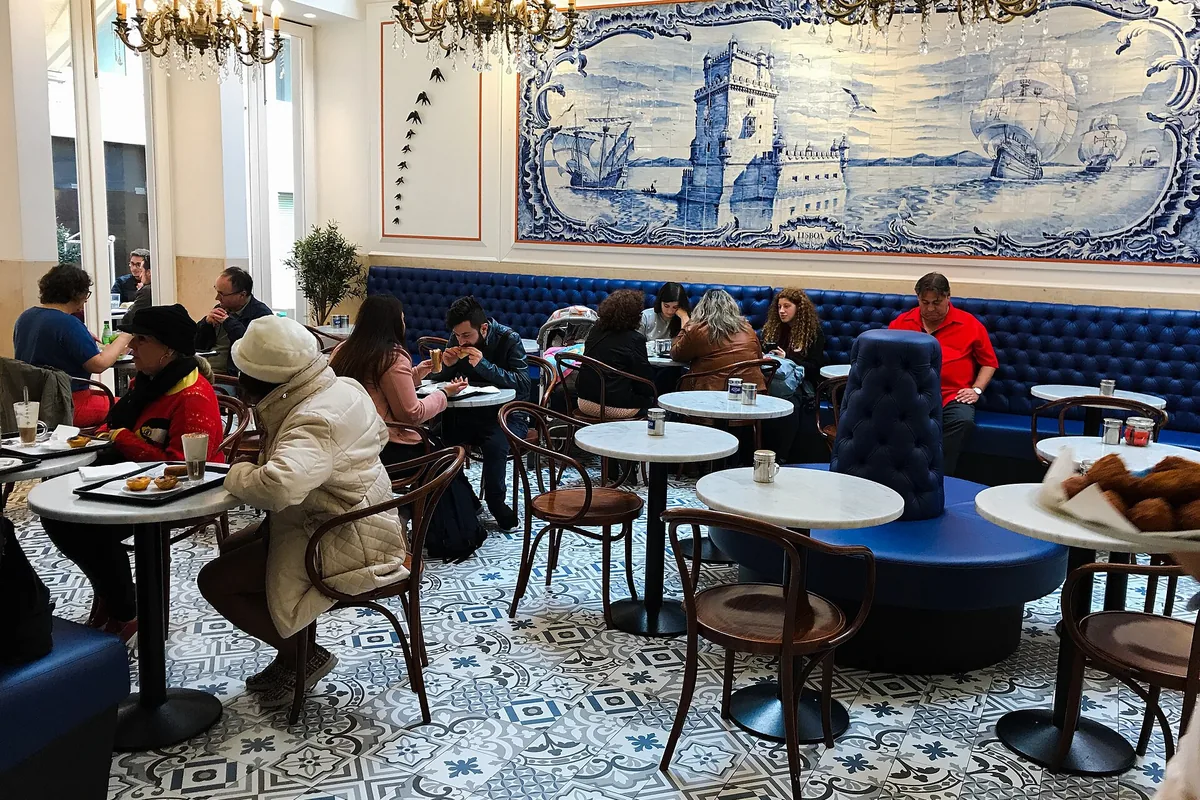
Fábrica da Nata is a dependable central choice, with tiled walls and a counter that is hard to miss on Praça dos Restauradores. The first shop opened on the square, and a second branch followed on Rua Augusta, so you can find one without leaving the Baixa area.
The tarts have a crisp shell and a silky custard, and many reviewers describe them as a good middle path between the classic shops and the busiest queues. Visitors often use it as a first taste on arrival, because it is easy to reach and rarely feels exclusive. The shop also sells savoury items and pastries, so it works as a quick lunch stop.
Reports suggest that the best tarts sell out early on busy days, so a morning visit gives the best choice. Opening hours are listed differently by different sources, and branches change, so check a map before you go.
Fábrica da Nata is a useful stop if you are staying in Baixa or Avenida da Liberdade and want a quick treat. Restauradores is a few minutes’ walk from Rossio and the start of Avenida da Liberdade, so it fits easily into a first day.
- How to get there: Metro to Restauradores, and the shop is on the square.
- How long to spend: Fifteen to thirty minutes.
- Best time to go: Morning, while there is a full tray.
- Tip: Walk along Rua Augusta to the second branch if the Restauradores shop is crowded.
6. Pastelaria Versailles
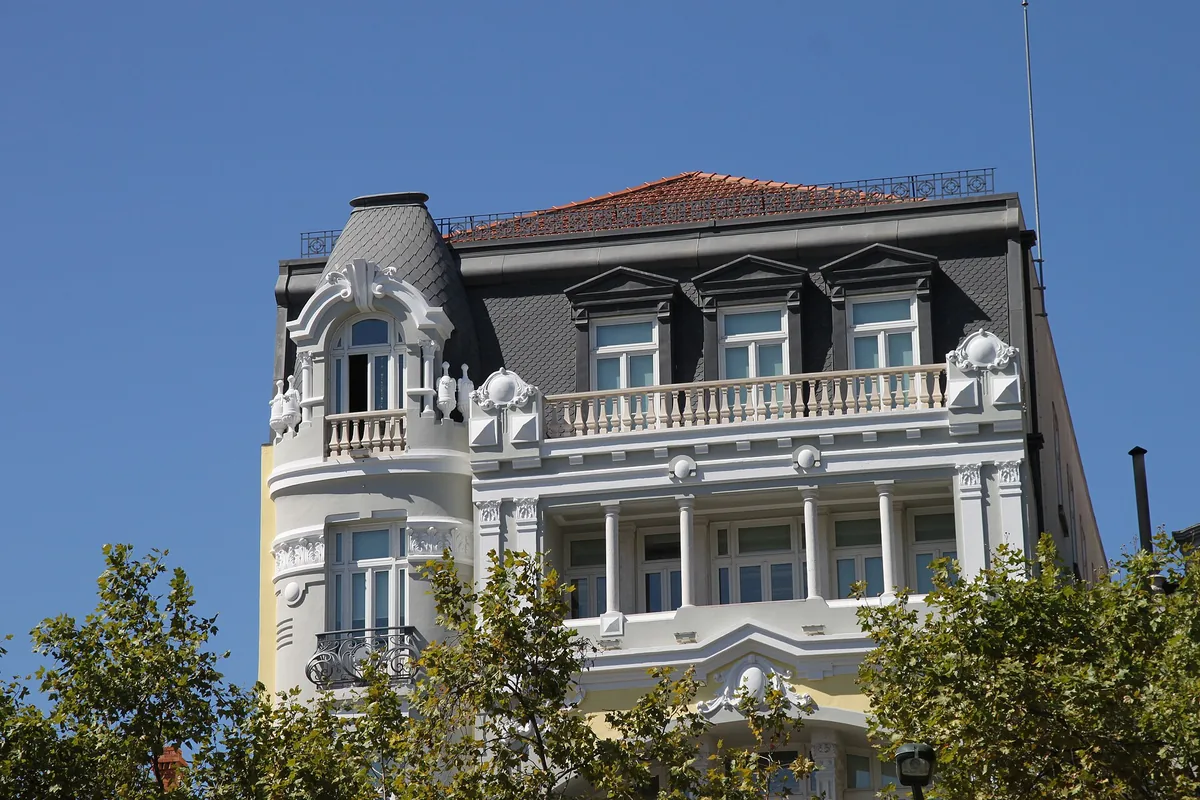
Pastelaria Versailles is a grand old tearoom where you can sit down properly with a tart and a coffee. It sits on Avenida da República, and it is widely reported to date from 1922. Mirrors, chandeliers and a long glass counter give the room a faded elegance.
The pastry display is large, so the pastel de nata is one of many choices, from cakes and savoury pastries to full breakfasts. Reviewers rate the tart highly, with a flaky shell and a creamy centre, and the room makes it a pleasant place to sit for an hour rather than grab and go. The setting suits a slow morning.
Versailles has expanded, and there are other branches in Lisbon, but the original on Avenida da República is the one with the most atmosphere. Check the venue’s own channels for current branches and hours, because listings differ.
The avenue is a short walk from the Saldanha and Campo Pequeno areas, so it combines well with a visit to the bullring or a stroll through the nearby gardens. It is a good choice when you want to rest your feet and avoid the tourist crowds of the old centre.
- How to get there: Metro to Saldanha or Entrecampos, then a short walk along Avenida da República.
- How long to spend: One hour.
- Best time to go: Mid-morning, when it is calm and the counter is full.
- Tip: Sit at a table by the mirrored wall for the best view of the room.
7. Pastelaria Santo António
Pastelaria Santo António is a small Alfama bakery that makes a good tart before or after the climb to the castle. It sits on Rua do Milagre de Santo António, a short walk from Castelo de São Jorge, in a tiled building. Time Out Portugal reported that it won the city’s best pastel de nata contest in 2019.
The tarts are baked in continuous batches, so they are often still warm, and visitors describe a balance of crisp pastry and smooth custard. The shop is small, so there may be a short queue, but it moves quickly. It is a good place to start a morning in Alfama, with a coffee and a tart before you head uphill.
Sources disagree about its opening days and times, so check before you go. It is also best to avoid the middle of the day if you want a quieter visit, as tour groups pass through the district.
Alfama’s streets are steep and uneven, so wear comfortable shoes. From the pastelaria, you can walk to the castle, the Santa Luzia viewpoint and the cathedral, all within a short distance. Tram 28 and Tram 12E serve the area, but both can be crowded.
- How to get there: Tram 12E or 28 to the Castelo area, or walk up from Alfama.
- How long to spend: Fifteen to thirty minutes.
- Best time to go: Early morning, before the tour groups arrive.
- Tip: Take your tart and coffee to a nearby viewpoint if the shop is full.
8. Pastelaria Suíça
Pastelaria Suíça is a historic name on Rossio that Lisbon people still talk about, and it is worth a stop if you are on the main square. Time Out reported that the original pastelaria closed in 2018, and that a new Pastelaria Suíça would open in 2024 on the Praça da Figueira side of the same block, so check its current status before you plan around it.
The old shop is remembered for its pastries and its place in everyday Lisbon life. That history gives it a place in the story of the Lisbon custard tart, even if it is now one of several choices around the square. Today, it is best treated as a convenient stop rather than a destination.
Rossio is the centre of old Lisbon, with the National Theatre, the station and several cafes on its edges. A pastry here fits naturally into a morning of sightseeing. Prices on the square can be higher than in neighbourhood shops, so compare before you sit.
Because details of the current shop could not be confirmed, treat this entry as a pointer rather than a promise. If it is closed or changed, Confeitaria Nacional and Fábrica da Nata are both a short walk away.
- How to get there: Metro to Rossio, then a short walk to the Praça da Figueira side of the block. Confirm the address on a map first.
- How long to spend: Thirty minutes.
- Best time to go: Mid-morning, when it is calmer.
- Tip: Check that the shop is open before you go, and have a back-up nearby.
9. Pastelaria Mexicana
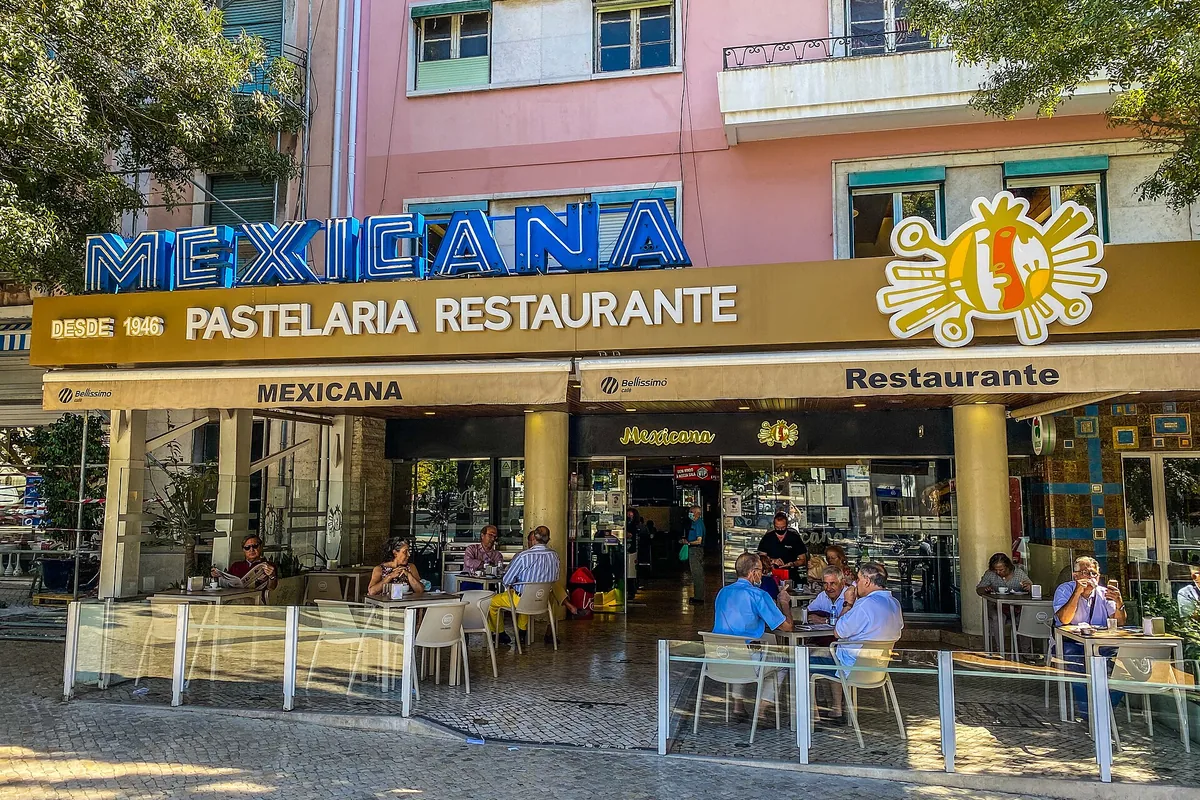
Pastelaria Mexicana is a family-run pastelaria with a tiled interior, and it suits a visit away from the centre. It opened in 1946 and is still owned by the same family, according to Time Out. It sits near Praça de Londres, in a residential part of the city, and the tiled interior dates from the 1960s.
The cakes, pastries and scones are made on the premises, and the shop is best known for its range of traditional pastries rather than for one signature tart. Pastel de nata is on the menu, but reviews focus more on its other specialities, so treat it as a place to compare styles and enjoy the room rather than a single-purpose tart stop. Ask what is freshest on the day.
Sources give slightly different addresses, so confirm the location on a map before you set out. The area is calm and local, with few other visitors, so it is a good place to see everyday Lisbon.
Combine it with a walk to Praça de Londres or the nearby gardens, and use the Metro to return to the centre. If you are short of time, one of the central shops will be easier to reach. The neighbourhood has few visitors, which is part of its appeal for anyone tired of queues.
- How to get there: Metro to Roma-Areeiro or Alameda, then a short walk.
- How long to spend: Thirty to forty-five minutes.
- Best time to go: A weekday morning.
- Tip: Confirm the address on a map first, as listings differ.
10. Time Out Academy workshop
If you want to understand why a good tart is hard to make, a pastel de nata workshop is a fun way to spend a couple of hours. Time Out Academy, inside Time Out Market Lisboa, runs a class on pastéis de nata where you learn the traditional recipe and then eat your results. The listing describes it as a two-hour session with a tasting.
You make the dough, fill the shells and bake your own batch, and a baker explains what makes the shell flaky and the custard set. It is a useful way to understand what you have been tasting in the pastelarias, and it makes a good rainy-day plan. The class is not suitable for vegans, because it uses dairy and eggs.
Prices and schedules change, so check the Time Out Academy booking page before you book. Other operators in Lisbon also run classes, so compare the group size, the length and what is included.
Time Out Market itself is a large food hall with stalls from many restaurants, and it also has a Manteigaria counter, so you can taste a professional tart before or after you bake your own. It is popular and can be crowded, so go outside the lunch rush.
- How to get there: Metro or train to Cais do Sodré, then a short walk to Time Out Market.
- How long to spend: About two hours for the class.
- Best time to go: Book ahead for a weekday or weekend session.
- Tip: Check the dietary information when you book, as the class is not for vegans.
How to eat a pastel de nata properly
Eat it warm, if you can. A tart straight from the oven has a crisp shell and a custard that is still soft, and by the time it has cooled the shell loses some of its snap. Most shops sell them one at a time, so you can order a second after the first.
Add cinnamon and icing sugar from the shakers on the counter, and drink it with a small black coffee, which Lisbon people call a bica. Eat it in two or three bites, and let the custard cool slightly if the top looks very hot.
Do not worry about the burnt spots. They are part of the flavour, and a pale tart is usually less interesting. If a shop offers a box to take home, tarts keep for a day, but they taste best the same day, heated briefly in a hot oven.
How to pick the right place for pastel de nata
Start with what you want from the visit. For history, choose Pastéis de Belém or Confeitaria Nacional. For a modern, busy shop with a visible bakery, choose Manteigaria. For a local bakery, choose Aloma or Santo António, and for a sit-down tearoom, choose Versailles.
Next, think about where you will be. Belém, Baixa and Alfama are all places where you will spend time as a visitor, so they are the easiest to fit in. Campo de Ourique and Avenida da República are slightly further out, but they reward the trip with fewer queues.
Finally, think about timing. Tarts are best in the morning, when the first batches are out, and the longest queues are around lunchtime and in the early afternoon. A weekday visit is almost always easier than a weekend.
Suggested pastry plans for 1, 2 or 3 days
You can compare the best of Lisbon’s custard tarts in three days by grouping the stops by area. Each day keeps the stops close together, so you spend less time travelling between them.
Day 1: Belém and Chiado
Begin at Pastéis de Belém for the original, then visit the monastery and the riverfront. Return to the centre in the afternoon and taste the Manteigaria version in Chiado, so you can compare the two styles the same day.
Day 2: Baixa and Alfama
Start with a tart at Confeitaria Nacional on Praça da Figueira, then walk through Baixa to Fábrica da Nata for a second taste. In the afternoon, climb to Alfama for a tart at Pastelaria Santo António before visiting the castle.
Day 3: Campo de Ourique and Avenida da República
Take the tram or a taxi to Campo de Ourique for a morning tart at Pastelaria Aloma and a walk through the neighbourhood. In the afternoon, travel to Avenida da República for a sit-down tart at Pastelaria Versailles. If you want a finale, book the Time Out Academy workshop for another day.
Where to stay for Lisbon pastelarias
For the most tart stops on foot, stay in Baixa or Chiado, where Confeitaria Nacional, Fábrica da Nata and Manteigaria are all close together. The area is lively and central, so ask for a quiet room if you are a light sleeper.
For a calmer base with a local feel, choose Campo de Ourique, which has its own bakery scene and a good market. It is a short tram or taxi ride from the centre.
If you plan to spend most of your time in Belém and Alfama, either neighbourhood is a pleasant base, though Alfama has steep streets and limited road access, so travel light.
Getting around Lisbon
Lisbon has a Metro, trams, buses and trains, and most of the places in this guide are close to a stop. Use the Metro de Lisboa website and the Carris website for routes, tickets and timetables.
The central districts are hilly, and the cobbled pavements can be slippery after rain, so wear comfortable shoes with a good grip. Baixa is flat and easy to walk, while Alfama and Chiado are steep. Tram 15E is the usual way to reach Belém, and trains from Cais do Sodré are a quick alternative.
Historic trams such as 28 can be very crowded, and pickpockets work the busiest lines, so keep your phone and wallet secure. Walking is often as quick as the tram for short trips in Baixa.
Budget guidance
For a lower spend, pastel de nata is one of the cheapest treats in Europe. A tart and a coffee at a counter at Manteigaria, Fábrica da Nata or Aloma costs very little compared with a meal, and eating several in a day is easy on a small budget.
At the middle level, sitting down at Confeitaria Nacional, Versailles or Pastelaria Suíça adds the cost of the setting. One tart and one coffee in a historic room is usually better value than a full pastry spread.
For a special occasion, the Time Out Academy workshop or a morning at Pastéis de Belém followed by a long lunch in Belém suits a longer visit. Book ahead for the workshop, especially at weekends.
Frequently Asked Questions
Where can you find the best pastel de nata in Lisbon?
Pastéis de Belém is the original and the most famous, while Manteigaria, Pastelaria Aloma and Pastelaria Santo António are strong alternatives. Which one is best is a matter of taste, so try two or three.
What is the difference between pastel de nata and pastel de Belém?
They are the same style of custard tart, but only the bakery in Belém can call its tarts pastéis de Belém, because the name is tied to its secret recipe. Everywhere else in Lisbon sells pastéis de nata.
How do you eat a pastel de nata?
Eat it warm, with cinnamon and icing sugar sprinkled on top, and a small black coffee on the side. Most people eat it in two or three bites.
Is Pastéis de Belém worth the queue?
For most visitors, yes, because it is the original and the shop is large enough that seating moves quickly. If the takeaway queue is long, ask for a table inside.
When is the best time to eat pastel de nata?
Morning is best, when the first batches come out of the oven. Weekday mornings are also the calmest times at the most popular shops.
Can you take pastel de nata home?
Yes, most shops sell boxes, and tarts keep for a day or so. They taste best fresh, so heat them briefly in a hot oven before eating.
Discover more of Lisbon
Once you have your pastry stops planned, plan a day away from the city with our guide to the best day trips from Lisbon, which pairs well with a pastry-fuelled morning.
Featured image: Photo by Kent Wang from London, United Kingdom, CC BY-SA 2.0, cropped, via Wikimedia Commons