Last updated: October 2026
The best winter sun destinations offer daytime temperatures of 20°C or more between November and March, without the heat and crowds of summer. Some are a short flight from Europe, others are long-haul escapes where winter is the dry season and the beaches are at their finest.
Whether you want a lazy week by the pool, a walking holiday in a mild climate, or a tropical island with turquoise water, there is a warm place waiting. Here are the top 10 warm winter sun destinations, ordered roughly from short-haul to long-haul for European travellers.
A quick note on temperatures: the figures below are typical daytime averages. Weather varies year to year, so check a long-range forecast before you book.
Quick answer: Where is warm in winter? Our top 10 are Canary Islands, Madeira, Dubai, Red Sea, Morocco, Cape Verde, Thailand, Southern Vietnam, Barbados and the Caribbean and Yucatán Peninsula. The Canary Islands are the warmest short-haul option from Europe at around 20 to 23°C, while Thailand, southern Vietnam and the Caribbean offer 28°C and above for a true tropical beach holiday.
Top 10 Warm Winter Sun Destinations at a Glance
| # | Destination | Best for |
|---|---|---|
| 1 | Canary Islands, Spain | Guaranteed mild weather on a short flight |
| 2 | Madeira, Portugal | Walkers and travellers who prefer scenery over beaches |
| 3 | Dubai, United Arab Emirates | Luxury, shopping and guaranteed sunshine |
| 4 | Red Sea, Egypt | Snorkelling, diving and value for money |
| 5 | Morocco | Combining culture and sunshine |
| 6 | Cape Verde | Beach lovers and watersports fans |
| 7 | Thailand | Tropical beaches combined with culture |
| 8 | Southern Vietnam | Great food, beaches and value |
| 9 | Barbados and the Caribbean | Classic white sand beaches and turquoise water |
| 10 | Yucatán Peninsula, Mexico | Beaches with history and adventure |
1. Canary Islands, Spain
The Canary Islands are Europe’s most reliable winter sun destination, with daytime temperatures of around 20 to 23°C right through winter. They sit off the coast of West Africa, about four hours’ flight from the UK.
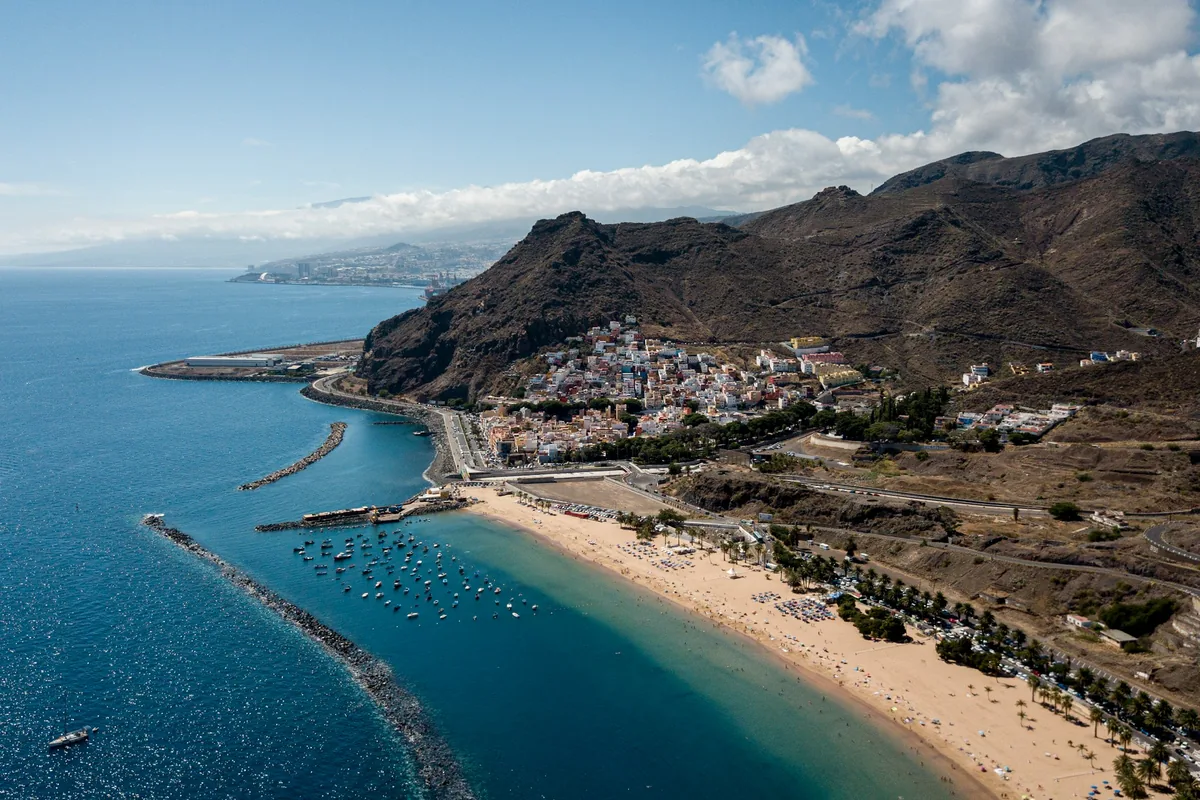
Each island has a different character. Tenerife has Mount Teide, Spain’s highest peak, and resorts in the sunny south. Gran Canaria has sand dunes at Maspalomas and a lively capital in Las Palmas. Lanzarote is volcanic and quieter, shaped by the artist César Manrique, while Fuerteventura has the longest beaches. The official Canary Islands tourism site has guides to each island.
Away from the beaches, ride the cable car up Mount Teide in a UNESCO-listed national park, explore the volcanic landscapes of Timanfaya National Park on Lanzarote, or hike to Roque Nublo in the mountains of Gran Canaria. Quieter islands like La Palma and La Gomera are ideal for walkers who want peace and dark skies.
- Getting there: Direct flights from across the UK and Europe, around four hours from London.
- Time needed: A week is ideal.
- Best time to go: January to March, for warm days without Christmas prices.
- Insider tip: The south of Tenerife and Gran Canaria is usually sunnier, while the north is greener and more often cloudy.
Best for: guaranteed mild weather on a short flight.
2. Madeira, Portugal
Madeira is called the “island of eternal spring” because temperatures rarely drop below 18°C in winter. It is greener and more dramatic than the Canaries, with steep cliffs, banana plantations and terraced valleys.

Walkers love the levadas, old irrigation channels with flat paths that wind along the mountainsides. Funchal, the capital, hosts a famous New Year’s Eve fireworks display over the bay. Visit Madeira lists walking routes and events.
In Funchal, ride the cable car up to Monte and come back down in a traditional wicker toboggan sledge, steered by two drivers in straw hats. Further afield, swim in the volcanic rock pools at Porto Moniz, or watch the sunrise from Pico do Arieiro, one of the island’s highest peaks.
- Getting there: Direct flights to Funchal take around four hours from the UK.
- Time needed: Five days to a week.
- Good to know: Some of the most popular walking trails now charge a small fee or require booking, so check before you go.
- Insider tip: The weather can change from one side of the island to the other. If it’s cloudy in Funchal, it may be sunny further west.
Best for: walkers and travellers who prefer scenery over beaches.
3. Dubai, United Arab Emirates
Dubai is at its best in winter, with sunny days of around 24 to 27°C and pleasant evenings. In summer it can be too hot to be outside, so November to March is peak season.
Mix beach days on Jumeirah with city sights like the Burj Khalifa observation deck, the old souks of Deira and a desert safari with dinner under the stars. Visit Dubai has an events calendar, including the winter shopping festival.
For a taste of old Dubai, cross the creek on a traditional abra water taxi and wander the narrow lanes of the Al Fahidi Historical Neighbourhood. The futuristic Museum of the Future is a striking contrast, and the beaches at Kite Beach and JBR have lively promenades lined with cafés.
- Getting there: Direct flights take around seven hours from London.
- Time needed: Four to five days.
- Best time to go: November to March, when it’s warm but not too hot.
- Good to know: Dress modestly when visiting souks, mosques and traditional areas.
Best for: luxury, shopping and guaranteed sunshine.
4. Red Sea, Egypt
Egypt’s Red Sea resorts of Hurghada, Sharm El Sheikh and Marsa Alam offer warm, dry winters of around 22 to 25°C. The sea stays warm enough to swim, and the coral reefs are some of the best in the world for snorkelling and diving.
Hurghada makes a good base for a day trip to Luxor, home to the Valley of the Kings and Karnak Temple. All-inclusive packages are often excellent value.
Near Sharm El Sheikh, Ras Mohammed National Park has some of the Red Sea’s finest reefs. Further south, Marsa Alam is quieter, and snorkellers sometimes spot turtles and, if very lucky, dugongs in the seagrass beds of its bays.
- Getting there: Direct flights to Hurghada, Sharm El Sheikh and Marsa Alam take around five hours from the UK.
- Time needed: One week.
- Good to know: Check your government’s latest travel advice and entry rules before booking.
- Insider tip: Choose a hotel with a house reef, so you can snorkel straight from the beach.
Best for: snorkelling, diving and value for money.
5. Morocco
Southern Morocco is a short flight from Europe and has warm winter days of around 20°C. Agadir is the main beach resort, with a long sandy bay and over 300 days of sunshine a year.

Marrakech is cooler at night but sunny by day and perfect for exploring the souks, gardens and palaces. From there you can head into the desert. Read our guide to a Desert Camp in Morocco for a night under Saharan stars.
In Marrakech, don’t miss the evening buzz of Jemaa el-Fnaa, the blue walls of the Jardin Majorelle and the tiled courtyards of the Bahia Palace. On the coast, Essaouira is a relaxed walled town popular with windsurfers, and the village of Taghazout near Agadir is a favourite with surfers.
- Getting there: Direct flights to Marrakech and Agadir take around three and a half hours from the UK.
- Time needed: A week, split between the city and the coast.
- Good to know: Winter nights in Marrakech and the mountains can be cold, so pack a warm layer.
- Insider tip: Stay in a riad, a traditional house built around a courtyard, for a quiet escape from the busy souks.
Best for: combining culture and sunshine.
6. Cape Verde
Cape Verde is an island nation off West Africa with steady temperatures of 24 to 26°C in winter and very little rain. It is about six hours from the UK, with direct flights to Sal and Boa Vista.
Sal and Boa Vista have long white beaches and are great for kitesurfing and windsurfing thanks to the constant breeze. Santo Antão is the island for hiking, with green valleys and mountain villages.
The islands have a laid-back culture shaped by African and Portuguese influences, with music at its heart. Listen for morna, the soulful music made famous by the singer Cesária Évora, and try cachupa, a hearty stew of corn, beans and meat or fish.
- Getting there: Direct flights to Sal and Boa Vista take around six hours from the UK.
- Time needed: One week.
- Best time to go: November to June, with humpback whales sometimes seen off Boa Vista from late winter into spring.
- Insider tip: Domestic flights and ferries between islands can change at short notice, so leave spare time if you island hop.
Best for: beach lovers and watersports fans.
7. Thailand
Thailand’s peak season runs from November to March, when the Andaman coast is dry, sunny and around 30°C. Phuket, Krabi and Koh Lanta are at their best in these months.
Combine beach time with Bangkok’s temples and street food, or head north to Chiang Mai, where winter evenings are cool and pleasant. If you want to split your trip between the mainland and the coast, our guide to the best Thai islands for beaches, diving and island hopping compares Koh Samui, Koh Lanta, Koh Lipe and more. The Tourism Authority of Thailand has up-to-date entry information.
Note that the Gulf of Thailand, home to Koh Samui, Koh Phangan and Koh Tao, has a different weather pattern and can be rainy in November and December. From January it becomes a great choice too. For limestone cliffs and beaches, Railay near Krabi is one of the most beautiful places in the country.
- Getting there: Direct flights to Bangkok take around 11 to 12 hours from London.
- Time needed: Two weeks to combine Bangkok, the north and the islands.
- Best time to go: December to March for the Andaman coast.
- Insider tip: Book Christmas and New Year beach stays early, as the best hotels sell out months in advance.
Best for: tropical beaches combined with culture.
8. Southern Vietnam
Southern Vietnam enters its dry season in winter, with sunny days of around 30°C. Phu Quoc Island in the Gulf of Thailand has calm seas and long beaches from November to April.
Ho Chi Minh City and the Mekong Delta are easy to add on. Phu Quoc is the island most winter visitors choose, so read what to do on Phu Quoc, from night markets to island boat trips. Vietnam’s weather changes a lot from north to south, so check the best time to visit each region of Vietnam before you book.
In the Mekong Delta, take a boat to the Cai Rang floating market near Can Tho, where traders sell fruit and vegetables from their boats. For a quieter island escape, the Con Dao islands have empty beaches and nesting turtles in season.
- Getting there: Fly to Ho Chi Minh City, then take a short domestic flight to Phu Quoc.
- Time needed: Ten days to two weeks.
- Good to know: Most visitors need an e-visa, which you apply for online before you travel.
- Insider tip: Central Vietnam, including Hoi An and Da Nang, is often wet from October to December, so plan beach time in the south.
Best for: great food, beaches and value.
9. Barbados and the Caribbean
The Caribbean’s dry season runs from December to April, with temperatures of 27 to 30°C and warm, clear water. Barbados is one of the easiest islands to reach from the UK, with direct flights and a mix of calm west coast beaches and wilder Atlantic shores.
Other great winter choices include Antigua, St Lucia and Grenada. Winter is also outside hurricane season, which runs from June to November.
On Barbados, the calm west coast has gentle seas for swimming, while the wild east coast at Bathsheba is famous for its rock formations and surfing. On Friday nights, the fish fry at Oistins is a local institution, with grilled fish, music and dancing.
- Getting there: Direct flights to Barbados take around eight to nine hours from the UK.
- Time needed: Ten days to two weeks.
- Best time to go: January to April, after the expensive Christmas and New Year period.
- Insider tip: Antigua is ideal for beach hopping, St Lucia for dramatic scenery and Grenada for a quieter, more local feel.
Best for: classic white sand beaches and turquoise water.
10. Yucatán Peninsula, Mexico
Mexico’s Yucatán Peninsula is warm and dry in winter, with temperatures of around 28°C. Cancún and Playa del Carmen have big resorts, while Tulum offers beach hotels beside clifftop Maya ruins.
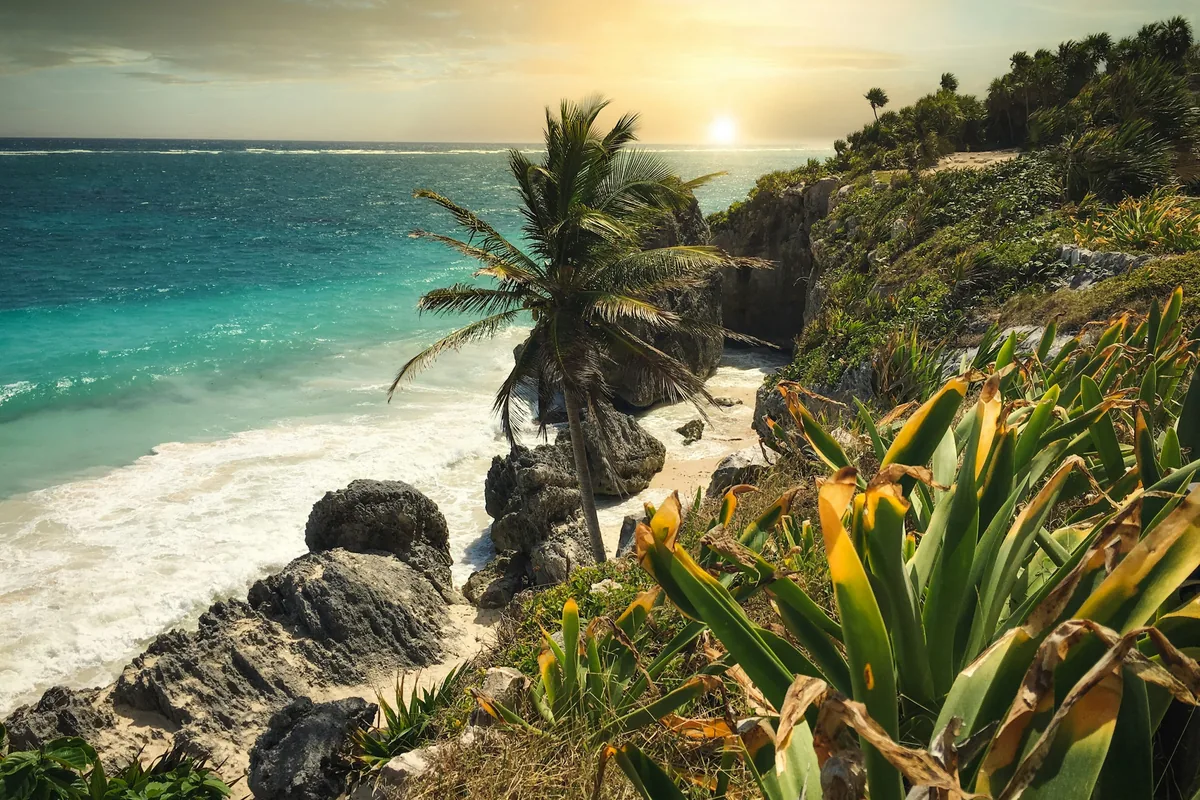
Go inland to swim in cenotes, natural freshwater sinkholes, and visit Chichén Itzá, one of the New Seven Wonders of the World. Seaweed (sargassum) can affect beaches in some seasons, so check recent reports.
Inland, the colonial cities of Mérida and Valladolid have colourful streets, markets and excellent Yucatecan food, including cochinita pibil, slow-cooked pork. For a quieter beach, the island of Holbox has sandy streets and no big resorts.
- Getting there: Direct flights to Cancún take around ten hours from the UK.
- Time needed: Ten days to two weeks.
- Best time to go: December to March, when it’s dry and sargassum seaweed is usually less of a problem.
- Insider tip: Arrive at the Tulum ruins and Chichén Itzá when they open to beat the heat and the tour groups.
Best for: beaches with history and adventure.
How to Choose Your Winter Sun Destination
Decide how far you are willing to fly. For a week away, short-haul options like the Canaries, Madeira and Morocco make the most sense. For two weeks or more, long-haul destinations become worthwhile.
Think about how hot you want it. Around 20°C is ideal for walking and sightseeing. 28°C and above is better for pure beach holidays.
Check the sea temperature too. The Canaries and Madeira are warm on land but the sea is around 18 to 20°C in winter. If swimming matters, the Red Sea, Caribbean or Southeast Asia are better.
Book early for Christmas and February half-term. Prices rise sharply during school holidays. Travelling in January or early March usually offers the best value.
Think about the time difference. The Canaries, Madeira and Morocco are on or close to UK time, so there’s no jet lag. Long-haul trips to Asia or the Caribbean are worth it, but allow a day or two to adjust.
How to Plan Your Winter Sun Itinerary
Match the trip to the time you have. Short-haul destinations suit a week away, while long-haul trips need ten days or more to make the flight worthwhile.
One Week, Short Haul
Spend a week on one Canary Island, or split it between Funchal and the west of Madeira. For more culture, try three nights in Marrakech and four on the coast in Essaouira or Agadir.
Two Weeks, Long Haul
In Thailand, spend a few days in Bangkok, then fly south to Krabi or Koh Lanta for the beaches. In Mexico, combine a week on the Riviera Maya with Mérida, Valladolid and the cenotes inland.
Getting Around Once You Arrive
Hire a car on the Canaries, Madeira and the Yucatán to explore beyond the resorts, as the best scenery is often inland or up in the mountains. In Thailand and Vietnam, cheap domestic flights, ferries and private transfers are the easiest way to cover long distances.
In Dubai, the metro and taxis are clean and efficient. In Egypt, Cape Verde and the Caribbean, most visitors use hotel transfers and organised trips, with taxis for shorter journeys.
How Much Does a Winter Sun Holiday Cost?
Prices depend more on when you travel than where you go. Christmas, New Year and February half-term are the most expensive weeks, while January and early March are usually cheapest.
Egypt, Morocco and the Canaries offer some of the best value packages from Europe. The Caribbean and Dubai are generally more expensive, while Thailand and Vietnam cost more to reach but are very affordable once you arrive.
Where Should You Stay?
Choose your base by what you want to do. For pure relaxation, a beachfront resort or all-inclusive hotel keeps things simple. For exploring, a town base with restaurants and transport links works better.
In Tenerife, Los Cristianos and Costa Adeje are sunny and lively, while Puerto de la Cruz in the north has more local character. In Madeira, Funchal is the best base for first-timers. In Thailand, Koh Lanta and Ao Nang near Krabi suit families and couples looking for a calmer stay.
Frequently Asked Questions
Where is hot in Europe in winter?
The Canary Islands are the warmest part of Europe in winter, followed by Madeira, Cyprus and parts of southern Spain like Málaga.
What is the cheapest winter sun destination?
Morocco, Egypt and the Canary Islands often offer the best value packages from Europe, especially in January.
Where can I get winter sun in December?
Dubai, the Canary Islands, Cape Verde, Thailand and the Caribbean are all reliably warm and sunny in December.
Is it warm enough to swim in the Canary Islands in winter?
Yes, but the sea is cool at around 19 to 20°C. Many hotels have heated pools, and the water feels much warmer on sunny afternoons.
Where is warm for February half-term?
The Canary Islands, Madeira, Morocco and Egypt are all good short-haul choices for February half-term. Book early, as prices rise during school holidays.
Find Your Sunshine
For short trips, head to the Canaries or Madeira. For a real tropical escape, go long-haul to Thailand, Vietnam or the Caribbean. Whatever you choose, a week of warmth in the middle of winter is one of the best things you can do for your mood.
Prefer to embrace the cold? Our snowy European winter breaks, from Alpine villages to Lapland are the cosy alternative, and where to see the Northern Lights in Norway, Finland and Iceland covers the best aurora trips.
Featured image: Photo by Ittemaldiviano on Unsplash