Last updated: October 2026
The best winter destinations in Europe are the places that get better when the temperature drops: snow-covered villages, mountain resorts, steaming thermal baths and historic cities with fewer crowds than summer.
Winter travel in Europe also has practical perks. Flights and city hotels are often cheaper in January and February, museums are quieter, and you get the special atmosphere of short days, candlelit cafés and fresh snow.
Here are the top 10 winter destinations in Europe, chosen for a mix of scenery, activities and that cosy winter feeling.
Quick answer: What are the best winter destinations in Europe? Our top 10 are Lapland, Zermatt, Hallstatt, Salzburg, Prague, Budapest, Bruges, Edinburgh, The Dolomites and Reykjavik and Iceland. Finnish Lapland is the top choice for snow and the Northern Lights, Zermatt and the Dolomites for skiing, Budapest for thermal baths and Edinburgh for New Year.
Top 10 Winter Destinations in Europe at a Glance
| # | Destination | Best for |
|---|---|---|
| 1 | Lapland, Finland | Families, couples and aurora hunters |
| 2 | Zermatt, Switzerland | Skiers and luxury mountain escapes |
| 3 | Hallstatt, Austria | Photographers and quiet, scenic stays |
| 4 | Salzburg, Austria | Culture lovers who want easy mountain access |
| 5 | Prague, Czech Republic | Affordable city breaks |
| 6 | Budapest, Hungary | Relaxation and value for money |
| 7 | Bruges, Belgium | Romantic weekends |
| 8 | Edinburgh, Scotland | Festive atmosphere and New Year |
| 9 | The Dolomites, Italy | Skiing with great food |
| 10 | Reykjavik and Iceland | Dramatic landscapes and adventure |
1. Lapland, Finland
Finnish Lapland is Europe’s true winter wonderland, with reliable snow from December to March. Rovaniemi sits on the Arctic Circle and is home to Santa Claus Village, while smaller resorts like Levi and Saariselkä feel wilder.
Activities include husky and reindeer sledding, snowshoeing through silent forests, ice fishing and staying in glass igloos to watch for the Northern Lights. Visit Finland has a full guide to the region.
In Rovaniemi, the Arktikum science centre is a great introduction to Arctic nature and culture, and the Ranua Wildlife Park nearby is home to bears, lynx and other northern animals. Further north, Levi is Finland’s biggest ski resort, with slopes that suit beginners and families.
- Getting there: Fly to Rovaniemi or Kittilä, or take the overnight train from Helsinki to Rovaniemi.
- Time needed: Four to five nights.
- Best time to go: December for a festive trip, or February and March for more daylight and great snow.
- Insider tip: In the far north, the sun barely rises in December. The soft blue light is beautiful, but plan activities around the few bright hours.
Best for: families, couples and aurora hunters.
2. Zermatt, Switzerland
Zermatt is a car-free mountain village at the foot of the Matterhorn, one of the most recognisable peaks in the world. Electric taxis and horse-drawn sleighs replace cars on the streets.
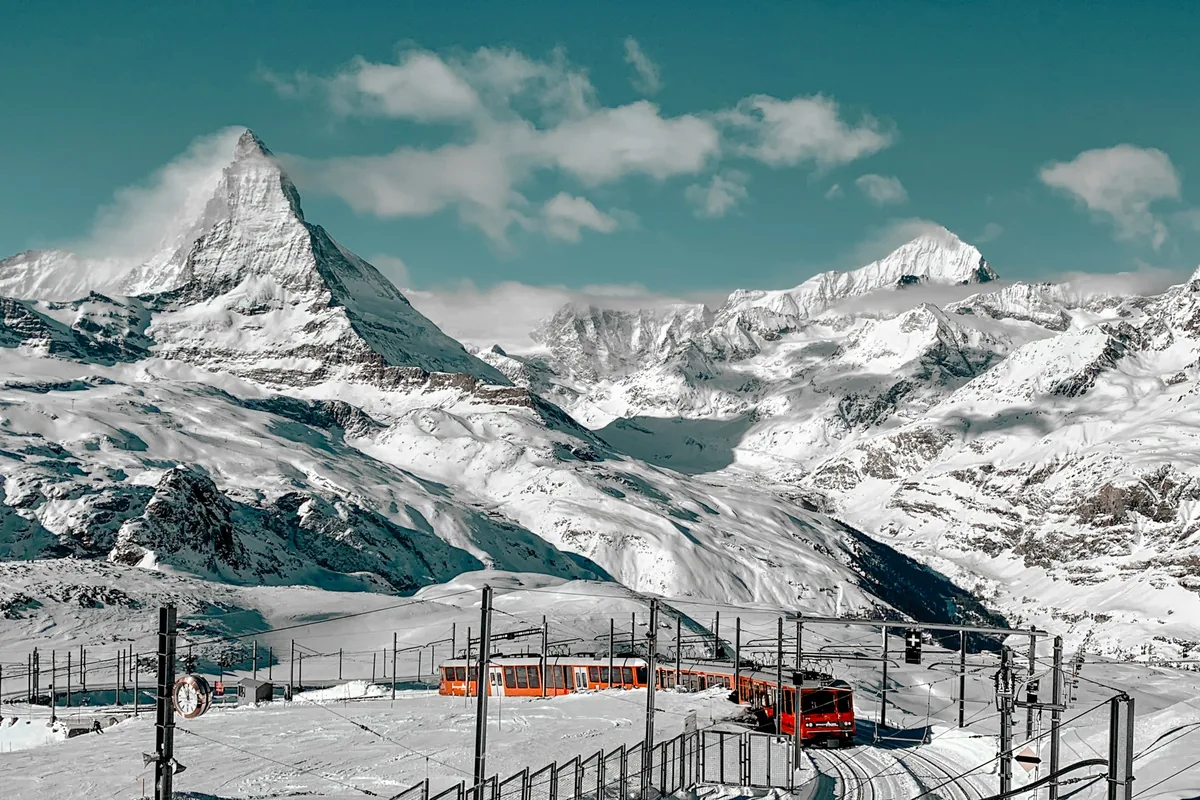
The ski area links with Cervinia in Italy and reaches high enough for snow throughout the season. Non-skiers can ride the Gornergrat railway for views of dozens of 4,000 metre peaks, or simply enjoy fondue in a mountain hut. The Switzerland Tourism site covers Zermatt and other Alpine resorts.
Ride the cable car up to the Matterhorn Glacier Paradise, one of the highest cable car stations in Europe, for views across the Alps into Italy and France. Back in the village, the old Hinterdorf quarter has wooden barns and chalets that are hundreds of years old.
- Getting there: Zermatt is car-free. Take the train via Visp, or arrive on the scenic Glacier Express from St Moritz.
- Time needed: Three to five days.
- Best time to go: January to March for the best snow, or December for a festive atmosphere.
- Insider tip: Go up to Gornergrat early on a clear morning, before clouds build around the Matterhorn.
Best for: skiers and luxury mountain escapes.
3. Hallstatt, Austria
Hallstatt is a tiny lakeside village in Austria’s Salzkammergut region, and under a layer of snow it looks like a postcard. Pastel houses sit between the lake and steep mountains.
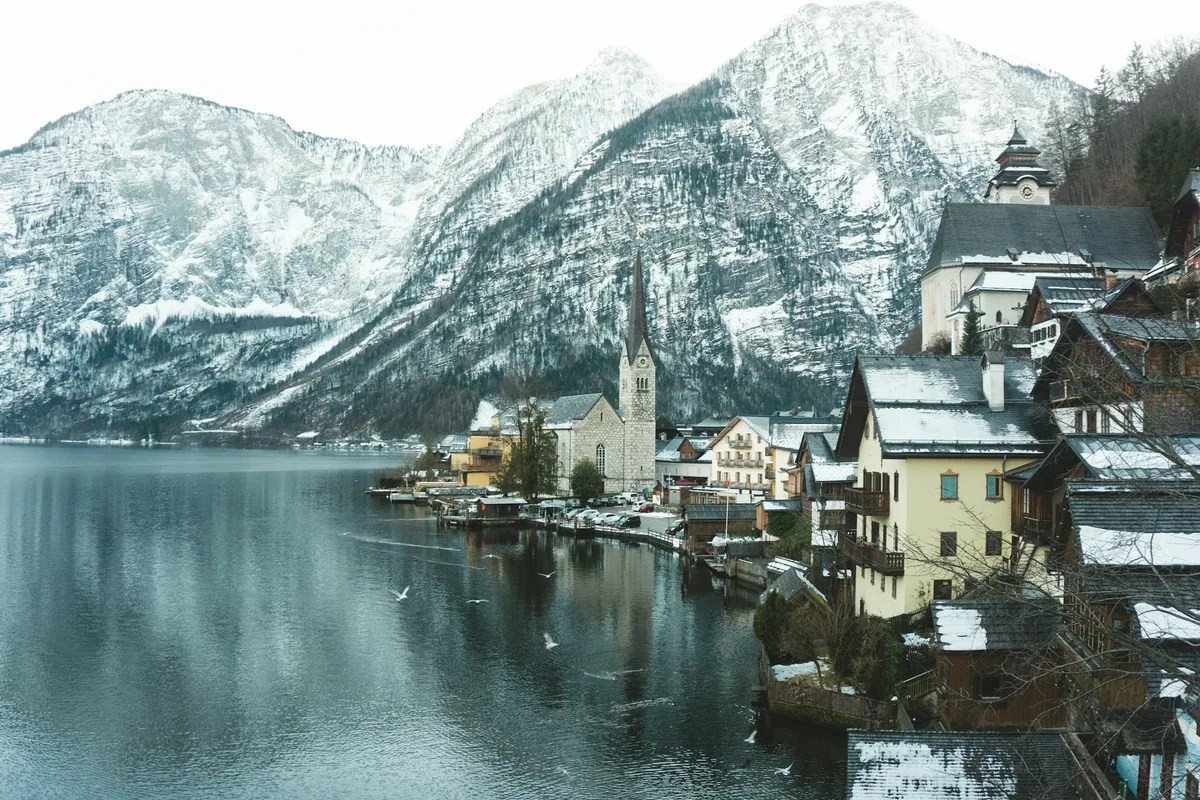
In summer it is very crowded, but winter is much quieter. From spring to autumn, a funicular climbs to the Skywalk viewing platform and the ancient salt mine, one of the oldest in the world. In winter, the snowy village and the lake are the main attraction. Stay overnight to see the village after the day visitors leave.
Walk the lakeside path at dawn, when the water is still and the village reflects perfectly in the lake. The Bone House beside the parish church, with its painted skulls, is one of the most unusual sights in Austria.
- Getting there: Take the train to Hallstatt station and the short ferry across the lake, or travel by bus and train from Salzburg in around two hours.
- Time needed: One night, or a full day trip.
- Good to know: The salt mine and its funicular usually close in winter, so check opening dates before you plan around them.
- Insider tip: Stay overnight to enjoy the village in the evening and early morning, when it’s at its most peaceful.
Best for: photographers and quiet, scenic stays.
4. Salzburg, Austria
Salzburg combines baroque architecture, mountain backdrops and a rich musical history, all within a compact old town. Mozart was born here, and The Sound of Music was filmed in and around the city.
In winter you can visit Hohensalzburg Fortress, explore Christmas markets in December and take day trips to nearby ski areas and Hallstatt. Austria’s official tourism site lists winter events across the country.
The Christkindlmarkt on Domplatz, in front of the cathedral, is one of Austria’s most traditional Christmas markets. Just outside the city, the small village of Oberndorf has a memorial chapel on the site where the carol “Silent Night” was first performed in 1818.
- Getting there: Trains from Munich take around two hours, and from Vienna around two and a half.
- Time needed: Two to three days.
- Best time to go: December for the markets, or January for quieter streets.
- Insider tip: The Salzburg Card includes public transport and entry to many sights, including the fortress funicular.
Best for: culture lovers who want easy mountain access.
5. Prague, Czech Republic
Prague is magical in winter, when fog drifts over the Vltava River and snow settles on the rooftops of the Old Town. Visitor numbers drop after the New Year, so January and February are ideal for seeing Prague Castle and Charles Bridge without the crowds.
Warm up in historic beer halls and cafés, catch a classical concert in a baroque church, and try hearty Czech dishes like goulash in a bread bowl.
Cross Charles Bridge at dawn, when the statues stand out against the mist and the bridge is almost empty. For a quieter view of the city, climb Petřín Hill or walk up to the old fortress of Vyšehrad, with its cemetery of famous Czech artists.
- Getting there: Prague Airport is linked to the centre by bus and metro, and trains run from Berlin, Dresden and Vienna.
- Time needed: Three days.
- Best time to go: January and February for the lowest prices and fewest visitors.
- Insider tip: Book classical concerts in historic churches directly with the venue for the best seats.
Best for: affordable city breaks.
6. Budapest, Hungary
Budapest is one of the best cities in Europe for winter because of its thermal baths. Soaking in the outdoor pools of the Széchenyi Baths while steam rises into cold air is unforgettable.
The city also has one of Europe’s largest outdoor ice rinks in City Park, beautiful views from Buda Castle and some of the best value food and wine in Central Europe.
Besides Széchenyi, the historic Rudas Baths by the Danube combine an Ottoman-era thermal pool with a rooftop pool that has views across the river. For the best city views, walk up to the Fisherman’s Bastion on Castle Hill as the lights come on along the Danube.
- Getting there: Budapest Airport is linked to the centre by express bus, and trains run from Vienna in under three hours.
- Time needed: Three days.
- Good to know: Bring flip flops and a towel to the baths, or hire them on site.
- Insider tip: Visit the baths on a weekday morning, when they are much quieter.
Best for: relaxation and value for money.
7. Bruges, Belgium
Bruges is a medieval city of canals, cobbled lanes and gabled houses that feels especially cosy in winter. Its historic centre is a UNESCO World Heritage Site.
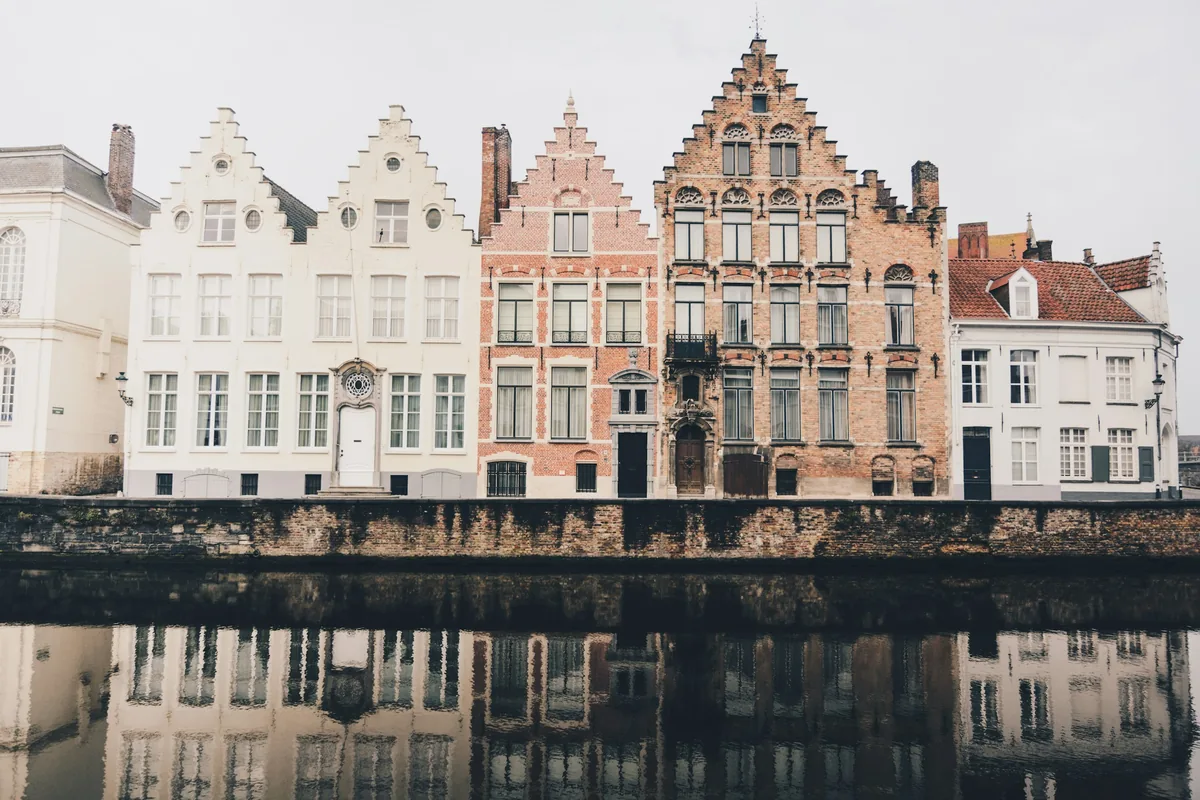
Warm up with Belgian hot chocolate, waffles and some of the world’s best beer. In December there is a Christmas market and an ice rink on the Markt square. Visit Bruges has seasonal events listed.
Climb the 366 steps of the Belfry for views over the rooftops, and visit the Basilica of the Holy Blood, a small chapel that holds one of Europe’s most famous relics. In the evening, the lit-up canals are perfect for a slow walk.
- Getting there: Trains from Brussels take around an hour, with Eurostar connections from London to Brussels.
- Time needed: One to two days.
- Best time to go: December for the market, or January for a quiet romantic break.
- Insider tip: Stay overnight. The day trippers leave by late afternoon, and the old town is magical in the evening.
Best for: romantic weekends.
8. Edinburgh, Scotland
Edinburgh has one of the world’s most famous winter celebrations: Hogmanay, three days of street parties, concerts and fireworks over the castle. The city’s Christmas market and seasonal light trails run through December.
Even outside the festive period, winter suits Edinburgh’s moody character. Walk up Arthur’s Seat for views across the city, explore the Royal Mile and warm up in a traditional pub. Our Edinburgh guide to the castle, Royal Mile and Arthur’s Seat helps you plan the days, and the UK’s most impressive castles are ideal for a wintry road trip beyond the city.
In December, the Christmas market and fairground fill East Princes Street Gardens, with views up to the castle. For Hogmanay, the main street party in the city centre is ticketed, so book early if you want to be close to the stages and the fireworks.
- Getting there: Trains from London take around four and a half hours, and Edinburgh Airport is linked to the centre by tram.
- Time needed: Three days.
- Best time to go: December for the markets and Hogmanay.
- Insider tip: Book Hogmanay accommodation as soon as you can, as the city fills up months in advance.
Best for: festive atmosphere and New Year.
9. The Dolomites, Italy
The Dolomites in northern Italy are a UNESCO-listed mountain range with jagged pink-tinged peaks and some of Europe’s best ski terrain. The Dolomiti Superski pass covers a huge network of linked resorts.
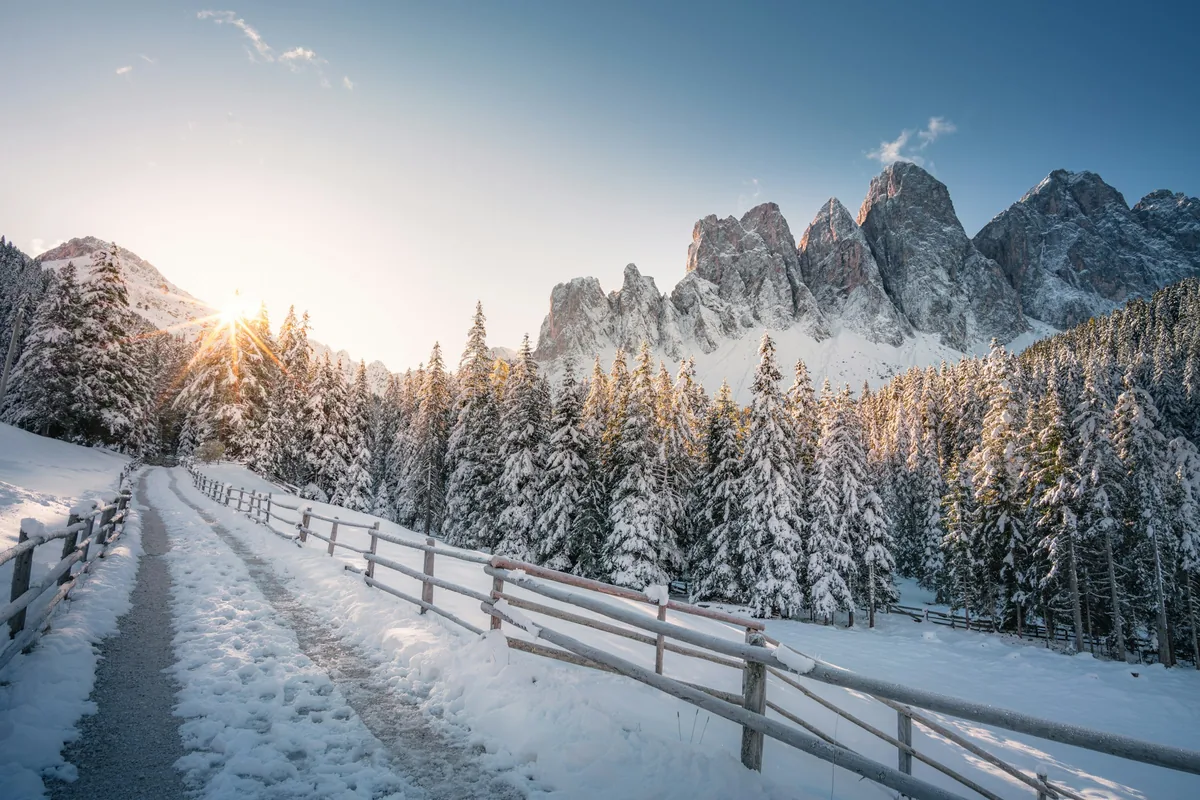
The Sella Ronda circuit lets skiers loop around a whole mountain massif in a day. Off the slopes, enjoy Italian food with an Austrian twist in mountain huts called rifugi, and towns like Cortina d’Ampezzo, a co-host of the 2026 Winter Olympics.
Non-skiers will love the Alpe di Siusi, one of the largest high alpine meadows in Europe, which becomes a winter playground for snowshoeing, sledging and cross-country skiing. In South Tyrol, German and Italian are both spoken, and the food mixes dumplings and speck with pasta and espresso.
- Getting there: Fly to Innsbruck, Verona, Venice or Bolzano, then transfer by road to resorts like Val Gardena, Alta Badia or Cortina.
- Time needed: Five days to a week for a ski holiday.
- Best time to go: January to March for reliable snow.
- Insider tip: Stop at a rifugio for lunch. Mountain huts in the Dolomites are known for excellent food.
Best for: skiing with great food.
10. Reykjavik and Iceland
Iceland in winter offers ice caves, frozen waterfalls, black sand beaches and the chance to see the Northern Lights. Reykjavik is a small, friendly capital with good restaurants and geothermal pools.
From the city, you can drive the Golden Circle or join tours to the south coast and glacier ice caves, which are only safe to visit in winter. Days are short in December, so plan your sightseeing around the light. Winter is also aurora season, so see where and when to see the Northern Lights in Iceland before you book a tour.
Drive the Golden Circle to see Þingvellir National Park, the erupting Strokkur geyser and the Gullfoss waterfall. In Reykjavik, climb the tower of Hallgrímskirkja church for views over the colourful rooftops, then relax in a geothermal lagoon.
- Getting there: Keflavík Airport is around 45 minutes from Reykjavik by bus or car.
- Time needed: Four to six days.
- Good to know: In December, Reykjavik gets only around four to five hours of daylight.
- Insider tip: Only visit glacier ice caves with a licensed guide, as conditions change through the season.
Best for: dramatic landscapes and adventure.
What Should You Know Before Travelling in Europe in Winter?
Plan around daylight. In northern Europe, December days can have six hours of light or less. Schedule outdoor sightseeing for the middle of the day.
Pack layers. Thermal base layers, a warm waterproof jacket, gloves, a hat and waterproof boots will keep you comfortable from Lapland to Prague.
Use trains where you can. Rail travel through the Alps in winter is spectacular and avoids icy mountain roads. Routes like the Glacier Express in Switzerland are attractions in themselves.
Travel in January for the best value. After the New Year rush, prices for city hotels drop and attractions are quiet.
Book thermal baths and saunas. Spa experiences like Budapest’s baths or Finnish saunas are among the best parts of a winter trip, and popular slots fill up at weekends.
Check winter opening hours. Some mountain passes, museums and island ferries reduce service or close in winter.
How to Plan a Winter Itinerary in Europe
Group destinations by region and travel between them by train. These three routes each make a great one-week winter trip.
Alpine Rail Journey
Spend three nights in Zermatt, then travel by train through Switzerland and Austria to Salzburg, with a night in Hallstatt. The scenery from the train window is a highlight in itself.
Central European Capitals
Combine Prague, Vienna and Budapest, travelling between them by train. Each city has thermal baths, cafés or Christmas markets to warm you up.
Arctic Week
Spend a week in Finnish Lapland, splitting your time between Rovaniemi and a smaller resort further north for husky safaris, saunas and the best chance of seeing the Northern Lights.
Getting Around in Winter
Trains are the most relaxing way to travel in winter, especially through the Alps, where they avoid snowy mountain passes. Book long-distance and scenic trains in advance.
If you drive, check the local rules before you go. Many Alpine countries require winter tyres in snowy conditions, and some roads require snow chains to be carried. In cities, public transport and walking are the best options.
How Much Does a European Winter Break Cost?
Switzerland, Iceland and Lapland are among the most expensive winter destinations in Europe, especially during Christmas and school holidays. Prague and Budapest offer excellent value, with affordable hotels, food and spa visits.
For ski trips, lift passes, equipment hire and lessons add up quickly, so look at package deals. January, after the New Year rush, is usually the cheapest time for city breaks.
Where Should You Stay?
For mountain trips, stay in the village rather than a distant valley town, so you can walk to the lifts, restaurants and evening life. In Lapland, a cabin or lodge outside town gives you dark skies for the Northern Lights.
In cities, stay centrally to make the most of short winter days. Prague’s Old Town, Vienna’s Innere Stadt and Budapest’s District V are all within walking distance of the main sights.
Frequently Asked Questions
Where is the most beautiful place in Europe in winter?
Hallstatt, Zermatt and Finnish Lapland are often named the most beautiful thanks to their snowy scenery.
What is the best European city to visit in winter?
Budapest, Prague and Vienna are favourites for their thermal baths, cafés and festive markets, combined with good value.
Where can I see snow in Europe in December?
Lapland, the Alps and the Dolomites have the most reliable snow in December. Cities like Prague and Vienna get snow some years but it is not guaranteed.
Which European city is cheapest in winter?
Budapest and Prague are among the best-value winter city breaks in Europe, with affordable hotels, food and thermal baths.
Is Iceland worth visiting in winter?
Yes. Winter brings the Northern Lights, ice caves and snowy landscapes, but days are short and roads can be icy, so plan carefully.
Embrace the Cold
Winter is one of the best times to see Europe, with fewer crowds, lower prices and a magical atmosphere. Whether you choose a snowy Alpine village or a city of thermal baths, pack warm and enjoy the season.
Planning a festive trip? Time your trip for December and you can add Europe’s best Christmas markets, from Strasbourg to Prague, or stay on for the best European cities to celebrate New Year’s Eve. If you would rather escape the cold, our guide to warm winter sun destinations, from the Canaries to Thailand shows where it’s still beach weather.
Featured image: Photo by Patrick Robert Doyle on Unsplash