Last updated: October 2026
The best ski resorts in Europe for beginners have wide, gentle nursery slopes close to the village, English-speaking ski schools and easy blue runs to progress onto. Value matters too, because lift passes, lessons and equipment add up quickly for first-timers.
Choosing the right resort can make the difference between loving skiing and never going back. This guide ranks the top 10 ski resorts in Europe for beginners, from budget-friendly options in Eastern Europe to classic Alpine villages.
What makes a good beginner resort? Look for free or cheap beginner lifts, snow-sure slopes, a compact village where you don’t need a bus to reach lessons, and enough easy terrain to keep you busy for a week.
Quick answer: What are the best ski resorts in Europe for beginners? Our top 10 are Soldeu, Bansko, Kranjska Gora, Livigno, Cervinia, Obergurgl, Ellmau and the SkiWelt, Courchevel, Saas-Fee and Seefeld. Soldeu in Andorra and Bansko in Bulgaria are the best-value choices, Obergurgl and Saas-Fee are among the most snow-sure, and Courchevel offers free beginner lifts with endless terrain to progress onto.
Top 10 Ski Resorts in Europe for Beginners at a Glance
| # | Destination | Best for |
|---|---|---|
| 1 | Soldeu, Andorra | British beginners who want great tuition |
| 2 | Bansko, Bulgaria | Beginners on a budget |
| 3 | Kranjska Gora, Slovenia | Families and a relaxed atmosphere |
| 4 | Livigno, Italy | Snow-sure skiing with good value |
| 5 | Cervinia, Italy | Progressing quickly on long, easy runs |
| 6 | Obergurgl, Austria | Families and guaranteed snow |
| 7 | Ellmau and the SkiWelt, Austria | Traditional Austrian charm and short transfers |
| 8 | Courchevel, France | Beginners who want room to grow |
| 9 | Saas-Fee, Switzerland | A scenic Swiss experience |
| 10 | Seefeld, Austria | Mixed groups and cross-country skiing |
1. Soldeu, Andorra
Soldeu in Andorra’s Grandvalira ski area is one of the most popular beginner resorts in Europe, known for its large ski school with many English-speaking instructors.
The nursery area sits at the top of the gondola, where the snow is reliable and the views are wide open. There is a huge amount of easy terrain to progress onto, and Andorra is tax-free, so après-ski and shopping can be good value. Visit Andorra has resort information.
Grandvalira is the largest ski area in the Pyrenees, so once you’re confident on blue runs there are long, scenic pistes to explore across several linked villages. In the evening, Soldeu has a friendly après-ski scene, and the spa centre at Caldea in the valley is a great way to rest tired legs.
- Getting there: Andorra has no commercial airport. Fly to Toulouse or Barcelona and transfer by road, which takes around three hours.
- Time needed: A full week.
- Best time to go: January and March for good snow and fewer crowds.
- Insider tip: Book lessons with the main ski school early, as English-speaking groups fill up in peak weeks.
Best for: British beginners who want great tuition.
2. Bansko, Bulgaria
Bansko is one of the best-value ski resorts in Europe, with lift passes, lessons, equipment hire and food often costing far less than in the Alps.
A gondola runs from the edge of town up to the main ski area, where gentle slopes are set among pine forests. The old town has cobbled streets and traditional taverns, called mehanas, serving hearty Bulgarian food. Queues for the gondola can be long at peak times, so start early.
The ski area sits within the Pirin mountains, part of a national park listed by UNESCO. Lessons are excellent value, so many beginners book private tuition here that would be too expensive in the Alps.
- Getting there: Fly to Sofia, then transfer by road in around two and a half to three hours.
- Time needed: A week.
- Good to know: The gondola is the only lift link from town to the slopes, so queues can be long first thing in the morning.
- Insider tip: Stay close to the gondola station to save time and avoid carrying skis across town.
Best for: beginners on a budget.
3. Kranjska Gora, Slovenia
Kranjska Gora is a small, friendly resort in Slovenia’s Julian Alps, with nursery slopes right at the edge of the village. It’s ideal for families and complete beginners who want everything within walking distance.
The ski area is modest, so it suits a first or second ski week better than intermediates. Ljubljana and Lake Bled are close by for a day off the slopes. The Slovenia tourism site has winter travel tips.
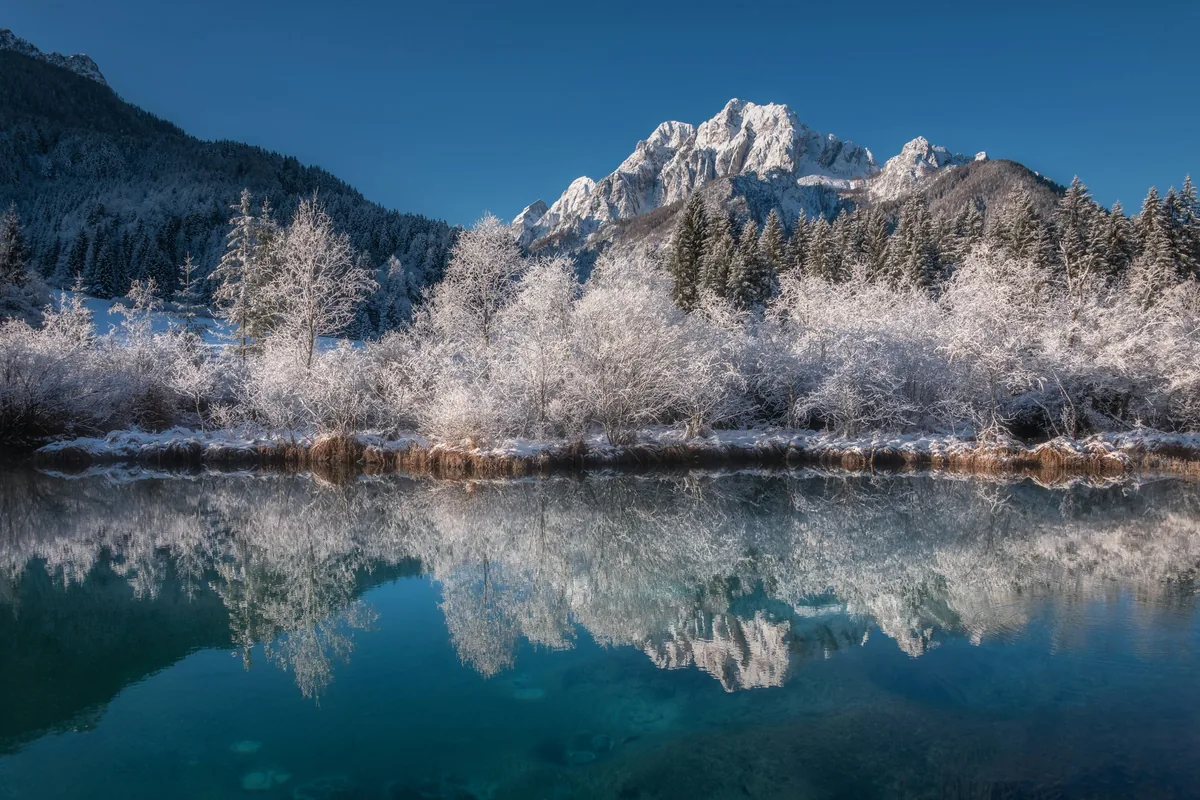
Kranjska Gora also hosts World Cup slalom races, and the famous ski jumping hills at Planica are just down the valley. A short walk from the village, the Zelenci nature reserve, the source of the Sava Dolinka river, looks magical under snow and frost.
- Getting there: Fly to Ljubljana, Klagenfurt or Venice and transfer by road. Ljubljana is around an hour away.
- Time needed: A week for a first ski holiday.
- Best time to go: January to early March.
- Insider tip: Take a day off to visit Lake Bled, around 40 minutes away by car.
Best for: families and a relaxed atmosphere.
4. Livigno, Italy
Livigno is a high-altitude, duty-free resort in the Italian Alps with reliable snow and wide, gentle slopes on both sides of the valley. Its high base means the season is long and snow conditions are usually good.
The town stretches along the valley, with free buses connecting the lifts. Ski schools are plentiful and prices for food and drink are lower thanks to its tax-free status. Livigno was a venue for the 2026 Winter Olympics, which brought upgrades to its facilities.
Livigno is also known for its snow parks, popular with snowboarders, and its long, wide valley gives plenty of sunshine. In the evening, the pedestrian centre has bars, restaurants and duty-free shops selling everything from ski gear to perfume.
- Getting there: Fly to Bergamo, Milan, Innsbruck or Zurich. Transfers take three to four hours.
- Time needed: A week.
- Best time to go: December to April, thanks to the high altitude.
- Insider tip: Use the free ski buses to reach both sides of the valley rather than walking in ski boots.
Best for: snow-sure skiing with good value.
5. Cervinia, Italy
Cervinia sits beneath the Matterhorn and has some of the longest, gentlest runs in the Alps. Its high altitude makes it one of the most snow-sure resorts in Europe.
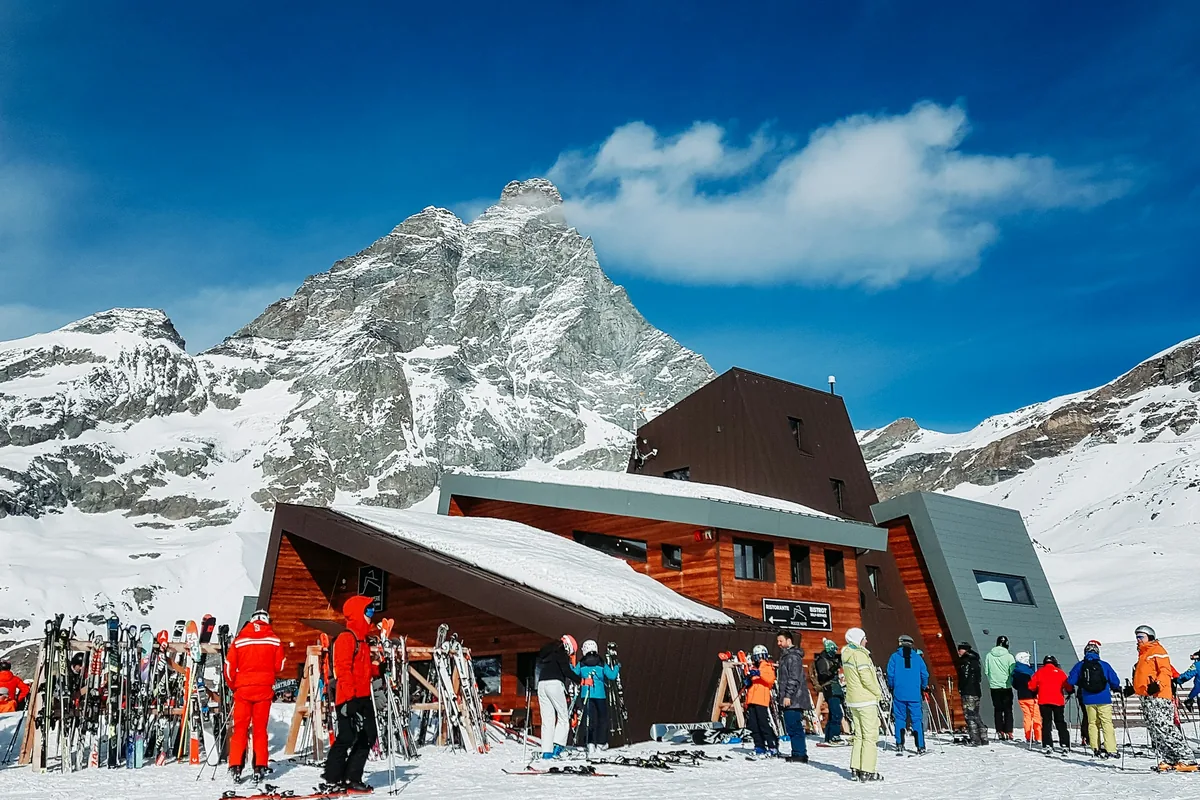
Once you have mastered the basics, there are long cruising blues to enjoy, and confident skiers can even ski across the border into Zermatt in Switzerland. Italian mountain food is a bonus. The official Italian tourism site covers the Aosta Valley region.
The village sits at around 2,000 metres, so even the lower slopes usually have good snow. The ski area links with Valtournenche on the Italian side and Zermatt in Switzerland, together forming the Matterhorn ski area.
- Getting there: Fly to Turin, Milan or Geneva and transfer in around two to three hours.
- Time needed: A week.
- Good to know: Skiing into Zermatt needs an international lift pass, and high winds can close the top lifts.
- Insider tip: Stick to the Italian side for your first few days, where the runs are long and gentle.
Best for: progressing quickly on long, easy runs.
6. Obergurgl, Austria
Obergurgl is one of the highest villages in Austria, which makes its snow very reliable from late November to April. The ski area is uncrowded and the slopes are wide and well groomed.
The village is quiet and traditional, without loud nightlife, so it’s especially popular with families. Ski-in, ski-out hotels make it easy to get to lessons. Austria’s official tourism site lists resorts across the Tyrol.
Obergurgl links with Hochgurgl across the valley, giving plenty of easy and intermediate terrain. The high altitude means the season often runs from mid November into late April.
- Getting there: Fly to Innsbruck and transfer by road in around an hour and a half.
- Time needed: A week.
- Best time to go: Late season in March and April for sunny, quieter slopes.
- Insider tip: Choose a hotel near the nursery slopes at the top of the village to save walking uphill.
Best for: families and guaranteed snow.
7. Ellmau and the SkiWelt, Austria
Ellmau is a pretty Tyrolean village in the SkiWelt, one of Austria’s largest linked ski areas, with plenty of gentle, tree-lined runs. The nursery slopes are close to the village and the ski schools are well regarded.
The SkiWelt is lower than some resorts, but it has extensive snowmaking. It’s also close to Innsbruck and Salzburg airports, meaning short transfers.
The SkiWelt links several villages, including Söll, Scheffau and Westendorf, with long, sunny tree-lined runs perfect for building confidence. Söll also offers floodlit night skiing on some evenings.
- Getting there: Innsbruck, Salzburg and Munich airports are all around an hour to an hour and a half away.
- Time needed: A week.
- Best time to go: January to February, when snow cover is most reliable at lower altitude.
- Insider tip: Ski in the morning when the snow is firm, and enjoy long lunches in the mountain huts.
Best for: traditional Austrian charm and short transfers.
8. Courchevel, France
Courchevel is famous for luxury, but it is also one of the best resorts in France for beginners. It has a number of free beginner lifts and dedicated learning areas, including gentle green runs through the forest.
Courchevel is part of the Three Valleys, the largest linked ski area in the world, so there is endless terrain once you improve. Accommodation is expensive in Courchevel 1850, but the lower villages of Courchevel 1650 and Le Praz offer better value.
Courchevel has several villages at different heights, from Le Praz down in the forest to Courchevel 1850 at the top. Beginners can learn in the dedicated free zones and then move on to long, wide green and blue runs above the villages.
- Getting there: Fly to Geneva, Lyon or Chambéry, or take the train to Moûtiers and transfer by bus.
- Time needed: A week.
- Insider tip: Buy a Courchevel-only lift pass for your first days and upgrade to the full Three Valleys pass once you’re confident.
Best for: beginners who want room to grow.
9. Saas-Fee, Switzerland
Saas-Fee is a car-free village surrounded by glaciers and 4,000 metre peaks. Its high slopes mean dependable snow and a long season.
The beginner area is right in the village, and some hotels offer packages that include a lift pass, so it’s worth comparing deals. The glacier ski area is spectacular for confident beginners. Read about other Swiss resorts on the Switzerland Tourism site.
High above the village, the Metro Alpin, an underground funicular, carries skiers up to the Allalin area at around 3,500 metres. The village itself is quiet and traditional, with wooden chalets and electric taxis.
- Getting there: Take the train to Visp, then the PostBus up the valley in under an hour.
- Time needed: A week.
- Best time to go: The season is long, often from November to April.
- Insider tip: The glacier is cold and windy, so take a warm layer even on sunny days.
Best for: a scenic Swiss experience.
10. Seefeld, Austria
Seefeld is a gentle, family-friendly resort near Innsbruck, best known for cross-country skiing. If you’re not sure downhill is for you, Seefeld’s hundreds of kilometres of flat trails are a brilliant way to enjoy the snow.
The downhill slopes are mostly easy and uncrowded, and the village offers horse-drawn sleigh rides, winter walks and spa hotels. It is reachable by train from Innsbruck.
Seefeld hosted the Nordic World Ski Championships in 2019, and its cross-country trails are some of the best in the Alps. The two small downhill areas, Rosshütte and Gschwandtkopf, are uncrowded and ideal for nervous beginners.
- Getting there: Trains run from Innsbruck in around 40 minutes, and from Munich in around two hours.
- Time needed: A week, or a long weekend from Innsbruck.
- Insider tip: Try a cross-country lesson on your first day. It’s an easy, low-cost way to enjoy the snow.
Best for: mixed groups and cross-country skiing.
What Should You Know Before Your First Ski Holiday?
Book lessons in advance. Ski schools fill up quickly during school holidays. Group lessons are cheaper, but a few private lessons can speed up your progress.
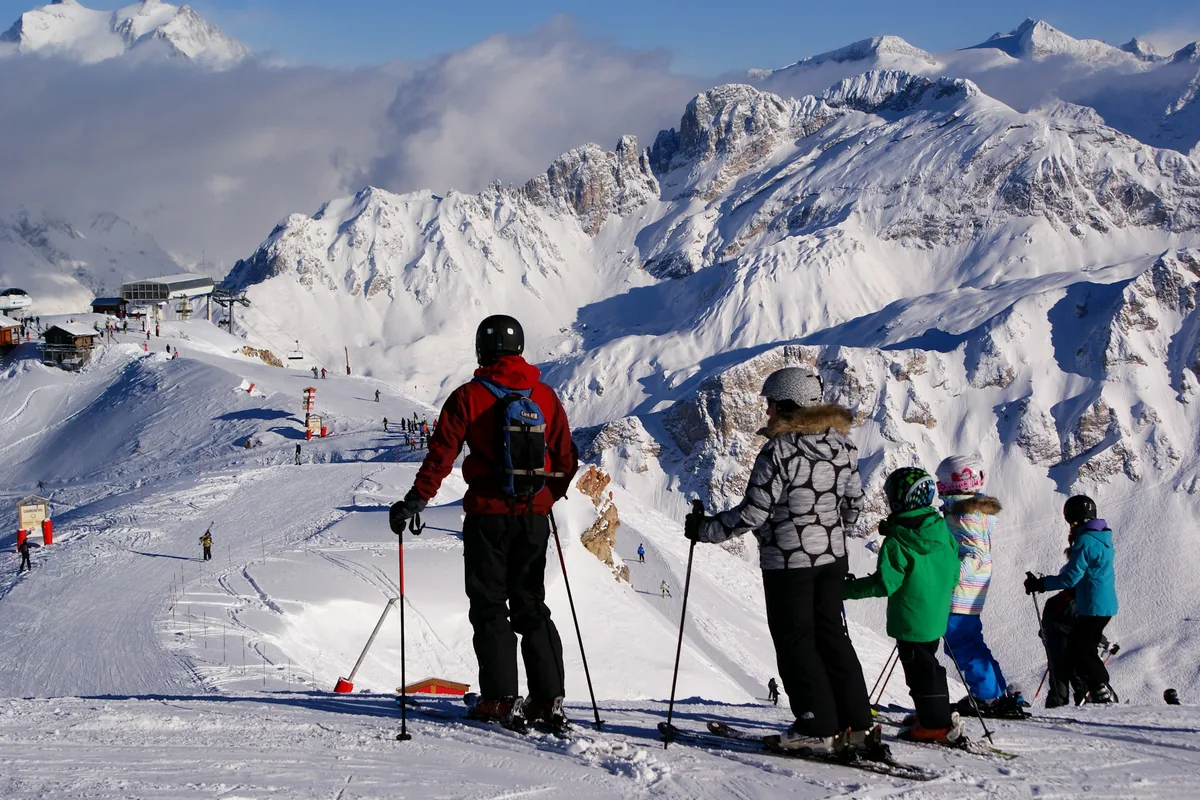
Choose ski-in, ski-out or central accommodation. Walking in ski boots while carrying skis is tiring. Being close to the nursery slope saves energy for skiing.
Avoid peak weeks if you can. Christmas, New Year and February half-term are crowded and expensive. If you do want to celebrate in the mountains, weigh it up against the best European cities for New Year’s Eve. Early January and March offer quieter slopes and lower prices.
Get proper clothing. Waterproof jacket and trousers, thermal layers, gloves, goggles and a helmet are essential. Most resorts rent helmets with skis.
Take a rest day. Skiing is tiring for beginners. A half-day off midweek to enjoy the spa or explore the village helps you come back stronger.
Buy travel insurance with winter sports cover. Standard policies often exclude skiing.
How to Plan Your First Ski Week: A Beginner Itinerary
A week is the ideal length for a first ski holiday, giving you time to learn the basics and enjoy some easy runs by the end. Here’s how a typical beginner week looks.
Days 1 and 2: The Nursery Slope
Collect your equipment, meet your instructor and learn to stop, turn and use the beginner lifts on the nursery slope.
Days 3 and 4: First Green and Blue Runs
Move up the mountain to easy green and blue runs, practising linked turns and riding chairlifts.
Days 5 to 7: Explore
Take a half-day rest, then spend the final days exploring easy runs with your group or a private instructor, and enjoy the view from a mountain restaurant.
Getting Around a Ski Resort
Most resorts have free ski buses linking the village with the main lifts. In car-free villages like Saas-Fee, electric taxis carry luggage to your hotel. Learn the lift types before you go: drag lifts pull you up while you ski, chairlifts carry you seated, and gondolas are enclosed cabins.
Book airport transfers in advance, especially on Saturdays in peak season, when roads into the mountains are busy.
How Much Does a Beginner Ski Holiday Cost?
The main costs are accommodation, lift passes, lessons and equipment hire. Bulgaria, Andorra and Slovenia are usually the best value, while Switzerland and Courchevel are the most expensive.
Look for resorts with free or cheap beginner lifts, as you won’t need a full area pass for the first few days. Package deals that include lessons, hire and a lift pass are often cheaper than booking each item separately.
Where Should You Stay?
Stay as close as possible to the nursery slope and ski school meeting point. Carrying skis in ski boots is tiring, especially for children.
Catered chalets are popular with groups and families, while hotels with ski rooms and boot heaters make mornings easier. Self-catering apartments are the cheapest option, especially in pricier resorts.
Frequently Asked Questions
What is the best country in Europe to learn to ski?
Austria is often recommended for its friendly ski schools and gentle slopes, while Andorra and Bulgaria offer excellent value.
How long does it take to learn to ski?
Most adults can ski basic green and blue runs after a week of lessons. Children often learn faster.
When is the best time for beginners to ski?
January and March offer good snow, fewer crowds and lower prices than school holiday weeks.
Is it hard for adults to learn to ski?
It takes a few days to feel comfortable, but most adults enjoy easy runs by the end of a week. Lessons make a big difference.
Do I need to buy ski equipment?
No. Rent skis, boots, poles and a helmet in the resort, and only buy warm, waterproof clothing, gloves and goggles.
Hit the Slopes
Pick a resort with easy slopes near the village, book lessons early and travel outside the peak weeks. You’ll be cruising down blue runs by the end of the week.
Not ready to ski? Our guide to Europe’s best winter destinations without skiing has snowy villages and spa towns, or plan a festive city break around Europe’s most magical Christmas markets.
Featured image: Photo by Nejc Peternelj on Unsplash