Last updated: November 2026
Lisbon runs on coffee. The city has grand old cafés with mirrors and marble, a newer wave of specialty roasters, and corner pastelarias where a small cup of espresso is a daily ritual. If you want the best cafes in Lisbon, start with A Brasileira for literary history, Fábrica Coffee Roasters for beans roasted on the premises and Copenhagen Coffee Lab for a calm, modern flat white. Add Café Nicola on Rossio and the 18th-century Martinho da Arcada, and you can drink your way through more than two centuries of Lisbon café life.
This guide covers ten cafes, each with a practical box. Further down you will find a short coffee glossary, how to choose between the cafes, a free printable 3-day Lisbon cafe itinerary, where to stay, getting around and budget guidance. For general planning, the official Visit Lisboa website is a good starting point, and if you want something sweet with your coffee, our guide to the best pastel de nata in Lisbon covers the city’s famous custard tarts.
Cafes change faster than monuments. Opening hours, branches and even addresses move from year to year, so this guide avoids exact times and prices. Where sources disagree or something could not be confirmed, it says so. Check before you go.
Quick answer: What are the best cafes in Lisbon? For history, go to A Brasileira in Chiado, Café Nicola on Rossio or Martinho da Arcada on Praça do Comércio. For specialty coffee, choose Fábrica Coffee Roasters, Copenhagen Coffee Lab, Hello, Kristof or Buna. For brunch, try Dear Breakfast, Comoba or The Mill.
Free printable itinerary
Planning a trip? Download our 3-Day Lisbon Cafe Itinerary as a PDF: the day-by-day plan plus all 10 places with directions and map links. Print it or keep it on your phone.
Quick comparison: best cafes in Lisbon
| Cafe | Area | Best for | Price tier |
|---|---|---|---|
| A Brasileira | Chiado | Literary history and a terrace statue | Mid-range |
| Café Nicola | Rossio | Art Deco interior and a classic stop | Mid-range |
| Martinho da Arcada | Praça do Comércio | Pessoa’s old corner and arcade views | Mid-range |
| Fábrica Coffee Roasters | Baixa | Beans roasted on site | Cheap to mid-range |
| Copenhagen Coffee Lab | Príncipe Real | A calm flat white and bakery | Cheap to mid-range |
| Hello, Kristof | Príncipe Real and Bairro Alto | A Scandinavian mood | Cheap to mid-range |
| Comoba | Cais do Sodré | Brunch in a former pharmacy | Mid-range |
| Dear Breakfast | Chiado and Bica area | Pancakes and eggs | Mid-range |
| Buna | Santos and Príncipe Real | Light-roast specialty coffee | Cheap to mid-range |
| The Mill | Príncipe Real | Australian-style brunch | Mid-range |
1. A Brasileira
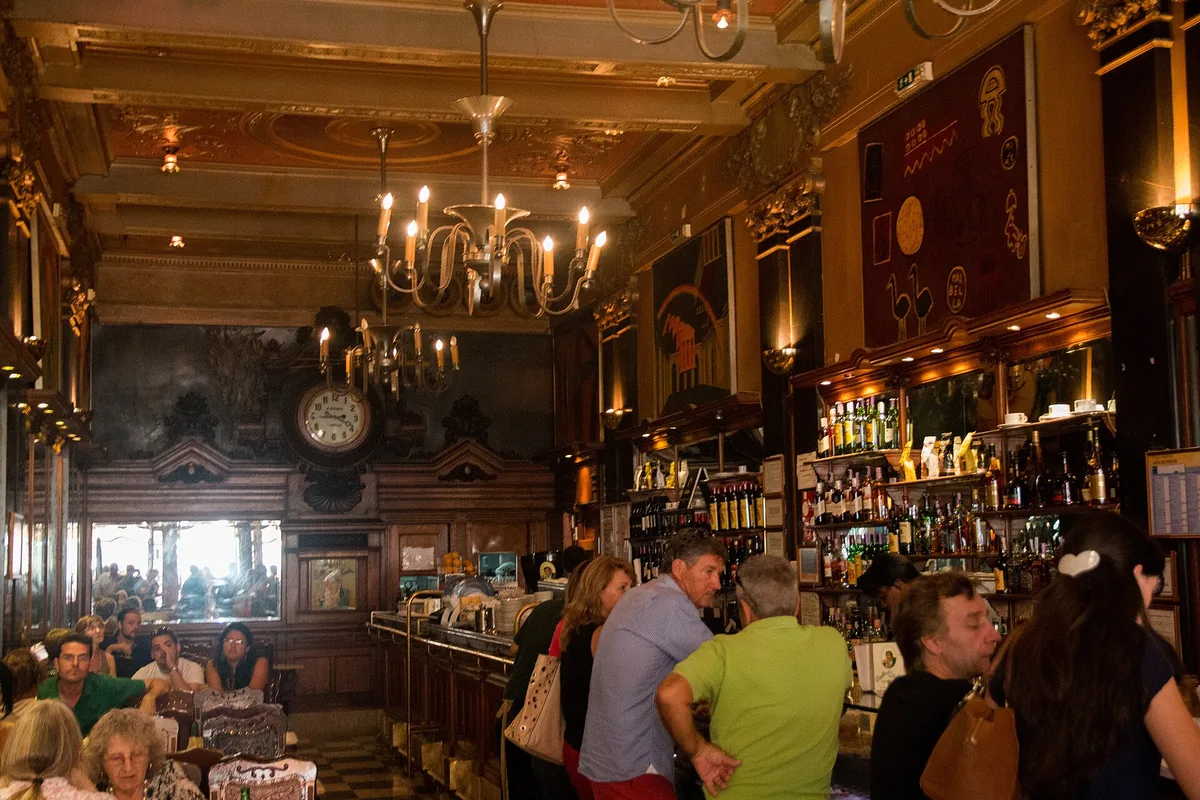
A Brasileira is the most famous café in Lisbon, and the one most visitors want to see first. It stands on Rua Garrett in Chiado, at numbers 120 to 122, and opened in 1905 as a shop selling Brazilian coffee before becoming one of the city’s great meeting places.
By the 1920s it was a gathering spot for writers, artists and thinkers, and the poet Fernando Pessoa is the name most closely tied to it. A bronze statue of Pessoa, seated at a table on the terrace, was unveiled in 1988 for the centenary of his birth. Sitting beside it is a popular photograph, so expect people queuing for the picture.
Inside, the room is all dark wood, mirrors and period detail. The building is classified as a Property of Public Interest, and the café is also listed in the city’s Lojas com História programme, which recognises historic shops. You can read more on the Lojas com História page for A Brasileira.
It is a working café, so you can order a coffee and a pastry, or a light meal later in the day. Prices reflect the location, and the terrace is the most expensive place to sit, so many locals drink their coffee standing at the counter. One guide notes the owner changed in 2020, and some visitors say quality is uneven, so treat it as a place for atmosphere rather than for the finest coffee in the city.
Sources do not give current hours, so check before you go. It pairs naturally with a stroll along Rua Garrett and a visit to the nearby Carmo convent ruins.
- How to get there: Metro to Baixa-Chiado, then walk a few minutes along Rua Garrett.
- How long to spend: 30 to 60 minutes.
- Best time to go: Early morning, before the terrace fills with tour groups.
- Tip: Order at the counter if you want the traditional, cheaper way to drink your coffee.
2. Café Nicola
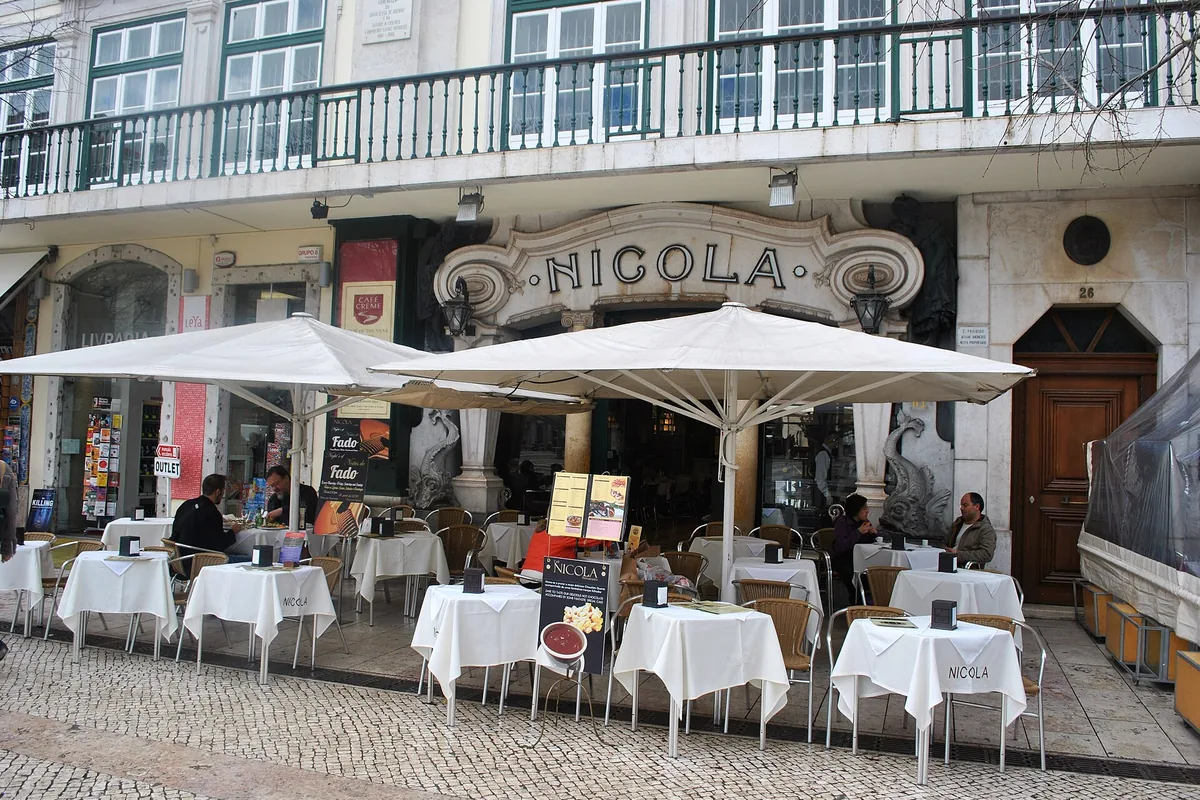
Café Nicola is a grand Rossio institution, with an Art Deco interior that makes it feel like a time capsule of 1930s Lisbon. It sits on Praça Dom Pedro IV, at numbers 24 and 25, on the northern side of the square.
The story goes back to the 18th century, when a man named Nicola opened an early Lisbon coffee house in the area. The current café opened in 1929 and was refurbished in 1935 in a sleek Art Deco style, with the exterior designed by the architect Norte Júnior. The poet Bocage is its best-known literary regular, and a statue reminds visitors of the connection. The café is also part of the Lojas com História programme, and its programme page has more detail.
Today it works as a café and restaurant. The coffee is classic, and the menu includes traditional dishes such as bife à Nicola and bacalhau à lisbonense. One source also mentions fado performances in the downstairs room from Thursday to Saturday, but this is not confirmed by an official source, so check before you plan an evening around it.
The best seats are on the terrace, facing the square, which makes it a good place for people-watching after a morning of sightseeing. Rossio is a major transport hub, so the café is easy to reach from almost anywhere in the centre.
Hours vary by source, from a weekday morning start to late evening, so confirm the current times with the café. Prices are higher than in a local pastelaria, which is the usual cost of a prime square.
- How to get there: Metro to Rossio, or walk from Baixa or Chiado.
- How long to spend: 30 to 60 minutes for coffee, longer for a meal.
- Best time to go: Mid-morning, when the light enters the front room.
- Tip: Look up at the Art Deco details inside before you sit down.
3. Martinho da Arcada
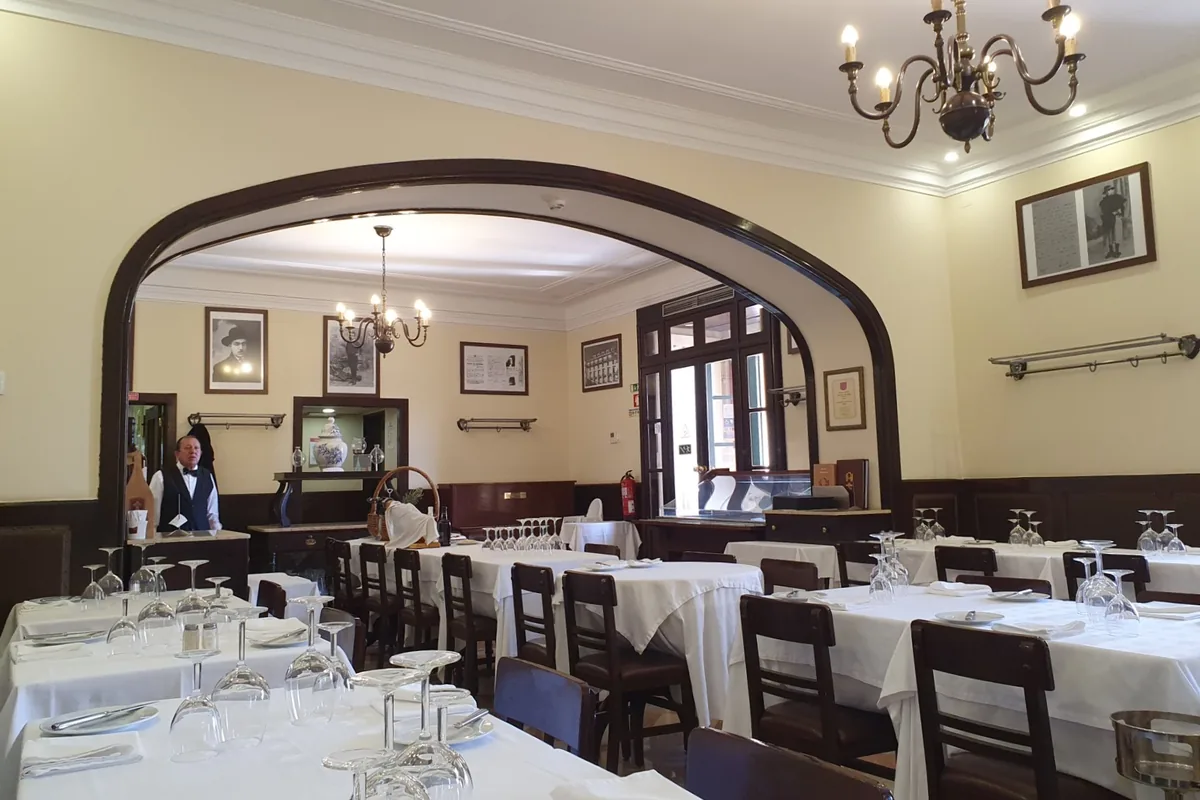
Martinho da Arcada is widely described as the oldest café in Lisbon, and it is the one most closely linked to Fernando Pessoa. It sits under the arcade of Praça do Comércio, at number 3, on the north-east side of the great riverside square.
Sources give 1782 as the opening year, with an earlier shop on the site called the Café da Neve, and it took the name Martinho in 1829 under a new owner. Turismo de Lisboa and other local sources call it the oldest café in the city, although this is a widely repeated claim rather than a figure you can check against an official register. The café is listed in the Lojas com História programme, with details on its programme page.
Pessoa is the draw. Accounts say his table is still there, in a small corner of the room, and the café also appears on Visit Lisboa’s walking route about the poet. Even if you are not a fan of his poetry, the dark interior, tiled floors and arches give it a quiet dignity that the busier cafés lack.
It is both a café and a restaurant, so you can stop for a coffee and a pastry or stay for a traditional Portuguese lunch. The setting is more formal than some of the others in this guide, and prices reflect the history.
Check the current opening days before you go, as historic restaurants of this kind sometimes close on certain days or for private events.
- How to get there: Walk from Baixa through the Rua Augusta arch to Praça do Comércio, or take the Metro to Terreiro do Paço.
- How long to spend: 30 to 60 minutes for coffee, one to two hours for lunch.
- Best time to go: Mid-morning, when the arcade is quieter.
- Tip: Ask about Pessoa’s table, but do not expect to be able to sit in it.
4. Fábrica Coffee Roasters
Fábrica Coffee Roasters is one of the names that started Lisbon’s specialty coffee wave, and the original branch still roasts on the premises. It sits on Rua das Portas de Santo Antão, at number 136, a short walk from Rossio at the northern end of the Baixa.
One travel blog describes a small, shiny roaster that produces all the shop’s coffee, and bags of beans are sold to take home. A Time Out listing says the beans are 100 percent arabica, from origins including Brazil, Ethiopia, Kenya and Colombia. Guides date the specialty wave in Lisbon to around 2014 and 2015, and Fábrica is repeatedly named as one of its anchors, along with Copenhagen Coffee Lab.
The atmosphere is relaxed and busy, with a steady flow of locals, visitors and people working on laptops. Guides say the Rossio location has communal tables, which makes it easy to share a space, though it can be crowded at midday. A second Lisbon location and a Porto branch are also reported, so if one is full, you may find another nearby.
The coffee list is a good place to try a filter brew or a flat white if you are used to the darker roast of a traditional bica. Sources disagree on hours and on the postcode, so check the current details before you go. It combines well with a walk around Rossio and the nearby Avenida da Liberdade end of town.
- How to get there: Metro to Restauradores or Rossio, then walk to Rua das Portas de Santo Antão.
- How long to spend: 30 to 45 minutes.
- Best time to go: Mid-morning on a weekday, when seating is easier.
- Tip: Buy a bag of beans as a souvenir, as the roasting is done on site.
5. Copenhagen Coffee Lab
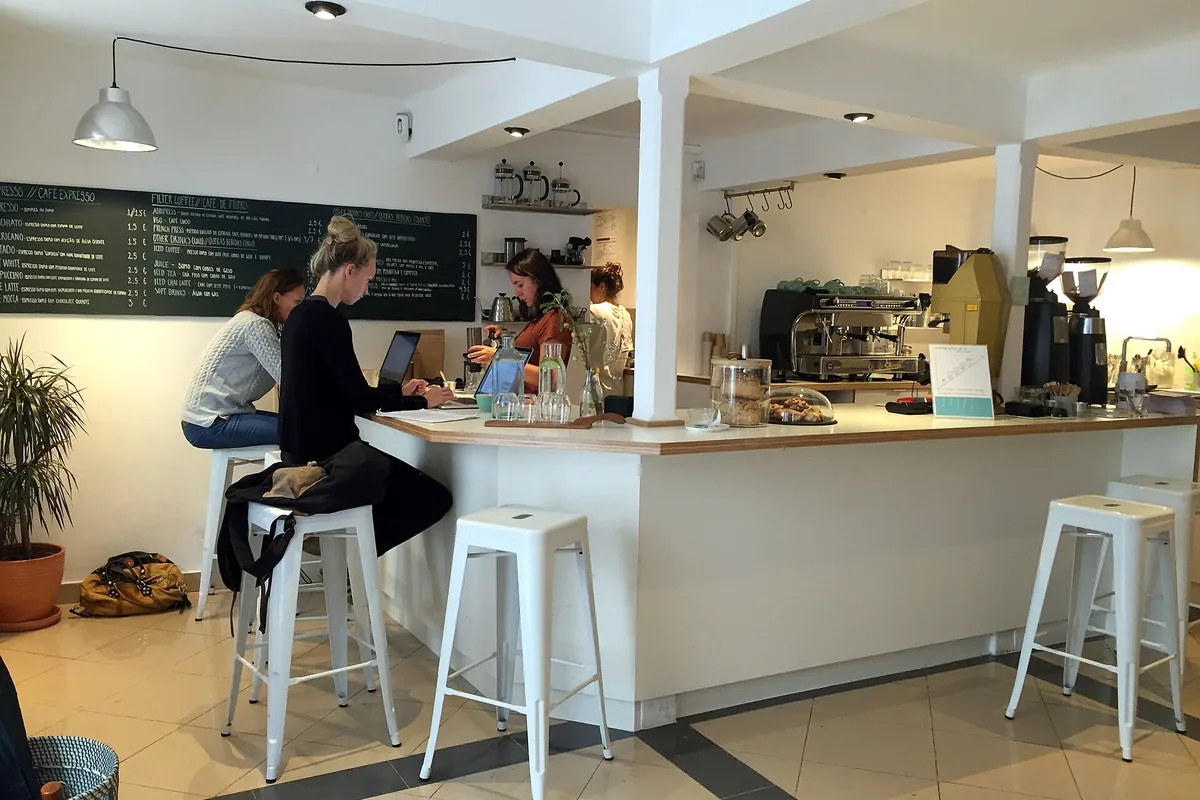
Copenhagen Coffee Lab is a calm, modern café that helped shape Lisbon’s specialty scene, and it is a good place to start the day. Its Príncipe Real branch is on Rua Nova da Piedade, at number 10, and guides agree on that address.
The name can be confusing for a Lisbon café, but guides still describe it as a standout, and the brand has been part of the city’s coffee story since around 2014. It is known for flat whites, filter coffee and baked goods, and the room is bright and relaxed, with a mix of locals, remote workers and visitors.
Be aware that there are or have been several branches. A Time Out listing says the brand began with a studio and café at LX Factory, then opened another space on Rua das Flores, and other sources mention locations on Escolas Gerais and in Alcântara. Some of these listings are older, so check which branch is open before you set out. One guide lists a LX Factory address that actually belongs to a different café, so beware of mixed-up addresses.
Guides list weekday hours from morning to early evening, with a later start at weekends, but sources differ, so confirm the current times. The café is a good choice for working on a laptop, though it can fill up at weekends. After coffee, you can walk to the Príncipe Real garden and the nearby shops.
Because this is one of the more popular specialty cafés, it is worth arriving early if you want a comfortable seat. The staff are used to visitors asking for recommendations, and the pastries are a good partner for a filter coffee.
- How to get there: Metro to Rato or a short walk from Príncipe Real, then follow Rua Nova da Piedade.
- How long to spend: 30 to 60 minutes.
- Best time to go: A weekday morning, before the laptop crowd arrives.
- Tip: Check which branch you are heading to, as older listings show several locations.
6. Hello, Kristof
Hello, Kristof is the place for a quiet, Scandinavian-feeling coffee, with magazines to read and a calm atmosphere. Its original café is on Rua do Poço dos Negros, at number 103, on the Príncipe Real and Bairro Alto border.
The mood is a big part of the appeal. Guides describe a calm, magazine-lined room with a Scandinavian feel, which suits a slow morning or a break from the noise of the city. The café focuses on coffee made from arabica beans, and a second, larger branch has opened near São Bento, so you may come across another when you are exploring.
It is a good option if you prefer a quiet space to the crowds at the historic cafés. Orders are simple, and the coffee list covers espresso, flat whites and filter. If you want something to eat, expect light bites and baked goods rather than a full brunch menu.
Hours change, so check the current times before you go. Some sources place it in Príncipe Real and others in Bairro Alto, which reflects its position on the border between the two districts.
It makes a good first stop on a Príncipe Real walk, followed by a visit to the Jardim do Príncipe Real and some of the independent shops around it.
- How to get there: Metro to Rato or Baixa-Chiado, then walk uphill to Rua do Poço dos Negros.
- How long to spend: 30 to 45 minutes.
- Best time to go: A quiet weekday morning.
- Tip: Bring a book or take a magazine from the shelf and enjoy a slow coffee.
7. Comoba
Comoba is a stylish brunch café set in a former pharmacy, and it is one of the most popular places for a relaxed late breakfast in Lisbon. It is on Rua de São Paulo, near Cais do Sodré and the Bica area, at number 101 in most listings (a few say 99), so check a map before you go.
The setting is the main attraction. Guides describe a plant-based brunch menu in a bright room that retains details from its time as a pharmacy. It is known as a place to work as well as eat, with reliable Wi-Fi and space to stay, according to one guide, although at weekends it fills with brunch crowds.
Because it is plant-based, it is a good choice for vegetarians and vegans, and for anyone who wants a lighter meal than the traditional pastelaria breakfast. The coffee is specialty-grade, and the menu changes through the year, so ask staff for the current recommendations.
Expect a queue at weekends. If you want a calm visit, go on a weekday or arrive early. The area is also close to the Time Out Market and the Pink Street nightlife district, so it combines well with a day in Cais do Sodré, including a walk along the river.
Some older guides give an address on Rua da Boavista, which is where it was before it reopened in a new space in 2023, and a smaller to-go branch is reported in Baixa. Hours and menus change, so check before you set off.
- How to get there: Metro or train to Cais do Sodré, then walk uphill a few minutes to Rua de São Paulo.
- How long to spend: One hour or more for brunch.
- Best time to go: A weekday late morning, to avoid the weekend queue.
- Tip: Use the Rua de São Paulo address, as older guides still show Rua da Boavista.
8. Dear Breakfast
Dear Breakfast is a bright, casual café built around breakfast all day, with pancakes, eggs and cold-pressed juices. It has several locations, and the branches most often recommended are in Chiado, on Rua António Maria Cardoso (number 64 in some listings), and the original on Rua das Gaivotas (number 17), near Bica and Bairro Alto.
The Chiado branch is described as a small room with a wooden floor that gets busy at weekends. The Rua das Gaivotas branch is reported to have the most extensive menu, in a less touristy part of town. Listings give different street numbers for the Chiado branch and the status of the newer Santos branch is unclear, so check the current branch details before heading out.
The menu is the draw for anyone who wants a proper brunch rather than a pastry. Expect pancakes, egg dishes and fresh juices, and a coffee list that covers the usual options. It is a popular place for a long, relaxed morning, and groups of friends and families often arrive for weekend brunch.
Because of that popularity, queues are common at weekends. A weekday visit or an early start will give you a calmer experience. Other branches are reported in Santos and Alfama, but their status is unclear, so treat them as details to check.
After brunch, the Rua das Gaivotas branch is within walking distance of the Miradouro de Santa Catarina, so you can walk off breakfast with a view. The Chiado branch is a short stroll from the shops and theatres around Rua Garrett.
- How to get there: Metro to Baixa-Chiado for the Chiado branch, or a walk from Cais do Sodré for the Rua das Gaivotas branch.
- How long to spend: One hour or more.
- Best time to go: A weekday morning, as weekend queues are common.
- Tip: Confirm the branch address on a map before setting off, as listings differ.
9. Buna
Buna is a specialty café known for light-roasted coffee in a city where darker roasts are the norm. It sits on the corner of Rua do Poço dos Negros and Rua de São Bento, though listings use both street names, so check a map before you go.
Several listings give the address as Rua do Poço dos Negros 168, and one adds Rua de São Bento 3 for the same corner. One guide says it moved to this corner beside the tram 28 line in December 2021. A few directories show other addresses that look out of date, so look up the location on a map before you set out.
Reviewers consistently rate the coffee. One guide describes it as one of the best specialty coffee shops in the city with a local feel, and another says it sources beans from Africa and the Americas. The light roast gives fruitier, brighter flavours than the traditional Portuguese espresso, which is worth trying even if you are used to a stronger cup.
It is a small place, so seating can be limited, and it suits a short stop rather than a long working session. Opening hours differ between listings, with one directory showing a Tuesday to Sunday pattern, but this should be confirmed.
If you are travelling with a coffee-loving friend, Buna is a good place to compare a filter brew with the espresso you drank earlier in the day. It combines well with a ride on tram 28 or a walk to the nearby Príncipe Real garden.
- How to get there: Tram 28 to the São Bento stops, or walk from Príncipe Real.
- How long to spend: 30 minutes.
- Best time to go: Mid-morning on a weekday.
- Tip: Ask for a filter coffee if you want to taste the light-roast character.
10. The Mill
The Mill is an Australian-style breakfast and brunch café, with flat whites and Portuguese ingredients served with an Aussie twist. It is on Rua do Poço dos Negros, at number 1, on the Príncipe Real side of Chiado.
The Australian-style brunch is the draw. Expect flat whites, eggs and toast-based dishes, with brunch mainly served at weekends according to one listing. It suits travellers who want a familiar style of brunch after a few days of pastries and espresso.
Opening days and menus change, so confirm them before you plan a visit. If it is closed, Hello, Kristof is a short walk away on the same street, and Copenhagen Coffee Lab is a few minutes beyond it. That makes Rua do Poço dos Negros and its surroundings a good area for an informal coffee crawl.
Príncipe Real is one of Lisbon’s most pleasant neighbourhoods for a slow morning. After brunch you can visit the garden, browse the independent shops and look out over the city from the nearby miradouro. If you are staying nearby, it is an easy walk from many hotels in the area.
If you are travelling in a group, check whether the café takes bookings, as small bright rooms can fill up quickly at weekends. A weekday visit will usually be calmer, and staff are used to explaining the menu to visitors.
- How to get there: Metro to Rato or Baixa-Chiado, then walk to Rua do Poço dos Negros.
- How long to spend: One hour for brunch.
- Best time to go: A weekday late morning.
- Tip: Confirm the opening days before making a special trip, as brunch may be weekend only.
A short coffee glossary for Lisbon
Ordering coffee in Lisbon is easier if you know the local names. A bica is the Lisbon word for a small, strong espresso, usually drunk standing at the counter. A café com cheirinho is an espresso with a splash of brandy, and a pingo or garoto is an espresso with a little milk.
A galão is a tall glass of milky coffee, usually drunk at breakfast, and a meia de leite is half coffee and half milk, served in a cup. Specialty cafés use English terms like flat white, filter and cold brew, so you can order as you would at home.
How to pick the right Lisbon cafe
Choose by mood first, then by area. For history and atmosphere, A Brasileira, Café Nicola and Martinho da Arcada are the classic choices. They are better for the setting than for the coffee, so treat them as part of sightseeing.
For specialty coffee, head to Fábrica, Copenhagen Coffee Lab, Hello, Kristof or Buna, which are the cafes most often named as the core of the city’s modern coffee scene. For brunch, choose Comoba, Dear Breakfast or The Mill, and go on a weekday if you can.
Think about the time of day as well. Historic cafés are quietest in the morning, specialty cafés are pleasant mid-morning, and brunch spots are busiest at weekends from late morning onwards. For a drink with a view later in the day, see our guide to the best rooftop bars in Lisbon.
Suggested cafe plans for 1, 2 or 3 days
You can taste the best of Lisbon’s cafe scene in three mornings by grouping the stops by area. The itinerary below is also available as a free printable PDF, which the site adds after the quick answer.
Day 1: Historic cafés in the centre
Start the morning at Café Nicola on Rossio with a coffee, then walk to Fábrica Coffee Roasters for a filter brew. Continue to Chiado and finish at A Brasileira for a pastry and a photo with the Pessoa statue. All three stops are within walking distance of each other.
Day 2: Specialty coffee in Príncipe Real
Begin at Copenhagen Coffee Lab on Rua Nova da Piedade, then walk to Hello, Kristof for a second, quieter coffee. Finish with brunch at The Mill if it is open, or take a short walk to Bica for Dear Breakfast. The streets are hilly, so wear comfortable shoes.
Day 3: Riverside, brunch and a poet’s corner
Spend the morning in Cais do Sodré with brunch at Comoba, then take the Metro or a walk to Praça do Comércio. End with a coffee at Martinho da Arcada, and if you have time, check the current address of Buna for a final light-roast filter coffee.
Where to stay for Lisbon cafes
For the shortest walks between cafes, stay in Chiado or Baixa, where A Brasileira, Café Nicola, Fábrica and Martinho da Arcada are all within a short stroll. The area is lively, so ask for a quiet room if you are a light sleeper.
For a more neighbourhood feel, choose Príncipe Real, where Copenhagen Coffee Lab, Hello, Kristof and The Mill are close together. The streets are steep, but the area has gardens, independent shops and a calm atmosphere.
For brunch and nightlife on the doorstep, consider Cais do Sodré, where Comoba is a short walk away and the Metro, train and ferry terminal are close. The streets can be busy late at weekends.
Getting around Lisbon
Lisbon has a Metro, trams, buses and trains, and most of the cafes in this guide are near a stop. Use the Metro de Lisboa website and the Carris website for routes, tickets and timetables.
The central districts are hilly, and cobbled pavements can be slippery after rain, so wear shoes with a good grip. Walking between Baixa, Chiado and Príncipe Real is possible but steep, so a short taxi ride or a tram is often easier.
Because several cafes have more than one branch and some sources disagree on addresses, it helps to look up the exact location on a map the night before. Opening hours also vary, particularly on Sundays and public holidays.
Budget guidance
For a lower spend, drink your coffee standing at the counter, as locals do, and order a bica or a galão with a simple pastry. Specialty cafes are usually mid-priced, and a single coffee is rarely expensive.
At the middle level, a brunch at Comoba, Dear Breakfast or The Mill is a reasonable treat, especially if you share a few dishes. Historic cafés charge more for a seat on the terrace than for a drink at the counter.
For a special occasion, a leisurely meal at Café Nicola or Martinho da Arcada suits a longer visit. Prices in these historic venues reflect the setting, so decide in advance whether you are paying for the food or the history.
Frequently Asked Questions
What is the best cafe in Lisbon?
For history, A Brasileira is the most famous, and Martinho da Arcada is the oldest. For specialty coffee, Fábrica Coffee Roasters and Copenhagen Coffee Lab are the names most often recommended.
What is a bica in Lisbon?
A bica is the Lisbon word for a small, strong espresso. It is usually drunk quickly at the counter, and it is the cheapest way to enjoy a classic café.
Do Lisbon cafes have Wi-Fi?
Many specialty cafes do, and guides name Copenhagen Coffee Lab, Fábrica and Comoba as popular places to work. Policies change, so ask staff, especially at busy times.
When is the best time to visit Lisbon cafes?
Mornings are the calmest, especially on weekdays. Brunch spots such as Comoba and Dear Breakfast are busiest at weekends.
Where can you find vegetarian and vegan brunch in Lisbon?
Comoba is described as a plant-based brunch café, which makes it a good choice. Check the current menu before you go.
Is it expensive to drink coffee in Lisbon?
A coffee at the counter is among the cheapest in western Europe, while a seat on a terrace or in a historic café costs more. Specialty cafes sit in the middle.
Discover more of Lisbon
Cafes are only one side of the city. Between coffee stops, plan your sightseeing with our guide to the best things to do in Lisbon, plan lunch with the best places to eat in Lisbon, and finish the day with a drink from our guide to the best bars in Lisbon. To explore beyond the city, see the best day trips from Lisbon.
Featured image: Photo by MollySVH, CC BY 2.0, cropped, via Wikimedia Commons