Last updated: November 2026
The best restaurants in Hanoi are mostly small, specialist places that cook one dish properly: bun cha over charcoal, pho from a long-simmered broth, turmeric fish in a pan at your table. The Old Quarter and the streets around Hoan Kiem Lake hold most of them, so you can eat very well on foot without booking a single table.
This guide picks ten places that cover the dishes Hanoi is known for, from a famous bun cha lunch to a dessert-like egg coffee. Every pick is a real, findable address, and where something may have changed we say “check before you go”. We have also built a free printable 3-day Hanoi food itinerary from these stops, which you can download from this page. If you are planning more than meals, our guide to the best things to do in Hanoi fills the hours between them.
Quick answer: What are the best places to eat in Hanoi? Start with Bun Cha Huong Lien for charcoal-grilled pork, Pho Bat Dan for classic beef pho and Cha Ca Thang Long for turmeric fish. Add Banh Mi 25 for a fast lunch and Giang Cafe for the original egg coffee. The rest of the list covers sticky rice, steamed rice rolls, a set menu of northern classics and a lunch spot for noodle soup.
Free printable itinerary
Planning a trip? Download our Suggested food plans for 1, 2 or 3 days as a PDF: the day-by-day plan plus all 10 places with directions and map links. Print it or keep it on your phone.
Quick comparison: where to eat in Hanoi
| Place | Area | Best for | Price tier |
|---|---|---|---|
| Bun Cha Huong Lien | Hai Ba Trung | Bun cha lunch | Cheap |
| Pho Bat Dan | Old Quarter | Classic beef pho | Cheap |
| Cha Ca Thang Long | Old Quarter | Turmeric fish | Mid-range |
| Banh Mi 25 | Old Quarter | Quick sandwiches | Cheap |
| Bun Thang Ba Duc | Old Quarter | Delicate noodle soup | Cheap |
| Quan An Ngon | French Quarter | Many dishes in one stop | Mid-range |
| Giang Cafe | Old Quarter | Egg coffee | Cheap |
| Xoi Yen | Old Quarter | Sticky rice breakfast | Cheap |
| Banh Cuon Ba Hoanh | South of the Old Quarter | Steamed rice rolls | Cheap |
| Home Hanoi | Central Hanoi | Sit-down northern dishes | Mid-range |
1. Bun Cha Huong Lien
Bun Cha Huong Lien is the most famous bun cha restaurant in Hanoi, and it is worth a visit even if you skip the story behind it. Pork patties and slices of marinated belly are grilled over charcoal, then served in a bowl of sweet, tangy broth with a plate of fresh rice noodles and a heap of herbs. You dip noodles and herbs into the bowl and eat the pork alongside.
The restaurant became known worldwide after a 2016 meal here, filmed for a television series, with then US president Barack Obama and the chef Anthony Bourdain, and it still draws a mix of tourists and office workers at lunchtime. The menu is short, the room is simple and the food arrives quickly. Many visitors order the combo that adds crab spring rolls (nem cua be), which are crisp and rich and good for sharing.
Bun cha is a lunchtime dish in Hanoi. The grills are lit mid-morning and the best of the day goes by early afternoon, so aim for late morning to avoid both the longest queue and the risk of sold-out portions. If the queue is too long, the Michelin Guide also lists other bun cha shops in the Old Quarter, such as Bun Cha Dac Kim on Hang Manh street, which makes a good backup.
Arrive hungry, because the set bowls are generous. A good way to approach the meal is to eat the noodles and herbs in small dips rather than pouring everything into the broth at once, so the noodles stay firm. Vegetarians will find little here, as the menu is built around pork, so this is one for meat eaters. Cash is the safest way to pay, and staff are used to visitors who point at what they want. Expect a short, busy service rather than a long, lingering lunch, and plan the rest of your afternoon around the nearby lake or a museum.
- How to get there: It sits at 24 Le Van Huu street in Hai Ba Trung district, about 10 to 15 minutes by taxi or ride-hailing app from the Old Quarter.
- How long to spend: About 45 minutes, including any wait for a table.
- Best time to go: Late morning, before the lunch rush peaks.
- Tip: Say “no” to extras you do not want, as side dishes and drinks are often added by default. Prices are shown on the menu, so check them before you order.
2. Pho Bat Dan
Pho Bat Dan is a classic address for traditional Hanoi beef pho, served in a plain, no-frills room that locals have queued at for decades. Northern pho is lighter and cleaner than the southern versions you may know: a clear, gently spiced beef broth, flat rice noodles, spring onion and slices of beef, with few extras on the side.
The menu is short, and that is the point. You choose between rare beef, well-done beef or a mix, and the bowl comes together in moments. Regulars often order it with a few slices of fried dough sticks (quay) for dipping, though some people find the plain version more balanced. A small bowl of pickled garlic and chilli sits on each table for seasoning.
Pho is a breakfast dish in Hanoi, but many shops serve it until evening. The mood here is brisk, so expect to share a table and eat quickly. The place has a loyal following and a reputation for being busy, so a visit at the very start of the day tends to be calmer.
If you want to compare, Pho Bo Lam on Hang Vai street has appeared in the Michelin Guide and offers a second take on the same dish.
Pho has a story worth knowing before you eat it. The dish is thought to have taken shape in northern Vietnam around the turn of the twentieth century, drawing on French cooking habits and local rice noodles, and Hanoi cooks still regard their version as the original. That is why the broth is judged first: it should smell of charred ginger and onion, star anise and cinnamon, without tasting greasy. Add lime and chilli sparingly at first, then adjust, so you taste the broth as the cook intended before you change it.
- How to get there: It is on Bat Dan street, a short walk west of the main Old Quarter streets and about 10 minutes on foot from Hoan Kiem Lake.
- How long to spend: 30 to 40 minutes.
- Best time to go: Early morning, when the broth is at its freshest.
- Tip: Pay attention to the rules of the room: queue, find a seat and order once you sit. Check before you go for opening hours, as they vary by season.
3. Cha Ca Thang Long
Cha Ca Thang Long is the best-known place to try cha ca, the Hanoi dish of turmeric-marinated fish cooked in a pan at your table. Chunks of white fish are fried with dill and spring onion, then you add rice vermicelli, roasted peanuts, fresh herbs and a spoonful of fermented shrimp paste or a milder dipping sauce.
The Old Quarter even has a street named after the dish, Cha Ca street, where another long-established family restaurant also serves it. Cha Ca Thang Long, on Duong Thanh street, is the one many guides point to for the full tabletop experience. The Michelin Guide’s Old Quarter list calls it an Old Quarter icon for more than 30 years.
The restaurant serves essentially one thing, so the menu is simple. Staff will often show you how to assemble each bowl if you are unsure. The fish is fried in a sizzling pan of oil, so it is a warm, fragrant, slightly messy meal, and it is better shared between two people.
This is one of the pricier stops on our list, but still reasonable by Western standards. Treat it as the dinner that anchors a food-focused day.
A few practical points make the meal easier. The pan arrives at the table with the fish still cooking, so wait for the staff to add the dill and spring onion before you start. Build each bowl in layers: noodles first, then fish and herbs, then peanuts and sauce. The aroma of dill and turmeric is strong, and it clings to clothes, so do not wear anything you would not want to smell of cooking. For most visitors, one portion between two people is a sensible amount alongside a drink.
- How to get there: It is on Duong Thanh street, about 10 minutes on foot from Hoan Kiem Lake through the Old Quarter.
- How long to spend: About an hour.
- Best time to go: Early evening, when the pans are busy and the herbs are fresh.
- Tip: Fermented shrimp paste is strong. Ask for the milder sauce if you are unsure, and check before you go as menus and portion sizes can change.
4. Banh Mi 25
Banh Mi 25 is a popular Old Quarter sandwich stall that makes crisp baguettes with pate, grilled meats and fresh herbs, ready in under a minute. Banh mi came to Vietnam through French colonial baking, and the Vietnamese version has become one of the world’s most loved street foods, with a thin, crisp crust and a light, airy crumb.
The shop on Hang Ca street is easy to find: look for the line of locals and travellers waiting for baguettes straight from the counter. Fillings usually include grilled pork or chicken, pate, pickled carrot and radish, cucumber, chilli and coriander, plus a splash of sweet soy or chilli sauce. Choose one of the filling options listed above the counter.
Banh mi is the practical option on a long day of walking. It is cheap, fast and easy to eat on the move, and it travels well, so you can take one to Hoan Kiem Lake or a nearby park.
Many shops in Hanoi make good banh mi, and quality varies. The advantage of a well-known stall is that turnover is high, which means the bread and fillings are fresh. If you are staying near the Old Quarter, there will be a stall on almost every block, so use this as a benchmark.
What to look for is balance. A good banh mi has a thin, shattering crust that does not scratch the roof of your mouth, a spread of pate that is rich rather than heavy, and enough pickle and herbs to cut through the meat. Ask for chilli on the side if you are unsure, because it can be fierce. Vegetarian travellers can ask for a version with egg and vegetables, though availability varies, so check at the counter. Eat your sandwich while it is warm, as the crust softens quickly in Hanoi’s humid weather.
- How to get there: It is on Hang Ca street in the Old Quarter, a few minutes on foot from the Hoan Kiem Lake area.
- How long to spend: 10 to 15 minutes to order and eat.
- Best time to go: Late morning or early afternoon, when baguettes are fresh.
- Tip: Order two small fillings and share, so you can try more than one. Check before you go that the shop is open, as stalls close on slow days.
5. Bun Thang Ba Duc
Bun Thang Ba Duc serves bun thang, a delicate Hanoi noodle soup that traditionally uses leftover chicken, egg and pork from the Lunar New Year feast. It is lighter than pho and more layered: a clear chicken and dried shrimp broth poured over vermicelli, topped with shredded chicken, thin egg omelette strips, pork sausage and herbs.
The dish is a good example of Hanoi’s refined cooking. Each bowl is assembled with care, and the colours on top are part of the appeal. A drop of fermented shrimp paste is traditionally added for depth, though you can skip it.
The restaurant on Cau Go street has been associated with the dish for many years and appears in several local food lists. The room is small and plain, so expect plastic stools and shared tables. It is a good pick if you want a quieter bowl than the headline pho places.
Bun thang suits the cooler months, from autumn to early spring, when a hot, clear broth feels especially welcome. In summer it is still served, but you may prefer a lighter dish at lunch.
The dish has a reputation as one of Hanoi’s more elaborate everyday bowls, because several ingredients are prepared separately before assembly. The chicken is poached and shredded, the egg is cooked into a thin sheet and sliced into ribbons, and the pork sausage is cut into fine pieces. Together they look almost like a garden of colour on the noodles. If you enjoy subtle flavours, this is a good place to slow down and taste each element, then add a squeeze of lime and a little chilli to finish.
- How to get there: It is on Cau Go street, a short walk from the northern shore of Hoan Kiem Lake.
- How long to spend: 30 to 40 minutes.
- Best time to go: Morning or lunchtime, in cooler months.
- Tip: The broth is very hot, so give it a minute. Check before you go for opening times, which can vary.
6. Quan An Ngon
Quan An Ngon is the easiest place to try many northern Vietnamese street dishes in one sitting, in a courtyard setting that suits groups and first-timers. Instead of walking between stalls, you order from a large menu where different cooking stations serve dishes such as banh xeo (crisp pancakes), nem (spring rolls), bun cha, noodle soups and sweet desserts.
It is a good pick if you are travelling with people who are nervous about street food hygiene, as seating is comfortable and the layout is clear. It is also popular with local families, so it works for a relaxed evening meal rather than a rushed snack.
The courtyard sits in a colonial-era villa on Phan Boi Chau street in the French Quarter. The menu is large, so decide what you want before you sit down, ordering a mix of fresh, fried and soup dishes to share.
Prices are higher than at stalls, but still fair. The advantage is variety: you can try five or six dishes between two people, which would otherwise take an hour of walking.
The format suits first-time visitors, because you can point to photographs or pass the menu to staff and ask for recommendations. Dishes arrive as they are ready, so share everything and ask for extra plates and chopsticks. Look out for regional specialities that are harder to find elsewhere, such as steamed rice pancakes, snail dishes or sweet soups served cold at the end of a meal. Do not order too much at once: the portions are made for sharing, and you can always add one more plate after you see how full you are.
- How to get there: It is on Phan Boi Chau street, about 15 minutes on foot from Hoan Kiem Lake, or a short taxi ride.
- How long to spend: 1 to 1.5 hours.
- Best time to go: Early evening, when the courtyard is cooler.
- Tip: Order a few dishes at a time and share them. Check before you go that the venue is open and whether booking is advised for groups.
7. Giang Cafe
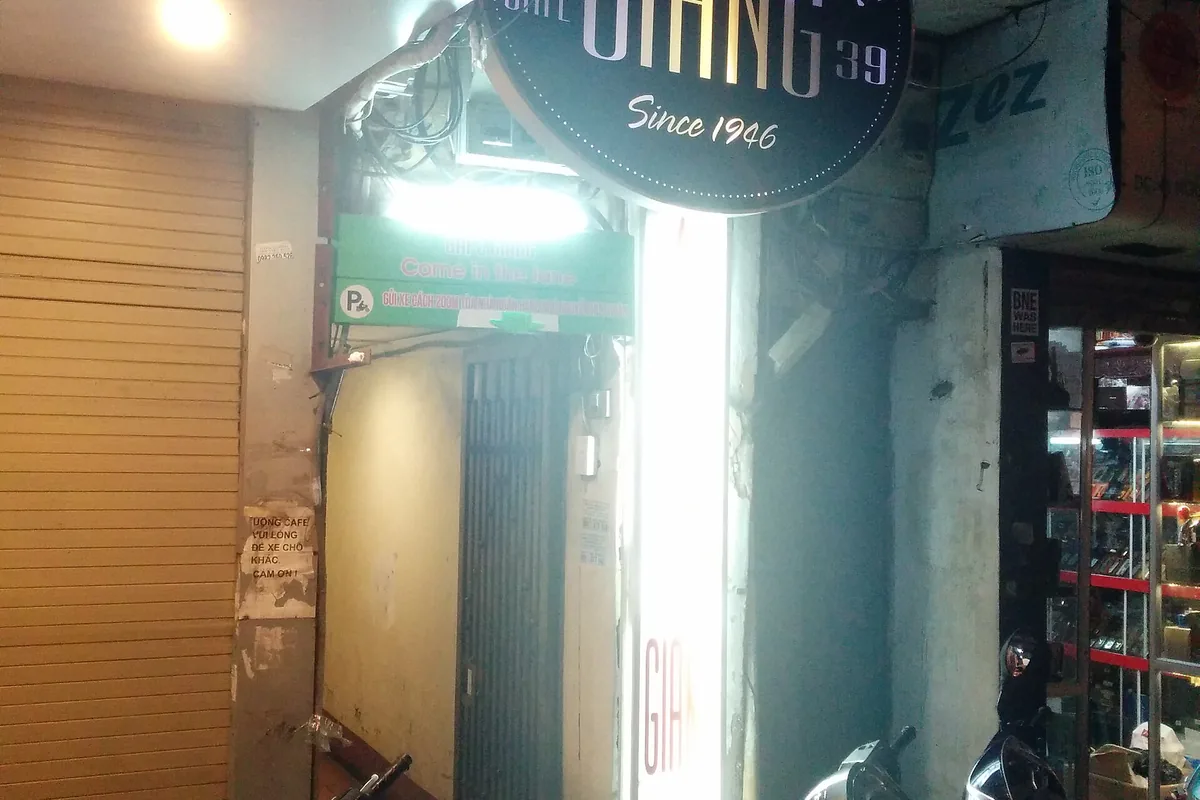
Giang Cafe is widely regarded as the home of egg coffee, the Hanoi drink made by whisking egg yolk with sugar and coffee until it turns into a thick, custard-like cream. The recipe dates back to a time when fresh milk was hard to find, and it remains one of the city’s signature drinks.
The cafe sits at the end of a narrow alley at 39 Nguyen Huu Huan street, near Hoan Kiem Lake. The room is small, simple and often full, but the drink is the point: a layer of sweet, creamy foam over strong coffee, usually served in a small cup placed in a bowl of warm water to keep it hot.
Egg coffee is rich, so many people treat it as dessert. If you prefer something lighter, the cafe also serves a range of coffees and teas. Stir the foam into the coffee slowly, or sip through the cream for a sweeter first mouthful.
Several other cafes in the area serve egg coffee, so you can compare. Giang is a sensible first stop because it is close to the lake and the Old Quarter, and fits easily into a walking day.
The drink has a short, interesting history. Egg coffee is said to have been invented in Hanoi in the 1940s, when fresh milk was scarce and a bartender whisked egg yolk into coffee as a substitute. Today the recipe is part of the city’s identity, and you will see variations such as egg cocoa or versions served cold. A first sip tastes closer to tiramisu than to a breakfast egg, which surprises many first-timers. If you are curious, order the classic hot version, and save the experimenting for a second cafe later in your stay.
- How to get there: It is on Nguyen Huu Huan street, a short walk from the north-west corner of Hoan Kiem Lake.
- How long to spend: 30 to 45 minutes.
- Best time to go: Mid-morning or mid-afternoon, between meals.
- Tip: Raw egg is used, so ask about preparation if this is a concern. Check before you go for current opening hours.
8. Xoi Yen
Xoi Yen is a long-running sticky rice shop where you build your own bowl of warm xoi with toppings such as shredded chicken, fried onions, mung bean paste and savoury pork. Sticky rice (xoi) is a common breakfast in Hanoi, eaten quickly on the way to work, and this shop is one of the best-known places to try it.
You order by choosing the type of rice and the toppings, and the staff assemble each portion with a banana-leaf lining or in a bowl. Common options are xoi xeo (rice with mung bean paste and fried shallots), xoi ga (with chicken) and xoi thap cam, a mix of toppings.
The portions are generous and filling, so one bowl is enough for a full breakfast. Pair it with a coffee or tea afterwards for a slow start to the day.
It is a popular choice with travellers, so the shop can be busy in the morning. The quieter option is to go a little later, once the commuter rush has passed.
Sticky rice is more varied than it first looks. Some toppings are sweet, such as mung bean and coconut, while others are savoury, such as chicken, Chinese sausage or fried shallots. The sweet and savoury sides mix on the same plate, and many Hanoi locals add a spoonful of dried pork floss for texture. A bowl is quick to eat, so it makes a handy first stop before a longer walking day. If you are travelling with children, the mild toppings, such as mung bean or corn, are often the easiest to enjoy.
- How to get there: The best-known branch is on Nguyen Huu Huan street, close to Giang Cafe, a few minutes on foot from the lake.
- How long to spend: 20 to 30 minutes.
- Best time to go: Breakfast, or mid-morning to avoid queues.
- Tip: Point at toppings if you do not know the names, and check before you go as the shop may have more than one address.
9. Banh Cuon Ba Hoanh
Banh Cuon Ba Hoanh specialises in banh cuon, thin, silky steamed rice rolls filled with minced pork and wood-ear mushroom, served with herbs and dipping sauce. The rice batter is steamed on a cloth stretched over a pot of boiling water, so each sheet is paper-thin and best eaten straight away.
Banh cuon is a staple Hanoi breakfast. The rolls are usually topped with fried shallots and served with cha lua (Vietnamese pork sausage) and a bowl of sweet and sour fish sauce. It is gentle and light, a good contrast to heavier dishes like bun cha or cha ca.
The shop on To Hien Thanh street, south of the Old Quarter, is local rather than touristy, so you will see families and office workers rather than tour groups. Seating is basic and orders are quick. The flavours are subtle, so do not expect a big hit of spice or fat.
If you find this shop busy or closed, other banh cuon places around the city offer similar rolls. Check recent reviews and opening days before you go, as this type of shop sometimes closes for rest days.
What sets banh cuon apart is texture. Done well, the rice sheets are almost translucent and slide easily from the chopsticks, with only a light chew. The filling should taste savoury and slightly peppery, and the dipping sauce should be clear and mildly sweet rather than sharp. If you find the rolls too plain, a few drops of chilli or a spoonful of the fried shallots on top will lift them. Because the sheets are best fresh, avoid ordering a large plate and then waiting before you eat.
- How to get there: It is on To Hien Thanh street, south of the Old Quarter, about 10 to 15 minutes by taxi or ride-hailing app. Michelin lists it as cash only.
- How long to spend: 30 minutes.
- Best time to go: Breakfast or early morning.
- Tip: Order a plate to share and add cha lua on the side. Check before you go that the shop is still at this address.
10. Home Hanoi
Home Hanoi is a sit-down restaurant in a converted house that serves northern Vietnamese home cooking, with a menu that suits people who want a relaxed meal with table service. It works as a gentler introduction to the cuisine, especially if you are not ready for plastic stools and shared tables.
The menu usually covers dishes such as grilled fish, pork with caramelised sauce, stir-fried morning glory, clay-pot dishes and soups. Portions are meant for sharing, which makes it a good place for a group dinner or the end of a long food day.
The setting is calmer than the busy streets outside. It is mid-range for Hanoi, but still affordable by Western standards.
Because the menu is broad, ask staff what is in season. Vegetables and fish dishes change through the year, and the kitchen often has a daily special.
It also suits travellers who want comfort at the end of a hot day. Air conditioning, table service and a menu in English remove some of the uncertainty of eating on a busy street, which is helpful if you are jet-lagged or travelling with older relatives. A good strategy is to order one fish dish, one meat dish, one vegetable dish and rice for the table, then add a soup if the group is large. That mix gives you a fair picture of a traditional northern meal, which is built on balance rather than a single main course.
- How to get there: The restaurant has moved before and listings disagree on its current address, so confirm the location on its own page or a map app before you go.
- How long to spend: About 1 to 1.5 hours.
- Best time to go: Evening, when you want a slower meal.
- Tip: Booking is wise for groups at busy times. Check before you go for the current menu and opening days.
Northern Vietnamese dishes to look out for
- Pho bo: beef noodle soup, lighter in the north than in the south.
- Bun cha: grilled pork with rice noodles, herbs and a sweet, tangy broth.
- Cha ca: turmeric fish cooked with dill at the table.
- Banh mi: a crisp baguette sandwich with pate, meat and herbs.
- Bun thang: a layered noodle soup with chicken, egg and pork.
- Xoi: sticky rice with sweet or savoury toppings.
- Banh cuon: steamed rice rolls with pork and mushroom.
- Ca phe trung: egg coffee, whisked with yolk and sugar.
Suggested food plans for 1, 2 or 3 days
Day 1: Old Quarter classics
Start with a bowl at Pho Bat Dan, then walk to Banh Mi 25 for a light lunch snack. In the afternoon, wander the lake and stop at Giang Cafe for egg coffee. Finish with dinner at Cha Ca Thang Long. Everything is within a short walk.
Day 2: Street breakfasts and a long lunch
Eat breakfast at Xoi Yen, then head by taxi to Bun Cha Huong Lien for lunch before the queue peaks. Return for a slow afternoon, then have dinner at Quan An Ngon to sample a range of dishes.
Day 3: Lighter dishes and a sit-down finish
Try Banh Cuon Ba Hoanh for breakfast, then Bun Thang Ba Duc for a lighter lunch. Spend the afternoon at a museum or by the lake, then finish with a relaxed dinner at Home Hanoi.
Getting around Hanoi
Most of the places here are close together, so walking works well in the Old Quarter. Pavements are often crowded with parked motorbikes and stalls, so you will sometimes walk on the road edge. Cross slowly and steadily, and traffic will flow around you.
For longer trips, such as Hai Ba Trung district, use a ride-hailing app or a metered taxi. Agree on the route or check the meter. Hanoi also has urban rail lines, but they do not serve the Old Quarter well, so taxis, ride-hailing apps and walking are simpler for this itinerary. If you have a spare day, a day trip to Ninh Binh from Hanoi pairs well with a food-focused stay. Check the official Vietnam tourism site for current travel advice and visa information.
Where to stay for food lovers
- Old Quarter: the best base for walking to most places on this list, with lively nights and plenty of budget stays.
- Hoan Kiem Lake area: calmer streets, a good mix of hotels and an easy walk to Giang Cafe.
- French Quarter: wider streets, more upmarket hotels and close to Quan An Ngon.
Travelling with children? Our guide to Vietnam family holidays and friendly places helps you choose where to base yourselves.
Budget guidance for eating in Hanoi
- Cheap eats: pho, banh mi, sticky rice and banh cuon cost very little and make up most of your meals.
- Mid-range: cha ca, Quan An Ngon and Home Hanoi are a step up, but still fair compared with western cities.
- Special occasion: if you want a high-end dinner, look at the current Michelin Guide listings for Hanoi for choices.
Frequently Asked Questions
What are the best restaurants in Hanoi?
The best restaurants in Hanoi are usually small specialists such as Bun Cha Huong Lien for bun cha, Pho Bat Dan for pho and Cha Ca Thang Long for turmeric fish. For a wider menu in a comfortable setting, try Quan An Ngon or Home Hanoi.
What food is Hanoi famous for?
Hanoi is famous for pho, bun cha, cha ca, banh cuon, bun thang and egg coffee. Many of these dishes are served only at certain times of day, so check opening hours before you go.
Is street food in Hanoi safe to eat?
Street food is generally safe if you choose busy stalls with high turnover and food cooked fresh in front of you. Sensitive travellers can start with cooked dishes and avoid raw herbs or ice if unsure.
How much should I budget for food in Hanoi?
Hanoi is affordable. Street food and casual shops cost very little, while sit-down restaurants cost more. Check menus for current prices as they change.
What is the best time of day to eat in Hanoi?
Pho, sticky rice and banh cuon are breakfast dishes, bun cha is a lunch dish and cha ca suits dinner. Go early for the freshest pho and shortest queues.
Can I follow a food itinerary in Hanoi without a tour?
Yes, most of the places on this list are easy to reach on foot or by a short taxi ride, so you can follow the free printable itinerary on your own. Booking a food tour is optional.
Keep Exploring Southeast Asia
If Hanoi has whetted your appetite, compare it with the best places to eat in Bangkok, or plan a beach stop with our guide to the best things to do on Phu Quoc Island.
Featured image: Photo by Martin Lewison from Forest Hills, NY, U.S.A., CC BY 2.0, cropped, via Wikimedia Commons