Last updated: October 2026
Prague is one of the easiest capitals in Europe to leave for a day. Castles, spa towns, brewery cities and sandstone gorges all sit within a few hours by train or bus. If you want the best day trips from Prague, start with Kutná Hora and Karlštejn Castle, which are the easiest by train, then add Plzeň for beer, Terezín for history or Bohemian Switzerland for scenery. Most of the trips below can be done without a car, and several take under an hour each way.
This guide covers ten day trips, each with a practical box. Further down you will find how to pick between them, a free printable 3-day Prague day trip itinerary, getting around, where to stay and budget guidance. Timetables change, so check journeys on IDOS, the Czech public transport journey planner or on the Czech Railways website before you travel, and use the official Prague tourism website for general trip planning.
Opening seasons for castles and gorges vary, and some sites close or shorten their hours in winter. This guide avoids exact times and prices, and where something could not be confirmed it says so. Check before you go, especially between November and March.
Quick answer: What are the best day trips from Prague? For the easiest and most rewarding trip, go to Kutná Hora to see the Sedlec Ossuary and St Barbara’s Cathedral. For a fairy-tale castle, choose Karlštejn or Konopiště. For beer, go to Plzeň, for spa architecture, Karlovy Vary, and for hiking, Bohemian Switzerland. Český Krumlov is the most beautiful town but is best with an overnight stay.
Free printable itinerary
Planning a trip? Download our Suggested day trip plans for 1, 2 or 3 days as a PDF: the day-by-day plan plus all 10 places with directions and map links. Print it or keep it on your phone.
Quick comparison: best day trips from Prague
| Trip | Best for | Getting there | Time each way |
|---|---|---|---|
| Kutná Hora | Medieval town and the bone church | Train | About an hour |
| Karlštejn Castle | A Gothic castle | Train, then a walk | Under an hour |
| Terezín | Wartime history | Bus | About an hour |
| Plzeň | Beer and brewery cellars | Train | About one and a half hours |
| Český Krumlov | A UNESCO riverside town | Bus | About three hours |
| Bohemian Switzerland | Hiking and sandstone scenery | Train and bus | About two hours or more |
| Karlovy Vary | Spa town and hot springs | Bus | About two hours |
| Konopiště Castle | A hunting residence and gardens | Train, then a walk or bus | About an hour |
| Mělník | Wine and a river view | Bus | About an hour |
| Dresden | Baroque architecture in Germany | Train | About two hours |
1. Kutná Hora
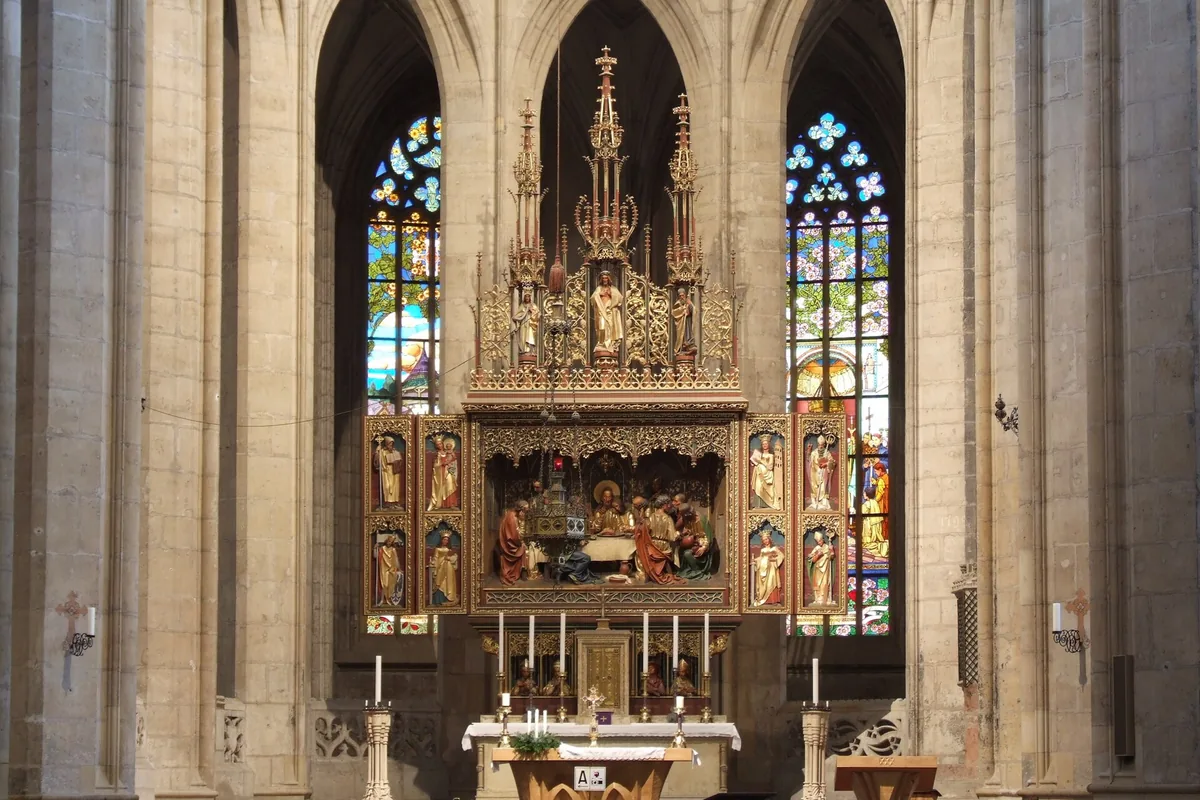
Kutná Hora is the best day trip from Prague, with a medieval silver-mining town, a Gothic cathedral and a church decorated with human bones. The historic centre is a UNESCO World Heritage Site, listed together with the Cathedral of Our Lady at Sedlec, and it is easy to reach by direct train.
The two headline sights are the Sedlec Ossuary and St Barbara’s Church. The ossuary is a small chapel decorated with the bones of tens of thousands of people, including a chandelier made from bones, and it is one of the most unusual interiors in Europe. St Barbara’s, in the town centre, is a Gothic church built with the wealth of the silver mines, with soaring vaults and views across the valley. Between them you can walk through the old town, past the Italian Court, where silver coins once were minted.
The station for the main line is Kutná Hora hlavní nádraží, which is close to Sedlec, and local connections link it with the town centre. Sources give the journey from Prague as roughly an hour, and travel times vary by train, so check the timetable. The sights can close on certain days and in winter, so confirm the details on the UNESCO listing and the sites’ own pages.
A half day is enough for the two main sights, but a full day lets you add the town centre, a lunch stop and a walk along the Vrchlice valley.
- How to get there: Direct train from Praha hlavní nádraží to Kutná Hora hlavní nádraží, about an hour.
- How long to spend: A full day, or five to six hours at a brisk pace.
- Best time to go: A weekday in spring or autumn, to avoid the biggest tour groups.
- Tip: Start at the Sedlec Ossuary before the coaches arrive, then walk or take a local connection to the town centre.
2. Karlštejn Castle
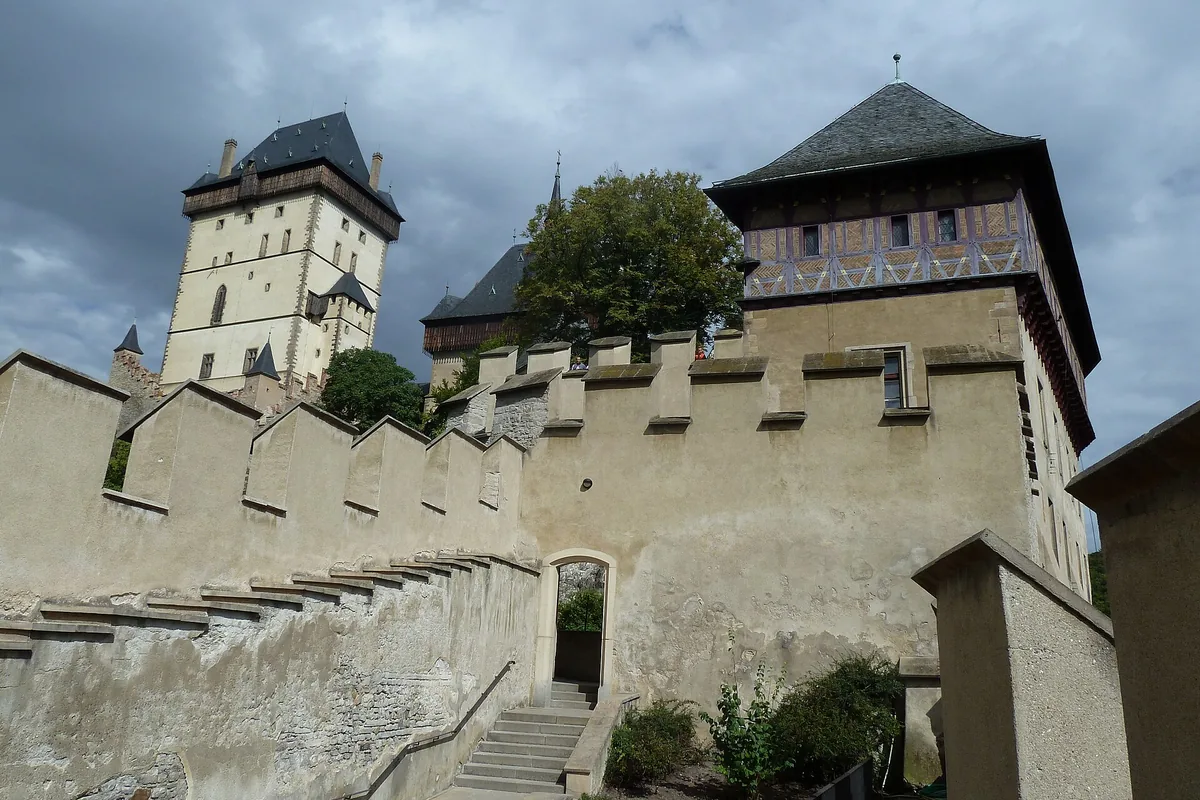
Karlštejn is the most famous castle near Prague, a Gothic fortress built in the 14th century for Charles IV. It sits on a hill above the village of Karlštejn, and from a distance its towers look like a storybook illustration.
The castle was built to protect the crown jewels and holy relics of the Holy Roman Empire. Its most important room is the Chapel of the Holy Cross, decorated with painted panels and set in the Great Tower. Interior visits are guided only, with different tour routes available, and booking ahead is strongly advised in summer. Details of tours and booking are on the official Karlštejn Castle website.
Getting there is simple. Trains run from Prague on the Berounka line, and the journey takes about 40 to 45 minutes. From the station you walk through the village and up a steep road to the castle, which takes about 20 to 25 minutes and passes souvenir shops and cafes. Wear comfortable shoes, since the climb is uphill on cobbles.
Winter opening is limited. In recent seasons the standard tour has run on Fridays to Sundays only in November and December, with a break around Christmas, and the castle is usually closed on Mondays. The separate chapels tour, which is the way into the Chapel of the Holy Cross, has not run from November to April. Check the official site before you travel. If you want a quieter visit, go on a weekday morning, and combine the castle with a walk in the surrounding Bohemian Karst nature reserve.
- How to get there: Train from Praha hlavní nádraží or Praha-Smíchov to Karlštejn, then a 20 to 25 minute walk uphill.
- How long to spend: Half a day, including the tour and the walk.
- Best time to go: A weekday morning from spring to autumn, with a booked tour.
- Tip: Book your tour time in advance and allow extra time for the climb from the station.
3. Terezín
Terezín is a sobering but important day trip, a fortress town that was used as a Gestapo prison and a Jewish ghetto during the Second World War. It lies north-west of Prague, close to the town of Litoměřice, and the Terezín Memorial looks after the main sites.
The two main places to visit are the Small Fortress, where political prisoners were held, and the Ghetto Museum in the town, which tells the story of the Jewish people who were deported here. Tickets are sold for each, and a combined ticket is available. The experience is quiet and reflective, with preserved cells, courtyards and exhibitions, and it is best approached with time to take it in. Details of the memorial, opening arrangements and ticket types are on the official Terezín Memorial website.
By public transport, the usual route is a regional bus from Prague to Terezín, which most often leaves from Letňany metro station, so check IDOS for other departure points. The journey takes roughly an hour, though sources vary. The stop called Terezín, U Památníku is directly by the Small Fortress, while Terezín, aut. nádr. is closer to the Ghetto Museum. Trains are less convenient, since the nearest station requires a bus connection.
Late-afternoon buses back to Prague can be sparse, so check the last departure on IDOS before you set out.
- How to get there: Regional bus from Prague (often from Letňany) to Terezín, about an hour, then a short walk.
- How long to spend: Half a day to a full day, depending on how many sites you visit.
- Best time to go: A weekday, to avoid larger tour groups.
- Tip: Check the last bus back to Prague before you start, and leave plenty of time at the Small Fortress.
4. Plzeň
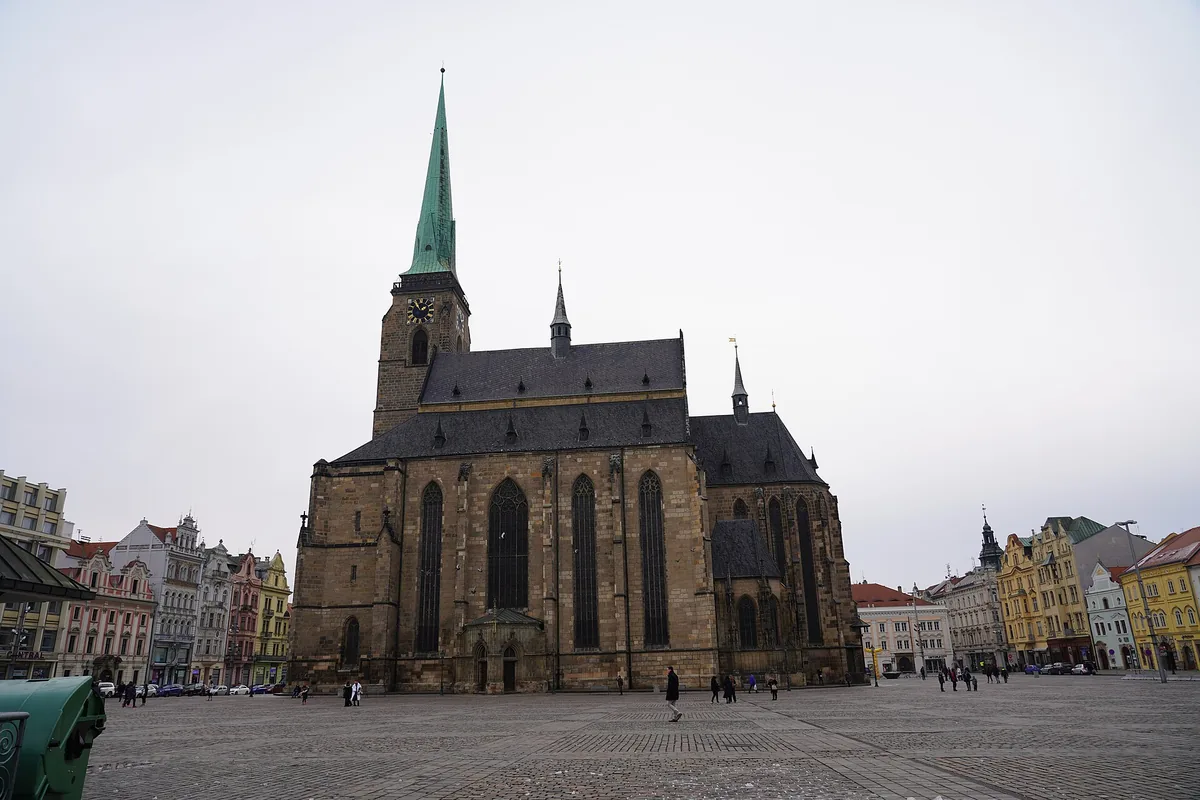
Plzeň, or Pilsen, is the home of Pilsner beer and the best day trip from Prague for anyone who likes a brewery tour. The city is about a one and a half hour train ride from the capital, and its compact centre is easy to cover on foot.
The main attraction is the Pilsner Urquell Brewery, where the world’s first golden lager was brewed in 1842. Tours show the brewhouse and the cellars, where beer is poured straight from wooden barrels. Details of tours and booking are on the Pilsner Urquell website. Underneath the old town is another sight, the Historical Underground, a network of medieval cellars and passages that you can visit on a guided walk.
Above ground, the Republic Square is dominated by St Bartholomew’s Cathedral, whose spire is the tallest of any church in the country and which you can climb for views over the red roofs. The Great Synagogue is one of the largest in Europe and is worth a visit if you have time. Plzeň was a European Capital of Culture, and the city has an arts scene that makes it more than a beer stop.
Trains from Praha hlavní nádraží are frequent, and the ride is comfortable, with a short walk from the station to the centre. Book brewery tours ahead in summer, since they can sell out.
- How to get there: Direct train from Praha hlavní nádraží to Plzeň hlavní nádraží, about one and a half hours.
- How long to spend: A full day.
- Best time to go: A weekday, with a pre-booked brewery tour.
- Tip: Combine the brewery with the Historical Underground for the best view of the city’s past.
5. Český Krumlov
Český Krumlov is one of the most beautiful small towns in Europe, with a castle above a looping bend of the Vltava river. It is a UNESCO World Heritage Site, and its cobbled lanes, Baroque theatre and red-roofed houses make it the most photogenic trip in this guide.
The castle complex is the second largest in the country, with a painted tower, a bridge over the moat and gardens. Inside, guided tours show state rooms, while the tower gives a classic view over the river bend. In the town below, you can walk across the bridges, rent a boat in summer or simply sit by the water. More background is on the UNESCO listing for Český Krumlov.
The catch is distance. The usual journey from Prague is a direct bus, which takes around three hours each way, and train travel typically involves a change at České Budějovice and a longer time. That makes a day trip possible but tiring, with perhaps four hours in the town itself. Many travellers prefer to stay a night, and an overnight stop transforms the experience, since the town is quietest in the early morning and the evening.
Castle opening varies by season, with some interiors closed in winter, so check the details in advance.
- How to get there: Direct bus from Prague, about three hours each way, or train with a change at České Budějovice.
- How long to spend: A long day, or better, an overnight stay.
- Best time to go: Late spring or early autumn, and a weekday if you can.
- Tip: Take an early bus and check the last return departure so you are not rushed.
6. Bohemian Switzerland
Bohemian Switzerland is the best day trip from Prague for hiking, with sandstone towers, forest trails and the largest natural sandstone arch in Europe. The national park lies on the German border, north of the capital, and the Pravčická brána arch is its most famous sight.
The classic route is from the village of Hřensko up to the arch, a walk through forest that takes a few hours. Nearby, the Kamenice gorges are known for their rock walls and for boat trips through the narrow channels in the warmer months. The scenery is rugged and green, with viewpoints that make it feel far from the city. The regional Bohemian Switzerland tourism website has visitor information, and you should check the national park’s own pages for current trail conditions.
Getting there takes longer than for the castle trips. One common route is a train to Děčín, which takes around an hour and a half, then a bus to Hřensko. Sources describe different combinations of train, bus and ferry, so plan the exact route on IDOS. The trip works best as a full day, and the last return connection matters, so build in a margin.
The gorge boats usually run only in the warmer months, so do not count on them in winter, and snow or ice can affect the trails to the arch. Check conditions before you set out. Bring layers and proper shoes.
- How to get there: Train to Děčín, then a bus to Hřensko, around two hours or more in total.
- How long to spend: A full day.
- Best time to go: Late spring to early autumn, in dry weather.
- Tip: Check the last connection back to Prague before you begin the hike.
7. Karlovy Vary
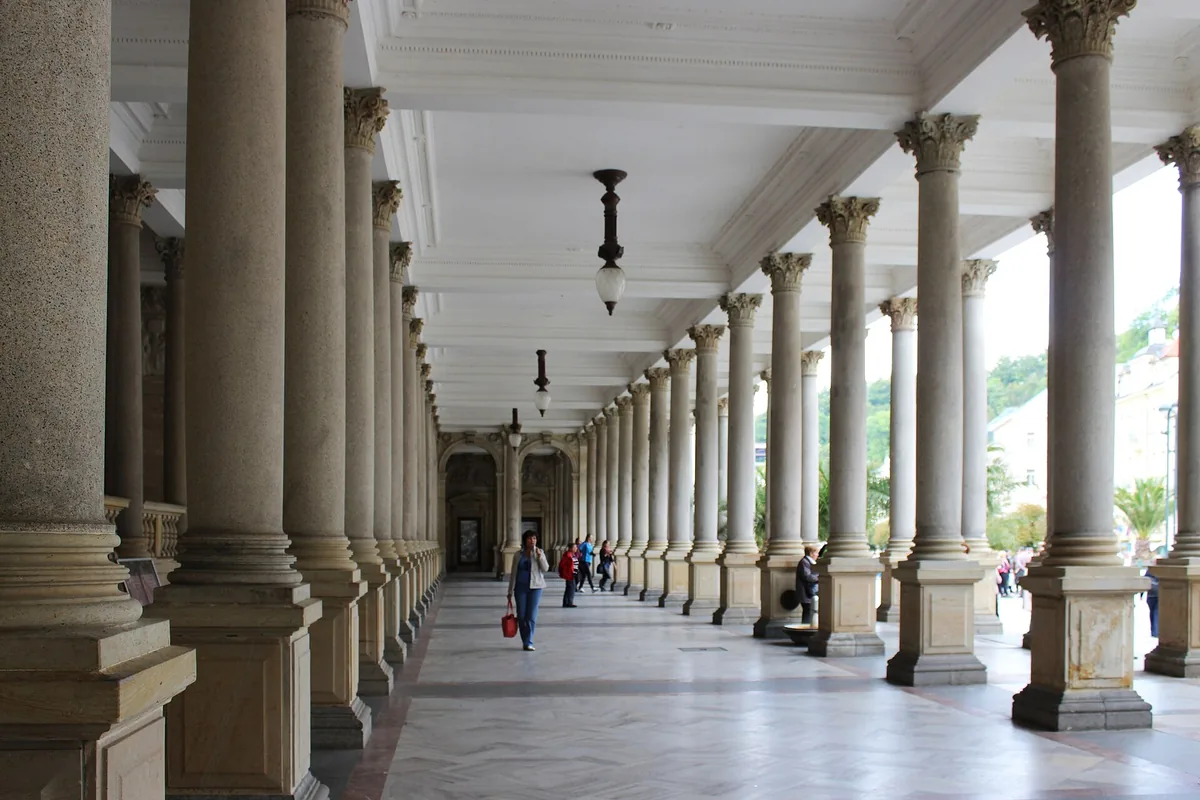
Karlovy Vary is a grand spa town in a wooded valley, famous for its hot springs, colonnades and pastel-coloured buildings. It is in west Bohemia, and the direct bus makes it practical as a long day trip.
The town grew around natural springs, and the spa tradition is still central. Colonnades such as the Mill Colonnade and the Hot Spring Colonnade house springs where you can taste the mineral water from small porcelain cups. Local specialities include thin spa wafers, which are sold in many shops, and the herbal liqueur Becherovka, made in the town. The town also hosts an international film festival each summer, which can make accommodation busy at that time.
The usual public transport is a direct bus from Florenc, run by operators such as RegioJet and FlixBus. Most listings give a journey of about two hours, with some departures slightly shorter or longer. Arrival is at the Dolní nádraží or Tržnice stop, depending on the operator, so check where your return bus leaves from.
Karlovy Vary is compact enough to see in a day, though many people find the bus ride tiring. If you can, take an early bus and walk the main spa route, with a break for lunch in the centre.
- How to get there: Direct bus from Florenc, about two hours each way.
- How long to spend: A full day.
- Best time to go: A weekday outside July, when the film festival is on.
- Tip: Buy a spa cup in the first colonnade and sample the different springs, which vary in temperature.
8. Konopiště Castle
Konopiště is a castle and park near Benešov, once the favourite residence of Archduke Franz Ferdinand, whose assassination in 1914 led to the First World War. It is a good choice if you want a less crowded alternative to Karlštejn.
The castle began as a medieval fortress and was rebuilt in the Baroque and later styles. Franz Ferdinand bought it in the 1880s and made it a home, filled with hunting trophies and weapons. The interiors reflect his passions, and the grounds include a rose garden and a park with ponds. Guided tours show different parts of the castle, and the season is the main thing to check.
The journey is simple. Trains run from Prague to Benešov, taking about an hour by most accounts, and from the station you can walk about two kilometres to the castle, or take a short taxi or bus ride. Sources describe the castle as open mainly from spring to autumn, with limited access in winter, and say it is closed on Mondays, so confirm the details on the castle’s official page before you travel.
Konopiště works well as a half-day trip, and the park is pleasant even if the interior is closed. It is also easy to pair with the town of Benešov for lunch.
- How to get there: Train from Praha hlavní nádraží to Benešov u Prahy, then a walk of about two kilometres or a short taxi ride.
- How long to spend: Half a day.
- Best time to go: Spring to autumn, on a weekday.
- Tip: Check the opening season before you travel, since winter access is limited.
9. Mělník
Mělník is a small hilltop town where the Vltava joins the Elbe, with a chateau, a wine tradition and one of the best easy views near Prague. It is one of the quickest and least demanding trips in this guide, which makes it a good choice for a relaxed day.
The chateau, owned by the Lobkowicz family, stands above the confluence, and its vineyards are among the best known in Bohemia. Wine tasting is a major reason to come, with local varieties served in the chateau’s cellars and in nearby wine bars. The town’s Church of Sts Peter and Paul has a tower that you can climb for views over the rivers and the plain, and a famous bone chapel sits beneath the church.
By public transport, regional buses run from Prague, and the journey takes about an hour, though the departure point depends on the service. Check IDOS to find the best connection. The town centre is small and walkable, with a main square, cafes and a short walk to the chateau.
The chateau and church can have limited winter hours, so confirm the details before you travel. If you want to taste wine, plan a bus return rather than driving. Mělník pairs well with a lazy lunch and a stroll through the old town.
- How to get there: Regional bus from Prague, about an hour each way.
- How long to spend: Half a day to a full day.
- Best time to go: Late summer or early autumn, during the grape harvest.
- Tip: Climb the church tower for the view of the river confluence, then taste wine at the chateau.
10. Dresden
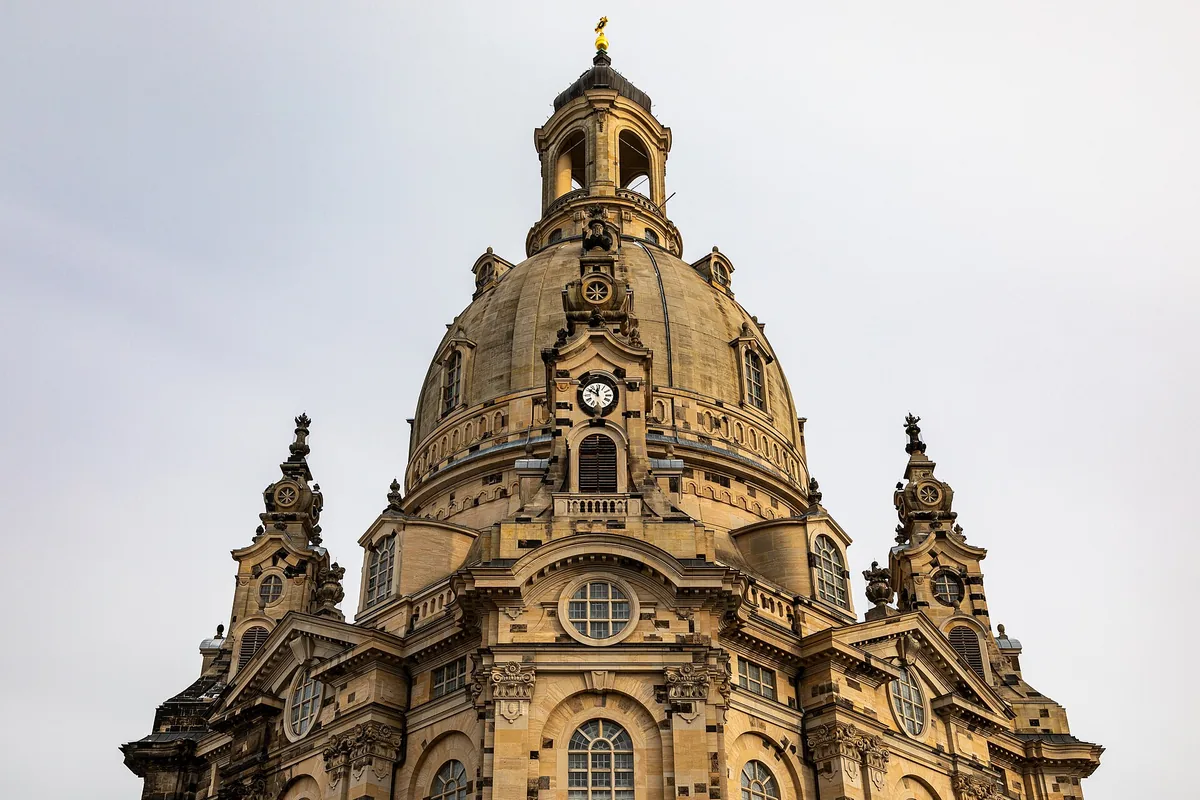
Dresden is the best day trip from Prague if you want to see another country, with a rebuilt Baroque old town on the Elbe. Direct trains take about two hours, and the route follows the river through sandstone scenery.
The old town is compact. The Frauenkirche, rebuilt after the Second World War, dominates the skyline, and the Zwinger palace and the Semperoper are a short walk away. The Brühl Terrace gives views along the river, and the Old Masters Picture Gallery houses Raphael’s Sistine Madonna. In Advent, the Striezelmarkt Christmas market is among the oldest in Germany, and it is one of the stops in our guide to the best Christmas markets in Europe.
You can book train tickets on the Deutsche Bahn website or through Czech Railways. The Czech Republic and Germany are both in the Schengen Area, so there are no routine border checks, but you should carry your passport or national ID card. Prices are in euros, so plan accordingly.
Dresden works best as a full day, since the journey is long. Start with a morning in the old town, then spend the afternoon at one or two museums or on a walk along the Elbe. Most major museums are closed on one weekday, so check before you go. If you prefer a shorter trip, choose Kutná Hora or Karlštejn.
- How to get there: Direct train from Praha hlavní nádraží to Dresden Hauptbahnhof, about two hours each way.
- How long to spend: A full day.
- Best time to go: A weekday in spring or autumn, or during Advent for the Christmas market.
- Tip: Carry photo ID for the border crossing, and check the closing day of the museums you want.
How to pick the right Prague day trip
Start with how much time you have. For a half day, choose Karlštejn, Konopiště or Mělník. For a full day, choose Kutná Hora, Plzeň, Terezín or Dresden. Český Krumlov, Karlovy Vary and Bohemian Switzerland are long journeys, so they suit travellers who have several days in Prague.
Next, think about your interests. History and architecture point to Kutná Hora, Karlštejn and Terezín. Beer points to Plzeň, wine to Mělník, and spas to Karlovy Vary. For hiking, Bohemian Switzerland is the clear winner.
Finally, think about the season. Castles and gorges are at their best from spring to autumn. In winter, towns such as Plzeň, Kutná Hora and Dresden are easier choices, since their main sights are indoors or open all year. If you are planning a cold-season trip, our guide to the best winter destinations in Europe shows where else is worth the journey.
Suggested day trip plans for 1, 2 or 3 days
You can see the best of the Prague region in three days by grouping the trips by direction. The itinerary below is also available as a free printable PDF, which the site adds after the quick answer.
Day 1: Kutná Hora
Take an early direct train to Kutná Hora and start at the Sedlec Ossuary before the tour groups arrive. Continue to the town centre for St Barbara’s Church and a walk through the old streets. Have lunch in town, then take a late-afternoon train back to Prague.
Day 2: Karlštejn and the west
Catch a morning train to Karlštejn with a pre-booked tour, and allow time for the uphill walk from the station. Return to Prague in the early afternoon and spend the evening in the city. If you prefer a longer day and have energy, swap Karlštejn for Plzeň and its brewery tour.
Day 3: Terezín or Mělník
For history, take a morning bus to Terezín, visit the Small Fortress and the Ghetto Museum, and return before the late-afternoon bus service thins out. For a lighter day, go to Mělník instead, climb the church tower and finish with a wine tasting at the chateau.
Where to stay for Prague day trips
For the easiest access to trains, stay near Praha hlavní nádraží, the main station, in the area around Nové Město. Most trains to Kutná Hora, Plzeň, Dresden and Benešov leave from here, and the metro connects it to the rest of the city.
Bus trips leave from terminals such as Florenc, Nádraží Holešovice or Letňany, depending on the service, so Karlín and Holešovice are convenient bases for Terezín, Karlovy Vary and Mělník. Karlštejn trains also call at Praha-Smíchov, so Smíchov is a handy choice for that route. If you prefer to be in the centre, the Old Town and Malá Strana are walkable to the metro and trams.
Getting around for Prague day trips
Czech Railways runs most of the trains in this guide, and tickets can be bought online, at stations and from machines. The Czech Railways website and IDOS both show timetables and let you plan routes that combine trains and buses. Regional buses leave from several terminals, so check which one your service uses.
For long bus journeys such as Český Krumlov and Karlovy Vary, private operators including RegioJet and FlixBus run direct services, and booking ahead is wise at weekends. Check the last return departure before you go, particularly for Terezín, Bohemian Switzerland and Český Krumlov. Within Prague, trams, buses and the metro share a ticket system run by the Prague Public Transit Company.
Budget guidance
Trains and buses to places such as Kutná Hora, Karlštejn and Mělník are inexpensive, and group or day tickets can save money on longer trips. Entry to castles and museums varies from low to mid-range, and guided tours cost more than basic tickets.
Costs rise for the longer trips. Český Krumlov, Karlovy Vary and Dresden involve more transport spending and often a meal in a tourist town, while a brewery tour in Plzeň is a mid-range activity. To save money, bring a picnic, travel on weekdays and combine a castle visit with a free walk. Organised tours are available if you prefer a guide, but independent travel is usually cheaper and gives you more control.
Frequently Asked Questions
What is the best day trip from Prague?
Kutná Hora is the best all-round day trip from Prague. It is about an hour by direct train, and it combines the Sedlec Ossuary, St Barbara’s Church and a medieval town centre in one day.
Which day trips from Prague can you do by train?
Kutná Hora, Karlštejn, Plzeň, Konopiště via Benešov and Dresden are all straightforward by train. Terezín, Mělník, Karlovy Vary and Český Krumlov are usually easier by bus.
Is Český Krumlov worth a day trip from Prague?
It is worth visiting, but the journey is around three hours each way, so a day trip is tiring. Many travellers prefer to stay a night, which also gives you the town in the quiet early morning and evening.
What are the best day trips from Prague in winter?
Plzeň, Kutná Hora and Dresden are good winter choices, since their main attractions are indoors or open year-round. Castles such as Karlštejn and Konopiště may close or shorten their hours, so check first.
Can you visit Germany as a day trip from Prague?
Yes. Dresden is about two hours by direct train, and the Czech Republic and Germany are both in the Schengen Area. Carry your passport or national ID card in case of checks.
Do you need to book ahead for Prague day trips?
Book guided tours for Karlštejn and Konopiště, and brewery tours in Plzeň, especially in summer. Train and bus tickets can often be bought on the day, though booking long bus routes at weekends is wise.
Discover more of Prague
A day trip pairs well with a good meal and a night in the city. For dinner ideas, read our guide to the best places to eat in Prague, for coffee and cake try the best cafes in Prague, and for beer after a long day, see our guide to the best pubs in Prague. If you would rather have a cocktail, our guide to the best bars in Prague covers the top cocktail rooms. Heading on to Poland afterwards? Compare these trips with the best day trips from Krakow.
Featured image: Photo by Pudelek (Marcin Szala), CC BY-SA 3.0, cropped, via Wikimedia Commons