Last updated: October 2026
The best New Year’s Eve destinations in Europe combine big fireworks with local traditions you won’t find anywhere else. In Madrid you eat 12 grapes at midnight, in Copenhagen people jump off chairs, and in Reykjavik the whole city lights its own fireworks.
Some cities put on ticketed mega-events, while others are about wandering between bonfires, concerts and street parties. This guide covers the top 10 New Year’s Eve destinations in Europe, with what to expect and how to plan.
Important: New Year’s Eve is one of the busiest travel nights of the year. Book flights and hotels early, and check whether events need tickets.
Quick answer: Where is the best place in Europe for New Year’s Eve? Our top 10 are Edinburgh, London, Berlin, Reykjavik, Vienna, Madrid, Funchal, Copenhagen, Lisbon and Rome. Edinburgh’s Hogmanay is the best street party, London and Funchal have some of the biggest fireworks, and Madrid, Copenhagen and Vienna offer the most memorable local traditions.
Top 10 New Year’s Eve Destinations in Europe at a Glance
| # | Destination | Best for |
|---|---|---|
| 1 | Edinburgh, Scotland | The ultimate New Year street party |
| 2 | London, England | World-class fireworks |
| 3 | Berlin, Germany | Nightlife and a free outdoor party |
| 4 | Reykjavik, Iceland | Something truly different |
| 5 | Vienna, Austria | Elegance and classical music |
| 6 | Madrid, Spain | Tradition and late nights |
| 7 | Funchal, Madeira | Fireworks in a warm climate |
| 8 | Copenhagen, Denmark | Quirky traditions and Scandinavian charm |
| 9 | Lisbon, Portugal | A relaxed riverside party |
| 10 | Rome, Italy | Food lovers and history |
1. Edinburgh, Scotland
Edinburgh’s Hogmanay is one of the world’s most famous New Year celebrations, a festival lasting several days with a torchlight procession, concerts and a huge street party on Princes Street beneath the castle.
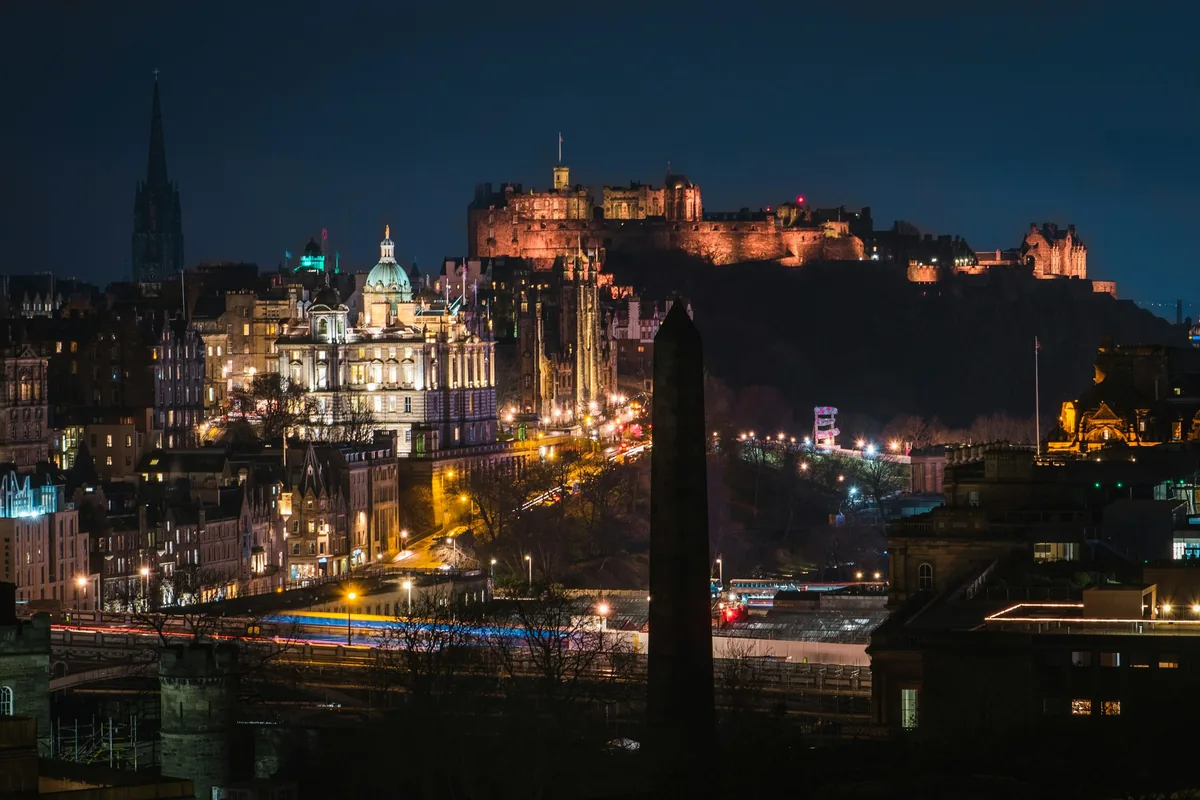
At midnight, fireworks explode above Edinburgh Castle and thousands of people link arms to sing “Auld Lang Syne”, written by Scotland’s national poet Robert Burns. On 1 January, brave souls take part in the “Loony Dook”, a chilly dip in the sea. Tickets and event details are on the official Edinburgh’s Hogmanay site. Staying a few days? Our guide to the best things to do in Edinburgh, from the castle to Arthur’s Seat fills the time around the celebrations.
The programme changes each year but usually includes a big outdoor concert in Princes Street Gardens, ceilidh dancing and events across the city. The Loony Dook takes place at South Queensferry, beside the famous Forth bridges, with participants often in fancy dress.
- Getting there: Trains from London take around four and a half hours, and Edinburgh Airport is linked to the centre by tram.
- Time needed: Three nights, from 30 December to 1 January.
- Tickets: The main street party and concert are ticketed, so book as soon as they go on sale.
- Insider tip: Book accommodation within walking distance of Princes Street, as transport is extremely busy after midnight.
Best for: the ultimate New Year street party.
2. London, England
London’s fireworks over the Thames are among the largest and most spectacular in the world, launched around the London Eye and timed to the chimes of Big Ben.
Riverside viewing areas need tickets, which go on sale months in advance and sell out. Without tickets, many people head to pubs, rooftop bars or high points like Primrose Hill. Arriving before Christmas? See London’s best festive experiences, from ice rinks to Christmas lights to plan a longer stay.
The display is short but spectacular, with music, lights and fireworks launched from barges and the London Eye. Afterwards, the city’s bars, clubs and restaurants carry on until the early hours.
- Time needed: The whole evening, as viewing areas open hours before midnight.
- Tickets: Buy only from the official Mayor of London ticket site.
- Good to know: Stations near the river may close or become exit-only when crowds build.
Best for: world-class fireworks.
3. Berlin, Germany
Berlin hosts one of Europe’s biggest free New Year’s Eve parties at the Brandenburg Gate, with live music, DJs and a fireworks display at midnight along the “party mile” of Straße des 17. Juni.
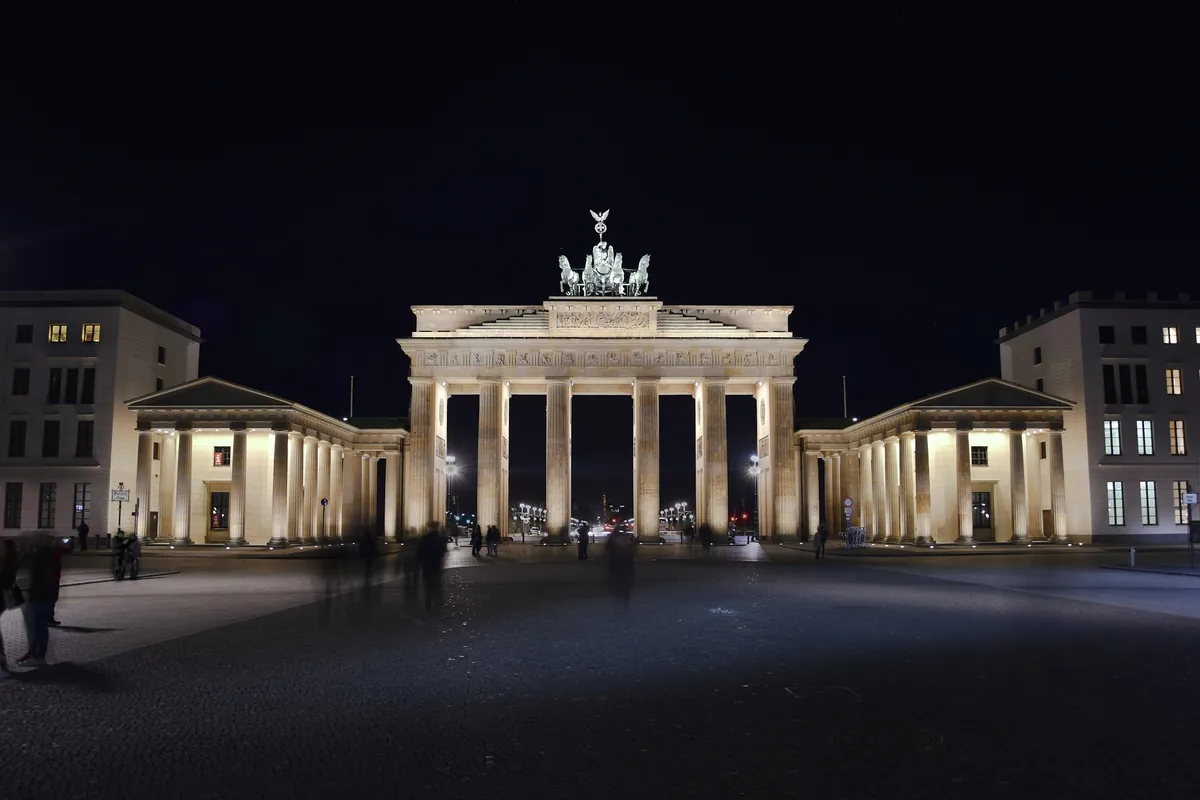
Germans call New Year’s Eve “Silvester”. The city’s famous clubs stay open well into New Year’s Day. Visit Berlin publishes event details each year.
Germans have their own New Year traditions, including watching the old British comedy sketch “Dinner for One” on TV and eating Pfannkuchen, jam-filled doughnuts. Private fireworks are allowed on New Year’s Eve, so expect rockets going off across the city all evening, except in a few firework-free zones in the centre.
- Getting there: BER Airport is linked to the centre by fast regional trains.
- Time needed: Three nights.
- Good to know: Security checks apply at the Brandenburg Gate party, and large bags and glass bottles are not allowed.
- Insider tip: Watch from a rooftop bar or a park hill such as Viktoriapark in Kreuzberg if you want to see fireworks across the whole city.
Best for: nightlife and a free outdoor party.
4. Reykjavik, Iceland
Reykjavik’s New Year’s Eve is unique because residents set off their own fireworks, filling the whole sky above the city at midnight. Earlier in the evening, families gather around community bonfires across town.
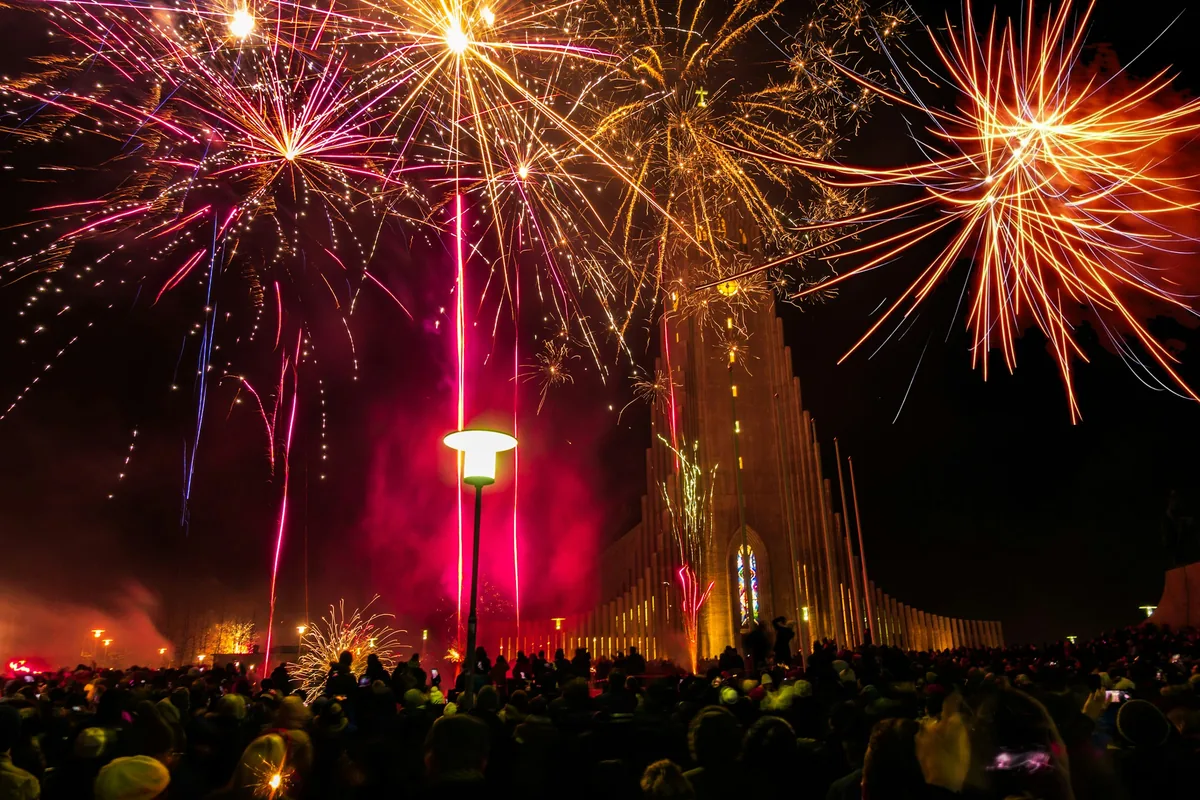
At around 10:30pm, most Icelanders head home to watch a famous comedy show on TV, before pouring back outside for midnight. Climb up to Hallgrímskirkja church for the best views. Clear skies may also bring the aurora, and our guide to the best places to see the Northern Lights explains how to time a tour from Reykjavik.
Much of the fireworks money goes to Iceland’s volunteer rescue teams, who sell them to raise funds each year. The comedy show families watch before midnight, called Áramótaskaup, pokes fun at the year’s news and is one of the most watched programmes in the country.
- Getting there: Keflavík Airport is around 45 minutes from Reykjavik.
- Time needed: Three to four nights, to add a day trip or a Northern Lights tour.
- Good to know: Book New Year’s Eve dinner early, as many restaurants have set menus and fill up fast.
Best for: something truly different.
5. Vienna, Austria
Vienna celebrates with the “Silvesterpfad”, a New Year’s trail of music stages, food stalls and dancing through the old town. At midnight, the Pummerin bell of St Stephen’s Cathedral rings, followed by the Blue Danube waltz, which people dance to in the streets.
On New Year’s Day, the Vienna Philharmonic’s New Year’s Concert is broadcast around the world. Tickets are allocated by lottery, but rehearsals and screenings offer alternatives. Vienna’s official tourism site has event details.
For something grand, Vienna’s ball season begins with the Kaiserball at the Hofburg Palace on New Year’s Eve. Austrians also exchange small lucky charms, such as marzipan pigs, chimney sweeps and four-leaf clovers, which you’ll see in shops around the city.
- Getting there: Vienna Airport is linked to the centre by fast trains.
- Time needed: Three nights.
- Insider tip: Arrive a few days earlier to catch the last of the Christmas markets, some of which stay open until New Year.
Best for: elegance and classical music.
6. Madrid, Spain
In Madrid, crowds gather in the Puerta del Sol and eat 12 grapes, one on each chime of the clock at midnight, for good luck in each month of the new year.
The square is packed and festive, though many locals celebrate at home and head out after midnight. Supermarkets sell tins of peeled, seedless grapes to make it easier. Parties continue until morning, followed by churros con chocolate.
On 30 December, many people gather in the Puerta del Sol for a practice run of the chimes, which is a fun and less crowded way to join in. Afterwards, the famous Chocolatería San Ginés near the square is a classic stop for churros, though expect a queue in the early hours of New Year’s Day.
- Getting there: Metro line 8 connects Madrid-Barajas Airport with the city.
- Time needed: Three nights.
- Good to know: Nights in Madrid can be cold in winter, often only a few degrees above freezing.
- Insider tip: Buy a small pack of peeled grapes at a supermarket before the evening, as they’re much easier to eat in time with the chimes.
Best for: tradition and late nights.
7. Funchal, Madeira
Funchal on the Portuguese island of Madeira has one of the biggest fireworks displays in Europe, launched from dozens of points around the bay so the whole amphitheatre-shaped city lights up at once.
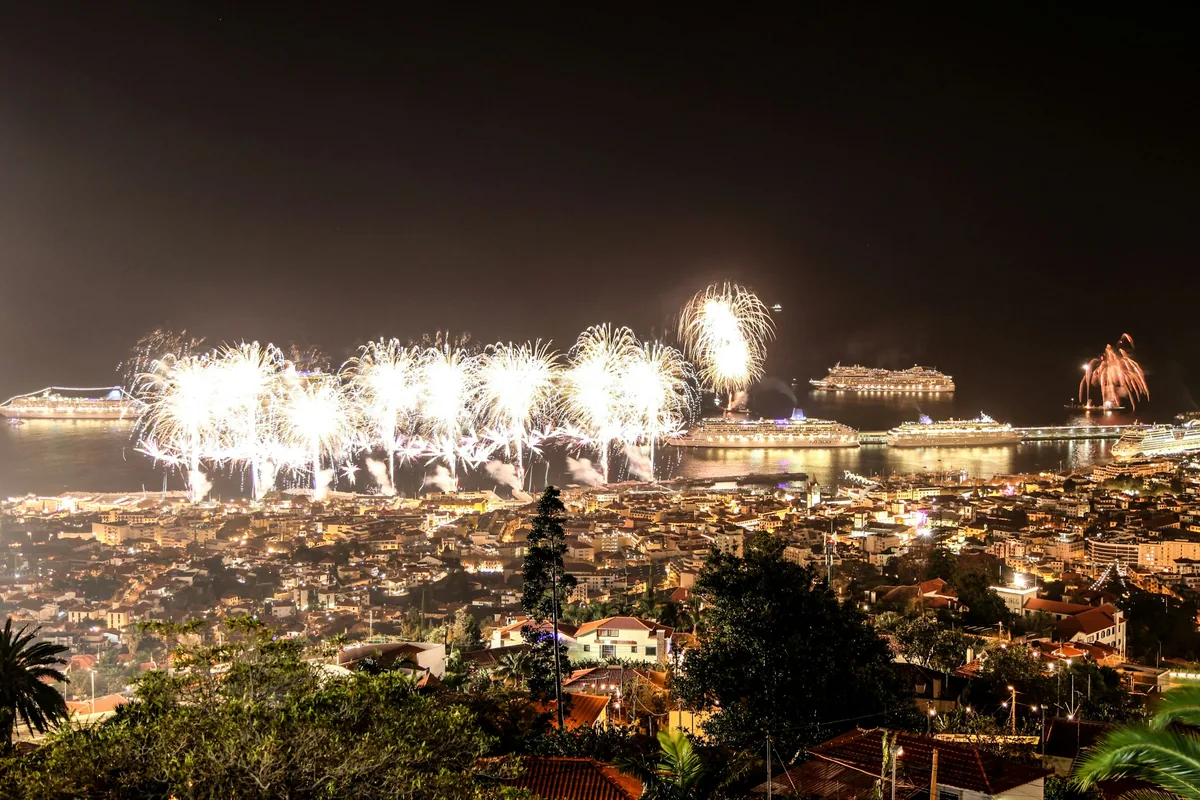
Cruise ships moor in the harbour for the view. The weather is mild, often around 18°C, so you can enjoy the show without freezing. Madeira is also one of our warmest winter sun destinations close to Europe, so it’s easy to turn the trip into a longer break.
Funchal’s display once set a world record as the largest fireworks show, and the city’s Christmas lights stay up through the New Year. Many visitors watch from the waterfront, hotel terraces or the hills above the bay, which give a view of the fireworks all around the amphitheatre-shaped city.
- Getting there: Flights to Funchal take around four hours from the UK.
- Time needed: A week, to combine the celebrations with walking and sightseeing.
- Good to know: Hotels fill up months in advance and often require minimum stays over New Year.
Best for: fireworks in a warm climate.
8. Copenhagen, Denmark
Copenhagen’s New Year traditions include smashing old plates on friends’ doorsteps and jumping off a chair at midnight to “leap” into the new year.
The evening starts with the monarch’s televised New Year speech at 6pm. Crowds then gather at City Hall Square to hear the clock tower strike midnight. Expect plenty of private fireworks across the city.
At midnight, many Danes eat kransekage, a tower of marzipan rings, and toast with champagne. The square in front of City Hall fills with people, and the city’s own fireworks mix with countless private ones.
- Getting there: The metro links Copenhagen Airport with the centre in around 15 minutes.
- Time needed: Two to three nights.
- Insider tip: Book a New Year’s Eve dinner early, as many restaurants offer special set menus.
Best for: quirky traditions and Scandinavian charm.
9. Lisbon, Portugal
Lisbon’s main New Year celebration takes place at Praça do Comércio, a grand riverside square, with live concerts and fireworks over the Tagus River. The mild climate makes it pleasant to be outdoors.
Bars in the Bairro Alto and Cais do Sodré districts stay busy until late. Spend New Year’s Day exploring with our guide to the best things to do in Lisbon, from Alfama to Belém, and check the Visit Lisboa events page for the programme.
Portuguese tradition is to eat 12 raisins at midnight, making a wish with each one. On New Year’s Day, the city is calm, and it’s a lovely time for a walk along the river to Belém.
- Getting there: Lisbon Airport is linked to the centre by metro.
- Time needed: Three nights.
- Good to know: Praça do Comércio fills up early, so arrive in good time if you want to be near the stage.
Best for: a relaxed riverside party.
10. Rome, Italy
Rome celebrates New Year’s Eve with concerts, fireworks and Italian traditions. Large public concerts are often held in historic locations, and fireworks light up the sky over the ancient city.
Italians traditionally eat lentils on New Year’s Eve, as the coin-shaped legumes are said to bring wealth. Some also wear red underwear for luck. Many restaurants offer special “cenone” (big dinner) menus.
The traditional dish is cotechino, a rich pork sausage served with lentils. On 1 January, many visitors head to St Peter’s Square for the Pope’s blessing at midday, a peaceful way to start the year.
- Getting there: The Leonardo Express train connects Fiumicino Airport with Roma Termini.
- Time needed: Three to four nights.
- Insider tip: Many museums and sights close on 1 January, so plan your big sightseeing days before or after.
Best for: food lovers and history.
What Should You Know Before Celebrating New Year’s Eve in Europe?
Book accommodation early. Hotels raise prices and set minimum stays over New Year. Booking several months ahead saves money.
Check if you need tickets. Edinburgh’s street party, London’s riverside viewing areas and many concerts are ticketed.
Plan your route home. Public transport is often extended but extremely busy. Stay within walking distance of the celebrations if you can.
Dress warmly. You will be outside for hours. Layers, gloves and comfortable shoes make a big difference.
Keep valuables safe. Big crowds attract pickpockets. Carry only what you need.
How to Choose Your New Year’s Eve Destination
Want a giant party? Choose Edinburgh, Berlin or London, where huge crowds and big events create an electric atmosphere.
Prefer tradition and culture? Vienna, Madrid and Copenhagen offer unique customs, from waltzing in the streets to eating grapes at midnight.
Looking for warmth? Funchal and Lisbon are far milder than northern Europe, so you can enjoy the fireworks without wrapping up in thermals.
Travelling on a budget? Madrid, Lisbon and Rome tend to offer better value than London or Edinburgh, especially if you book early. Wherever you go, staying for two or three nights lets you enjoy the city on 1 January too, when the streets are calm and many locals head out for a long, lazy lunch.
How to Plan Your New Year’s Eve Itinerary
Three nights is ideal, arriving on 30 December and leaving on 1 or 2 January, so you have time to rest after the celebrations.
Christmas Markets and New Year
Spend a few days in Vienna before Christmas or between Christmas and New Year, when some markets are still open, and stay on for the Silvesterpfad.
Hogmanay Weekend
Arrive in Edinburgh on 30 December for the first events, enjoy the street party on New Year’s Eve and join or watch the Loony Dook on 1 January.
Winter Sun Week
Fly to Madeira for a week over New Year, combining walks in the mountains with the fireworks over Funchal.
Getting Around on New Year’s Eve
Public transport usually runs later than normal on New Year’s Eve, but trains and buses are extremely busy, and stations near big events may close temporarily. Taxis and ride-hailing apps are hard to find and expensive after midnight.
Staying within walking distance of the celebrations is the simplest solution. If you need to travel, check the local transport operator’s New Year timetable before you go out.
How Much Does a New Year’s Eve Trip Cost?
New Year’s Eve is one of the most expensive times to travel, with higher hotel prices, minimum stays and fewer flight deals. London, Edinburgh, Reykjavik and Copenhagen are among the priciest, while Madrid, Lisbon and Budapest usually offer better value.
Public celebrations and fireworks are often free, so the main costs are accommodation and dinner. Booking early, travelling midweek where possible and choosing a hotel slightly outside the centre can all help.
Where Should You Stay?
Stay close to the main celebrations, but not right on top of them. Hotels a short walk away let you join the party easily while avoiding the noise and street closures around the main stage.
Check your hotel’s cancellation policy and minimum stay before you book, and look for rooms with a view of the fireworks if you’d prefer to celebrate in comfort.
Frequently Asked Questions
Which European city has the best New Year’s Eve?
Edinburgh’s Hogmanay is often ranked the best for atmosphere, while London and Funchal have some of the biggest fireworks.
Where is the cheapest place to spend New Year’s Eve in Europe?
Cities like Budapest, Lisbon and Madrid usually offer better value for hotels and food than London or Edinburgh.
Where can I spend New Year’s Eve somewhere warm in Europe?
Funchal in Madeira, the Canary Islands and Lisbon all offer milder temperatures.
Do you need tickets for New Year’s Eve fireworks in Europe?
Some events need tickets, including Edinburgh’s street party and London’s riverside viewing areas. Most other cities on this list hold free public celebrations.
Are attractions open on New Year’s Day?
Many museums and attractions close or open late on 1 January. Check opening times in advance and plan a relaxed day of walking and eating out.
Ring In the New Year
Choose your style, whether it’s a giant street party, quiet traditions or fireworks over the sea, and book early. Europe has a New Year’s Eve for everyone.
Arriving earlier in December? Many cities on this list also host some of Europe’s best Christmas markets, and our guide to snowy winter breaks in Europe suggests where to go next.
Featured image: Photo by Andrea Santoni on Unsplash